HALLOWEEN SUPER SALE 30% OFF USE CODE: SPOOKY
| ShippingMethod | Fixed Price(Unlimited QTY) |
|---|---|
| Priority* | $30 |
| Express* | $20 |
Size (W X H)
Size (W X H)

Kindly share the artwork via email at design@ebannersigns.com
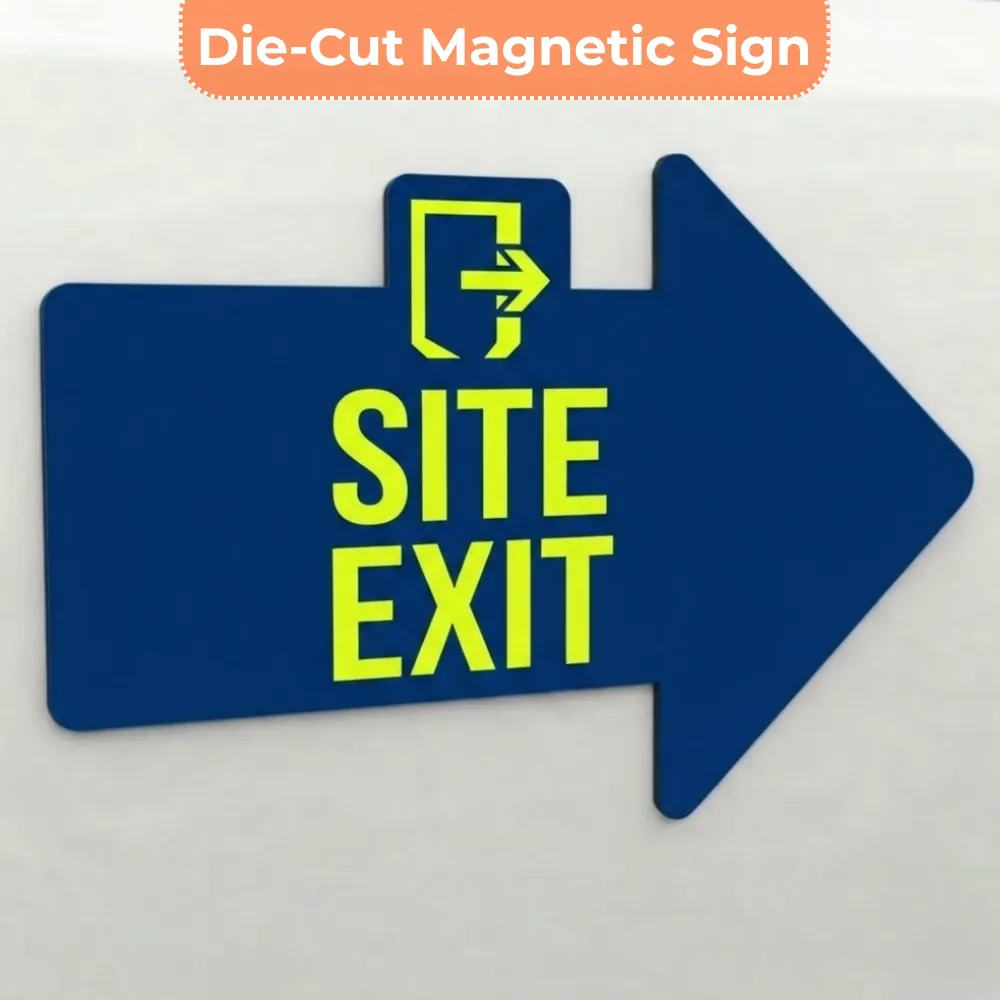
Site exit signs are safety, directional, and wayfinding signs used to identify exit points, vehicle exits, pedestrian exits, emergency escape routes, and designated ways to leave a construction site, industrial facility, warehouse, commercial property, or other controlled area. Effective exit signage helps workers, visitors, contractors, drivers, and pedestrians understand where they should go when leaving a site or following an emergency evacuation route.
A site exit sign should clearly communicate that an exit or designated way out is located at the identified point. Simple wording and recognizable symbols help people understand the message quickly.
Exit signs should be easy to notice from the intended approach. Strong contrast, suitable colors, clear typography, appropriate sizing, and strategic placement help ensure the sign remains visible in busy site environments.
The message should be concise, legible, and immediately understandable. Text should be large enough for the expected viewing distance, while arrows and symbols should be clearly distinguishable.
Standardized exit symbols and directional arrows can help communicate the location or direction of an exit quickly. Directional information is particularly important where an exit is not directly visible.
Site exit signs should be positioned where people can see and understand the exit information before reaching a decision point, route change, gate, or exit location.
Signs should not be hidden behind vehicles, equipment, temporary structures, vegetation, gates, or stored materials.
Where people need to follow a specific route, exit signs should provide consistent directional information. Multiple signs along a route can help occupants maintain confidence that they are following the correct path.
For sites operating during nighttime or in areas with reduced lighting, exit signage may require illumination, emergency lighting, retroreflective materials, photoluminescent features, or other approved visibility solutions, depending on the application and applicable requirements.
Sign dimensions should be suitable for the viewing distance, site layout, traffic conditions, and intended audience. Larger signs may be appropriate at vehicle entrances or locations where people view the sign from a greater distance.
Outdoor site exit signs may be exposed to sunlight, rain, wind, dust, moisture, temperature changes, and physical wear. Suitable materials and protective finishes help maintain visibility and legibility.
A site may have separate pedestrian and vehicle exit points. Signs should clearly identify the intended route and help prevent confusion between pedestrian movement and vehicle traffic.
Where an exit forms part of an emergency evacuation system, signage should be coordinated with the site’s emergency plan, evacuation routes, emergency lighting, assembly points, and other required life-safety measures.
An exit sign is effective only when people can see it. Signs should remain free from equipment, vehicles, advertising, vegetation, temporary structures, doors, or other obstructions.
Site exit signs should be securely mounted and correctly oriented so they remain visible and stable during normal site operations and expected weather conditions.
Exit signs should use consistent terminology, symbols, colors, arrows, and visual design throughout the site. Consistency makes navigation easier and reduces confusion.
Exit signage should consider the needs of the people expected to use the site. Clear visual contrast, readable information, appropriate positioning, and accessible routes can support safer and more inclusive wayfinding.
Specific accessibility requirements depend on the site type and applicable regulations.
Exit signs should be inspected regularly for:
Damaged, missing, obstructed, or outdated signs should be corrected or replaced promptly.
Site exit signs should follow the applicable workplace safety, fire-safety, building, accessibility, traffic-control, and local signage requirements. Requirements can vary according to the country, jurisdiction, facility type, and whether the exit is part of an emergency evacuation system.
Site exit signs are safety, directional, and wayfinding signs used to identify designated exit points, pedestrian exits, vehicle exits, emergency escape routes, and other safe ways to leave a construction site, industrial facility, warehouse, commercial property, or controlled area.
Their main purpose is to help workers, visitors, contractors, drivers, and pedestrians quickly identify where and how to exit a site. Clear exit signage is especially important where sites have multiple gates, complex layouts, heavy equipment, vehicle traffic, or designated emergency evacuation routes.
A clearly identified exit helps people navigate away from a site without unnecessary confusion. Effective site exit signs can:
Exit signs should work together with gates, barriers, pedestrian routes, traffic controls, emergency lighting, evacuation procedures, and other appropriate safety measures.
The appropriate sign depends on the site’s layout, users, hazards, and applicable requirements. Common examples include:
Q: What are site exit signs?
A: Site exit signs are safety and directional signs that identify designated exit points, pedestrian exits, vehicle exits, or routes for leaving a site safely.
Q: Why are site exit signs important?
A: They help workers, visitors, contractors, pedestrians, and drivers quickly identify the correct way to leave a site or follow a designated evacuation route.
Q: Where are site exit signs used?
A: Site exit signs are commonly used at construction sites, factories, warehouses, industrial facilities, infrastructure projects, commercial properties, and controlled-access areas.
Q: What are the main types of site exit signs?
A: Common types include site exit, emergency exit, pedestrian exit, vehicle exit, gate exit, exit-direction, and emergency evacuation direction signs.
Q: What information should a site exit sign include?
A: Depending on the application, it may show “Exit,” directional arrows, pedestrian or vehicle instructions, gate identification, emergency evacuation directions, or other relevant site information.
Q: What makes a site exit sign effective?
A: An effective sign is clear, highly visible, legible, appropriately sized, durable, securely installed, correctly positioned, and relevant to the site’s exit requirements.
Q: Where should site exit signs be placed?
A: They should be positioned where people can see and understand the exit information before reaching the exit or a decision point requiring a change in direction.
Q: Should site exit signs be reflective?
A: Reflective materials can improve visibility at night and in low-light conditions, particularly for vehicle entrances, outdoor sites, and areas with limited illumination.
Q: Can site exit signs be illuminated?
A: Yes. Illuminated or emergency-powered exit signs may be appropriate or required for certain emergency exits, depending on the facility and applicable regulations.
Q: What materials are used for site exit signs?
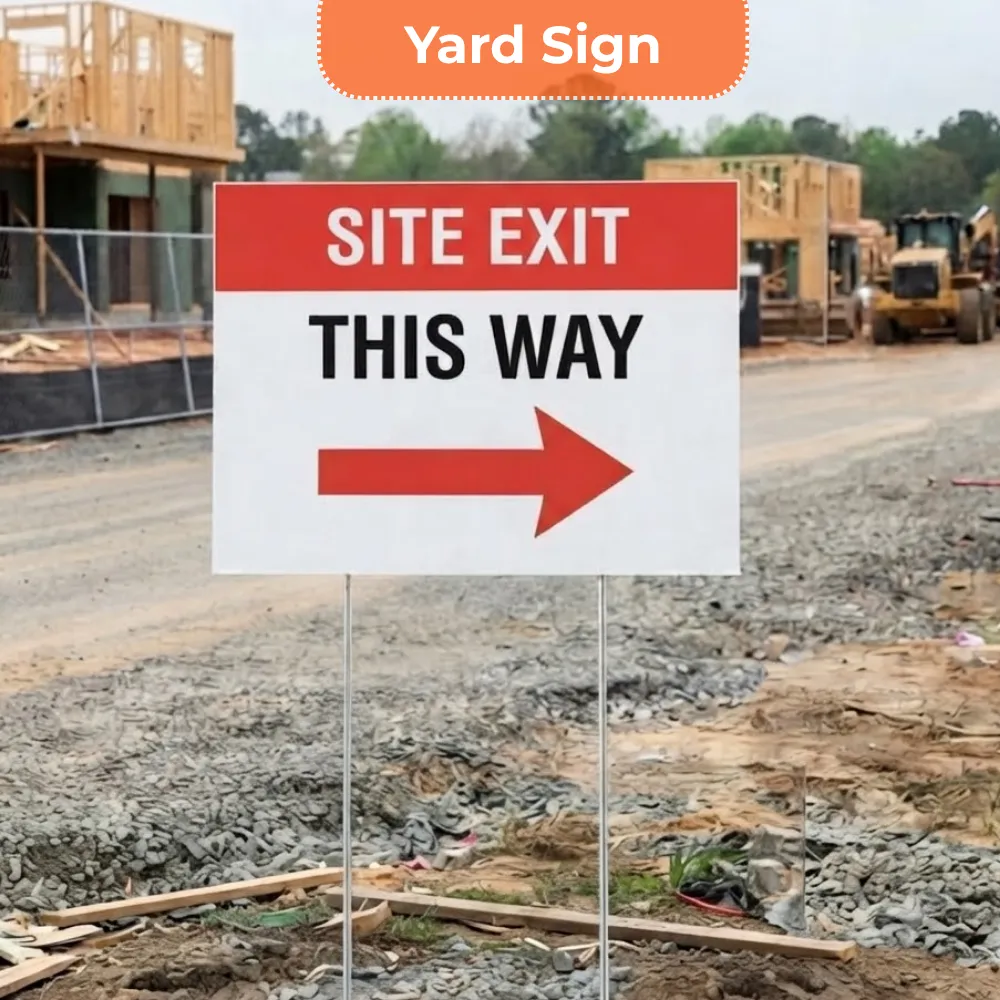
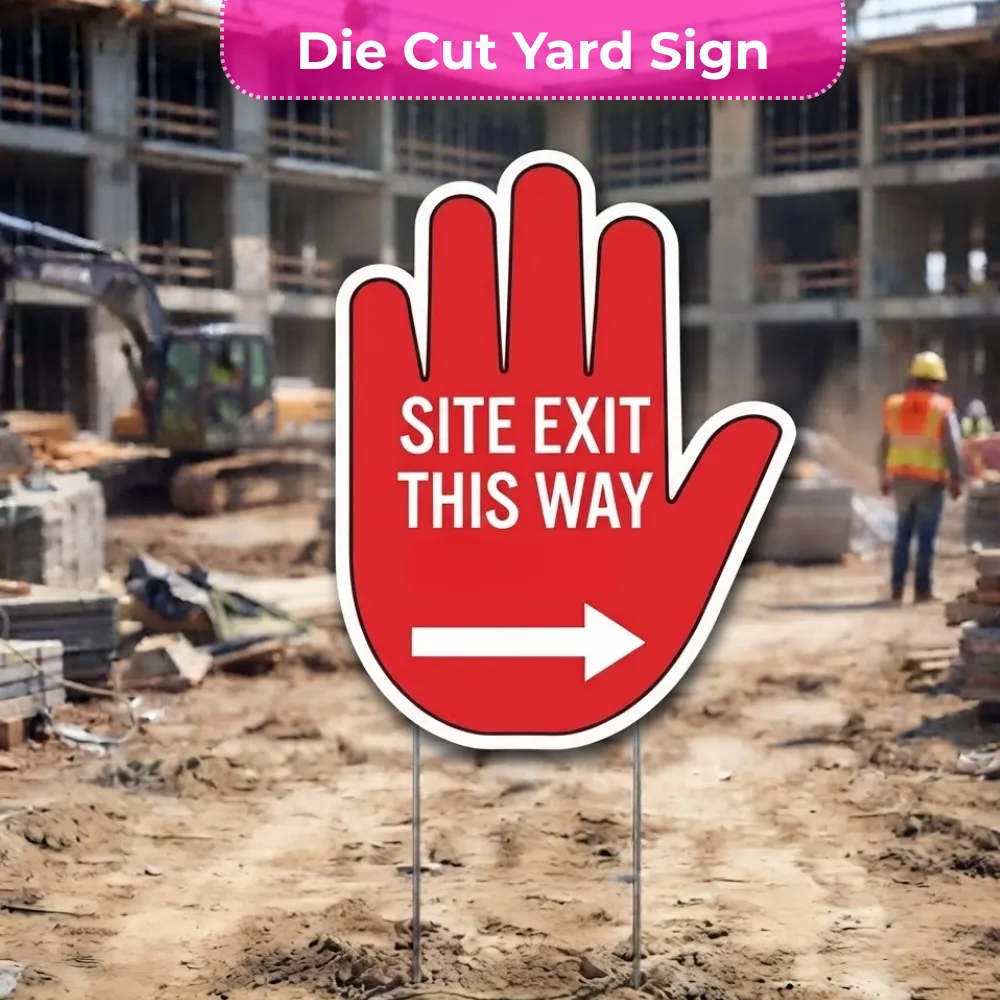
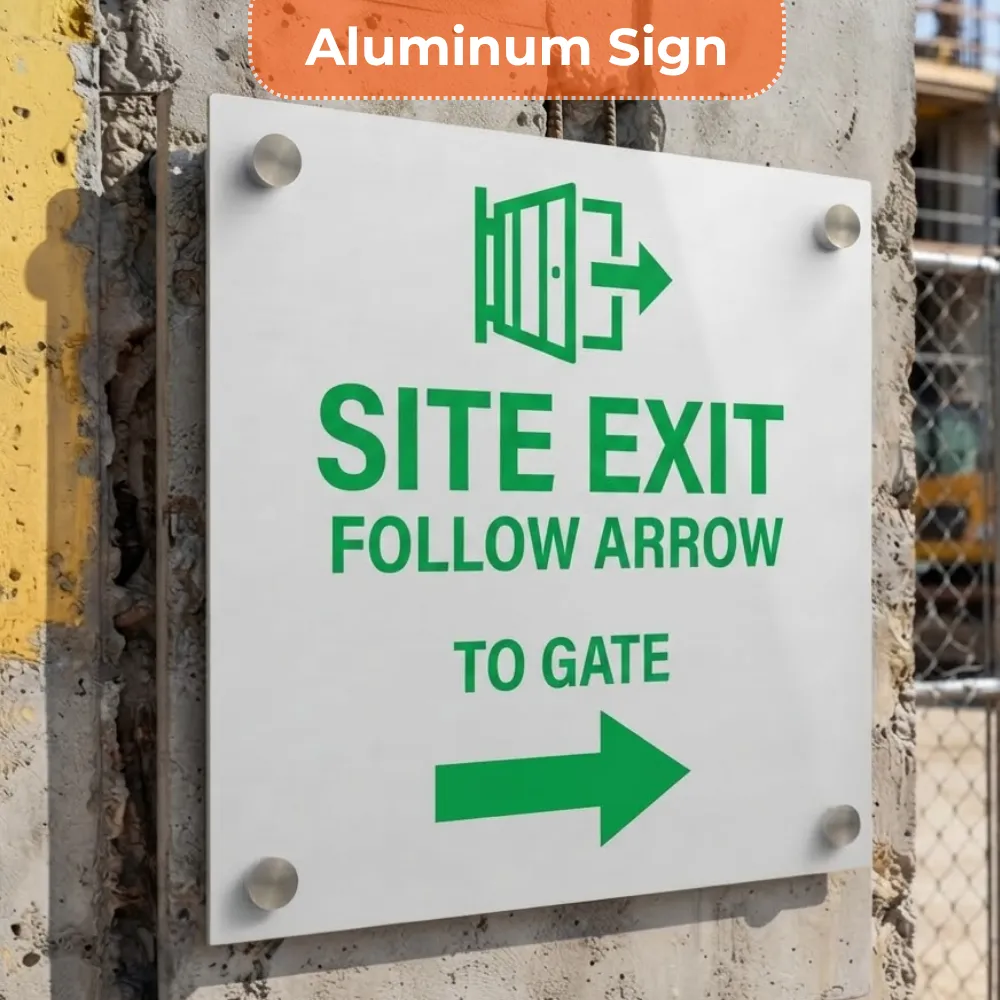
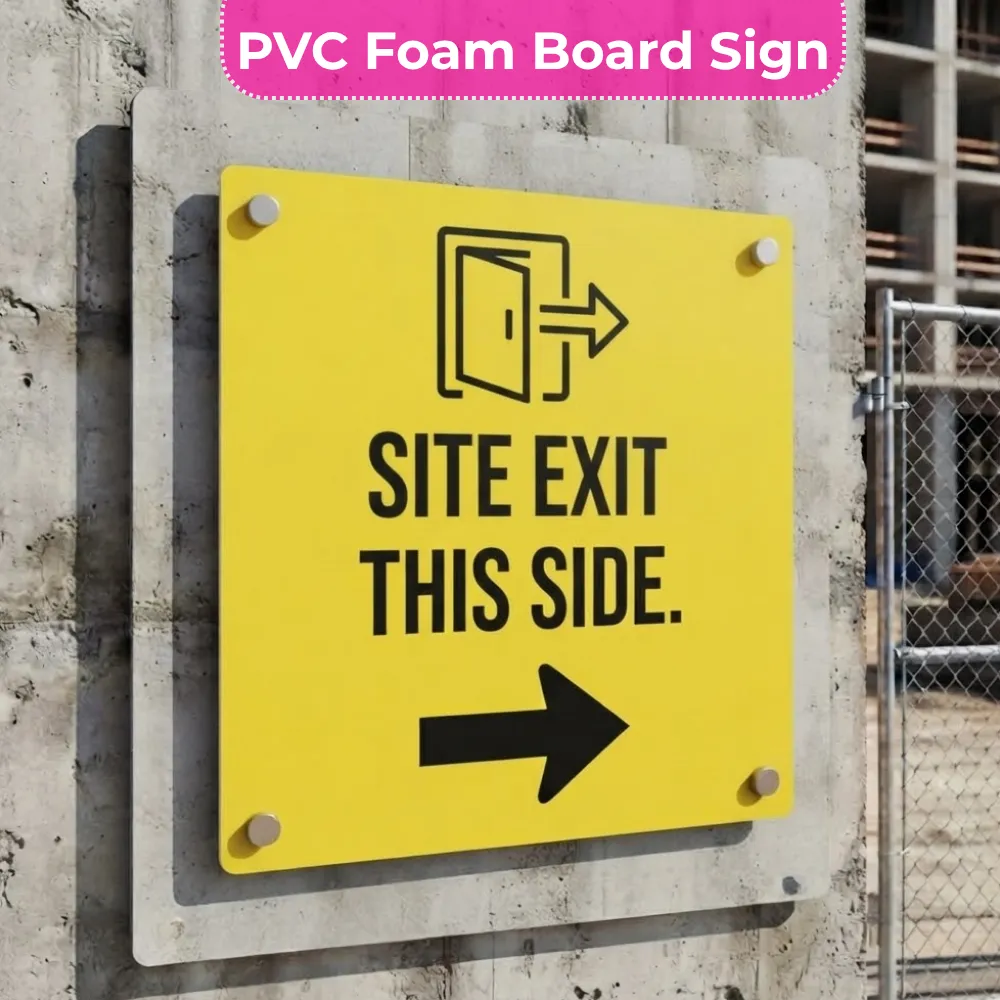
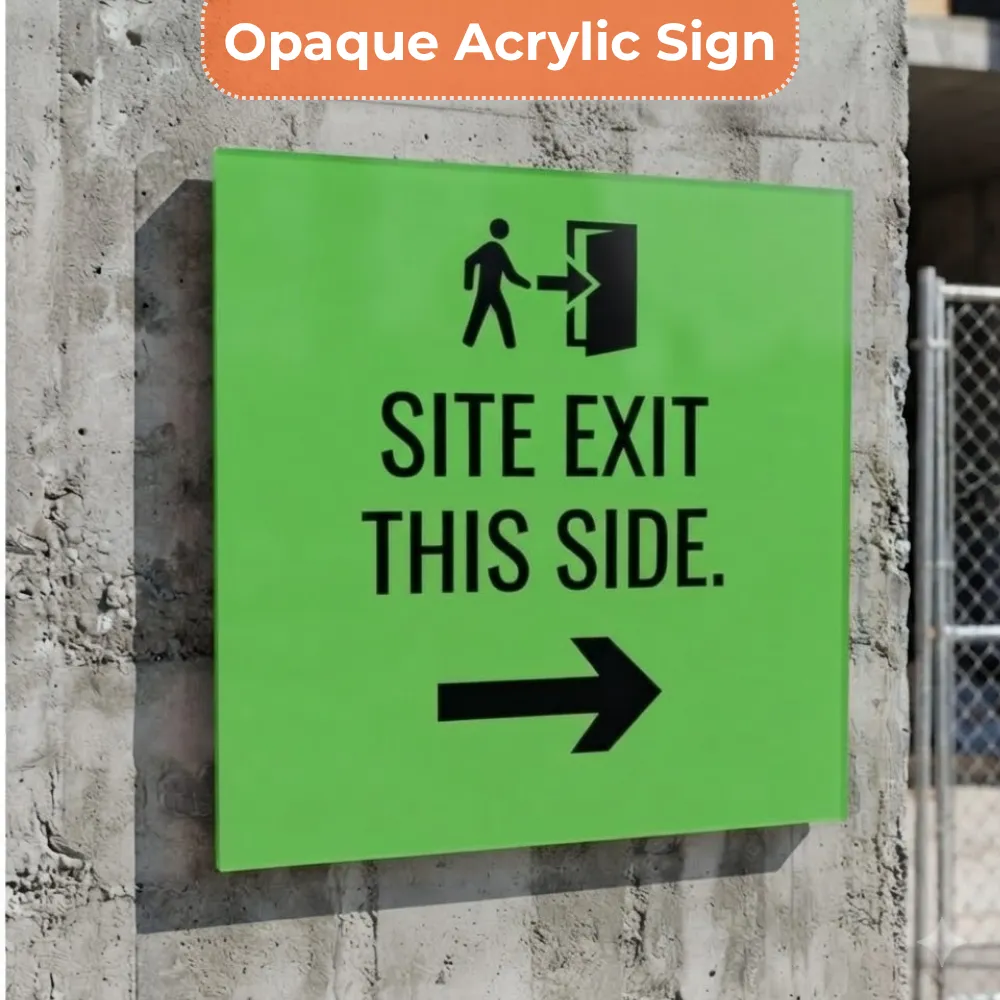
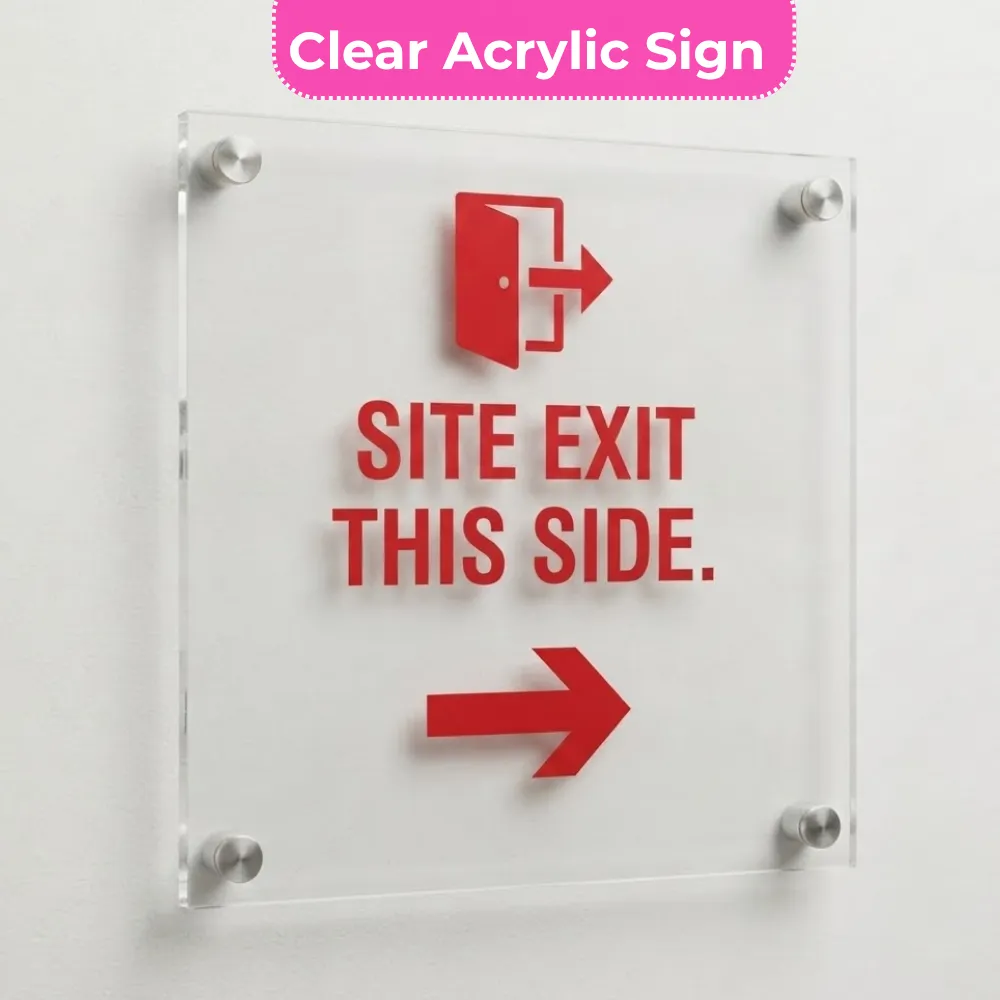
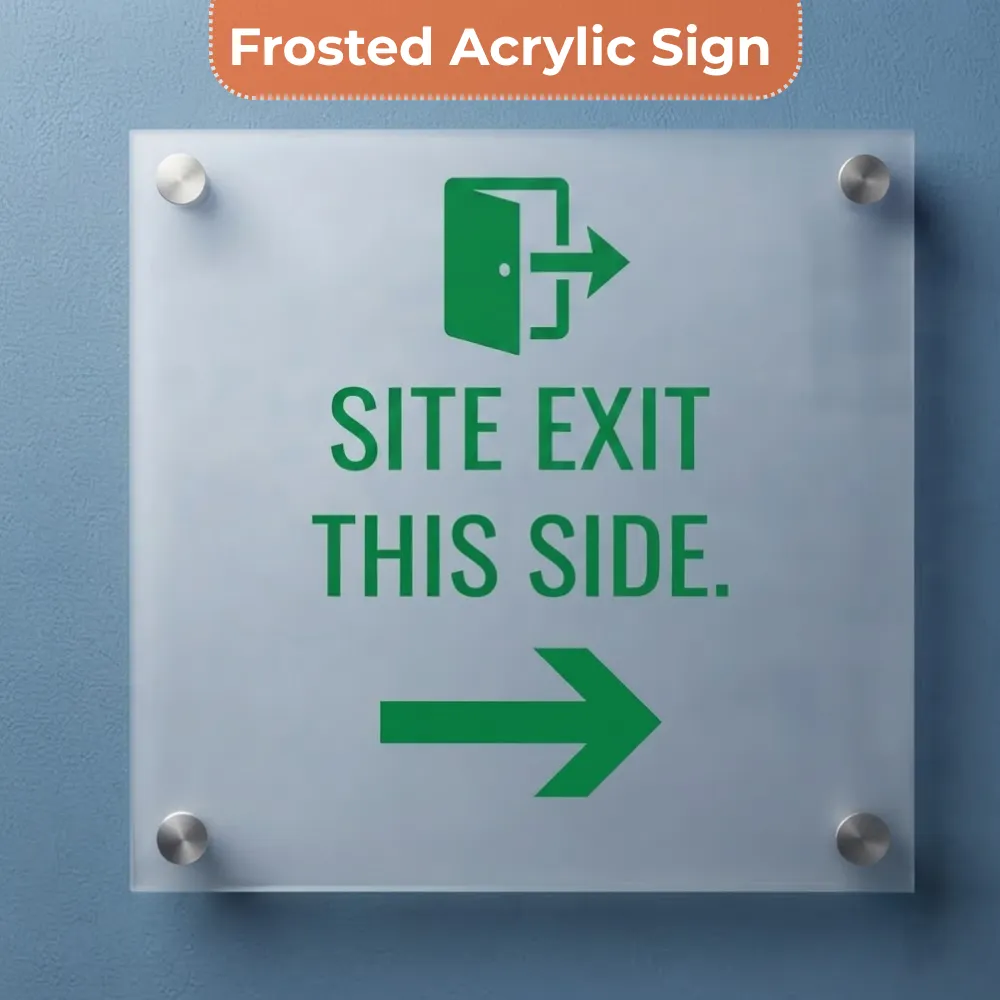
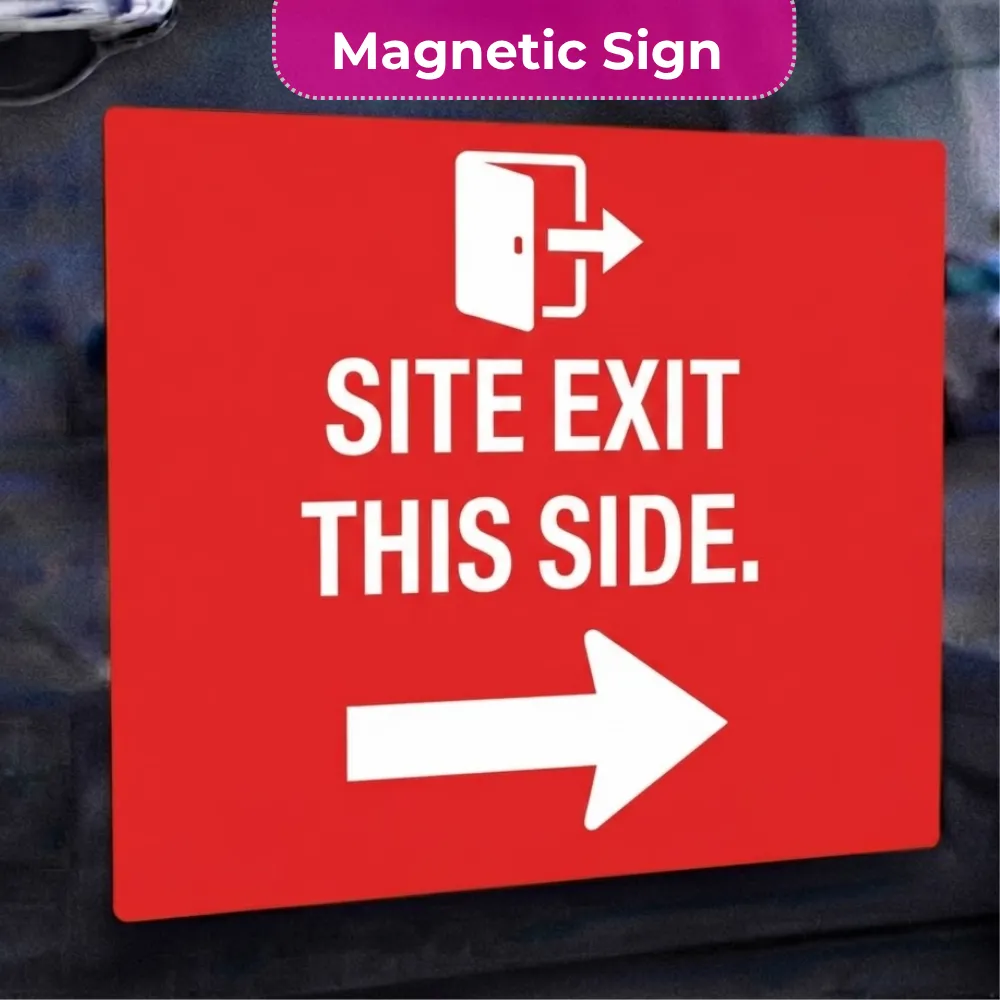
A: Common materials include Corrugated/Coroplast plastic, PVC Foam Board, Aluminum, Acrylic and Magnetic selected according to the installation environment.
Q: How large should a site exit sign be?
A: The appropriate size depends on viewing distance, traffic conditions, site layout, lighting, sign content, and applicable requirements. The message must remain clearly legible.
Q: What is the difference between a site exit sign and an emergency exit sign?
A: A site exit sign identifies a way to leave a site or controlled area, while an emergency exit sign identifies an exit or route intended for emergency evacuation. Exact requirements vary by jurisdiction.
Q: Can site exit signs be used for pedestrian and vehicle exits?
A: Yes. Separate signs can identify pedestrian exits, vehicle exits, and shared access points, helping reduce confusion between different types of site traffic.
Q: Are site exit signs legally required?
A: Some exit signs may be required under fire-safety, building, workplace safety, accessibility, traffic, or local regulations. Requirements depend on the site and jurisdiction.
Q: Can site exit signs be customized?
A: Yes. They can be customized with exit directions, gate numbers, pedestrian or vehicle identification, site-specific instructions, symbols, and other relevant information, subject to applicable requirements.
Q: How do site exit signs improve construction-site safety?
A: They provide clear wayfinding that helps people identify exit routes, navigate complex site layouts, and avoid confusion around vehicles, machinery, gates, and pedestrian routes.
Q: Should site exit signs include directional arrows?
A: Yes, when the exit is not immediately visible or the route requires a change in direction. Clear directional arrows help guide people toward the correct exit.
Q: How should site exit signs be maintained?
A: They should be regularly checked for fading, damage, dirt, obstruction, poor visibility, loose mounting, incorrect information, and changes to the site’s exit routes.
Q: When should a site exit sign be replaced?
A: Replace a sign when it becomes damaged, faded, illegible, unstable, obstructed, outdated, or no longer accurately identifies the designated exit or route.
Q: How do you choose the right site exit sign?
A: Choose the sign based on the exit type, site layout, intended audience, viewing distance, lighting conditions, environmental exposure, traffic movement, emergency requirements, and applicable safety standards.

No products in the cart.