HALLOWEEN SUPER SALE 30% OFF USE CODE: SPOOKY
| ShippingMethod | Fixed Price(Unlimited QTY) |
|---|---|
| Priority* | $30 |
| Express* | $20 |
Size (W X H)
Size (W X H)

Kindly share the artwork via email at design@printwithebannersigns.com
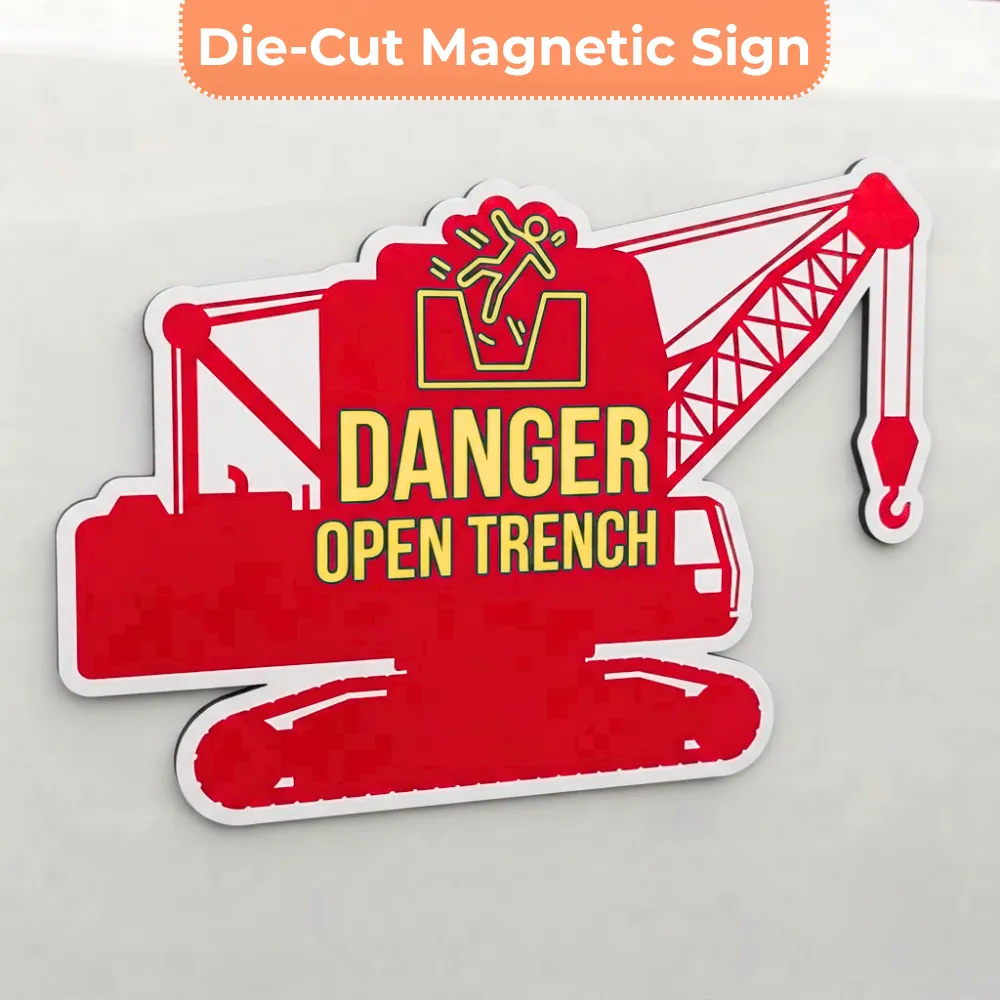
Excavation and trenching signs are safety warning and hazard communication signs used around excavations, trenches, open pits, earthworks, and underground construction activities. They alert workers, visitors, operators, and pedestrians to hazards such as falls, cave-ins, falling materials, moving equipment, underground utilities, restricted access, and unstable ground conditions.
Effective excavation and trenching signs should communicate hazards before people approach or enter the affected area and should support the site’s broader excavation safety controls.
Excavation signs should clearly communicate the specific hazard or restriction. Short, direct messages help people understand the risk quickly.
Examples include:
Signs should be highly visible from the expected approach. Strong contrast, appropriate colors, bold text, recognizable symbols, and adequate sign size help workers and visitors identify excavation hazards quickly.
Where appropriate, standardized hazard symbols and pictograms can reinforce written warnings. Visual symbols can be particularly useful on multilingual construction sites.
The sign should be large enough for people to read and understand the warning before reaching the hazard area. Size should take into account viewing distance, site layout, lighting, and whether the intended audience is on foot or in a vehicle.
Excavation warning signs should be placed where people can see the warning before reaching the excavation, trench, or restricted area.
Depending on the site, signs may be needed near:
Where unauthorized entry is dangerous, signs should clearly communicate restricted access or keep-out requirements. Signage should be coordinated with physical barriers, barricades, fencing, or other access controls where required.
Open excavations and trenches can present serious fall hazards, particularly where edges are exposed or people work near the excavation. Signs can reinforce awareness of the hazard but should not replace required physical protection.
Excavation areas may contain or be close to electrical, gas, water, telecommunications, or other underground utilities. Appropriate warning and identification signs can communicate utility-related hazards and restrictions.
Signage should be supported by proper utility locating, planning, and safe excavation procedures.
Excavation work frequently involves excavators, loaders, dump trucks, compactors, and other mobile equipment. Signs can warn people about moving machinery, reversing vehicles, swing-radius hazards, and restricted operating zones.
Excavation signs are typically used outdoors and may be exposed to rain, sunlight, dust, mud, wind, moisture, vibration, and physical impact. Durable materials and suitable finishes help maintain visibility and legibility.
Where excavation work occurs during nighttime or in low-light conditions, reflective materials, illumination, or suitable warning systems can improve visibility, subject to the applicable requirements.
Signs should be firmly mounted, stable, and correctly oriented so that wind, vibration, equipment movement, or normal site activity does not make them ineffective.
Excavation signs should work together with barricades, guardrails, fencing, warning lights, access controls, safe walkways, designated crossings, and other protective measures.
Signage alone should not be relied upon where physical protection is required.
Signs should be regularly checked for:
Damaged or illegible signs should be repaired or replaced promptly.
Excavation and trenching signage should follow the applicable construction, workplace safety, traffic-control, and local requirements. Requirements vary by jurisdiction, excavation type, work environment, and hazard.
Excavation and trenching signs are safety and hazard communication signs used around excavations, trenches, open pits, earthworks, and underground construction areas. Their purpose is to warn workers, visitors, pedestrians, and equipment operators about hazards associated with excavation activities and to communicate access restrictions, required precautions, and site-specific safety information.
These signs are commonly used on construction sites, roadwork projects, utility installations, infrastructure projects, drainage works, foundation projects, and other excavation operations.
Excavation areas can create multiple hazards, including falls into open excavations, trench collapse, falling materials, moving equipment, underground utilities, unstable ground, water accumulation, and restricted access.
Clear excavation signage provides early visual communication that can help people:
Signs should be used together with appropriate physical and procedural controls. Warning signs alone do not provide physical protection against excavation hazards.
The appropriate sign depends on the hazard and site conditions. Common examples include:
Q: What are excavation and trenching signs?
A: Excavation and trenching signs are safety warning signs used around trenches, excavations, open pits, and earthwork areas to communicate hazards and access restrictions.
Q: Why are excavation and trenching signs important?
A: They help warn workers, visitors, and equipment operators about open excavations, fall hazards, restricted areas, moving machinery, and other excavation-related risks.
Q: Where are excavation and trenching signs used?
A: They are commonly used on construction sites, roadwork projects, utility projects, infrastructure sites, drainage projects, foundation excavations, and civil engineering works.
Q: What are the main types of excavation signs?
A: Common types include open excavation, open trench, danger keep out, fall hazard, trench work in progress, underground utility, heavy equipment, restricted area, and pedestrian detour signs.
Q: What hazards do excavation signs warn about?
A: They can warn about open edges, falls, trench collapse, unstable ground, underground utilities, falling materials, moving equipment, water accumulation, and restricted access.
Q: What makes an excavation warning sign effective?
A: An effective sign is clear, visible, legible, specific to the hazard, durable, securely installed, appropriately positioned, and compliant with applicable requirements.
Q: Where should excavation warning signs be placed?
A: Signs should be positioned where people can see and understand the warning before reaching the excavation, trench, or restricted area.
Q: Should excavation signs be reflective?
A: Reflective materials can improve visibility during nighttime and low-light construction activities, particularly where workers, vehicles, or pedestrians approach the excavation.
Q: What materials are used for excavation and trenching signs?
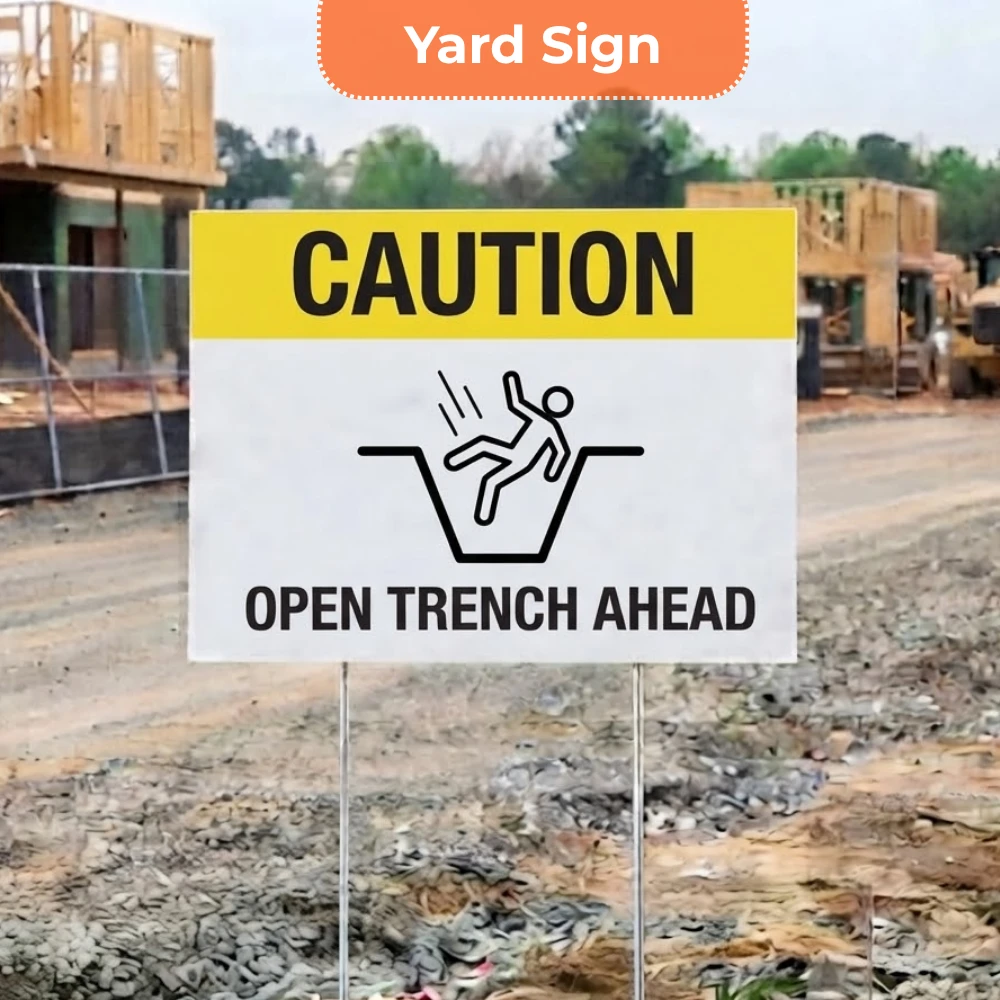
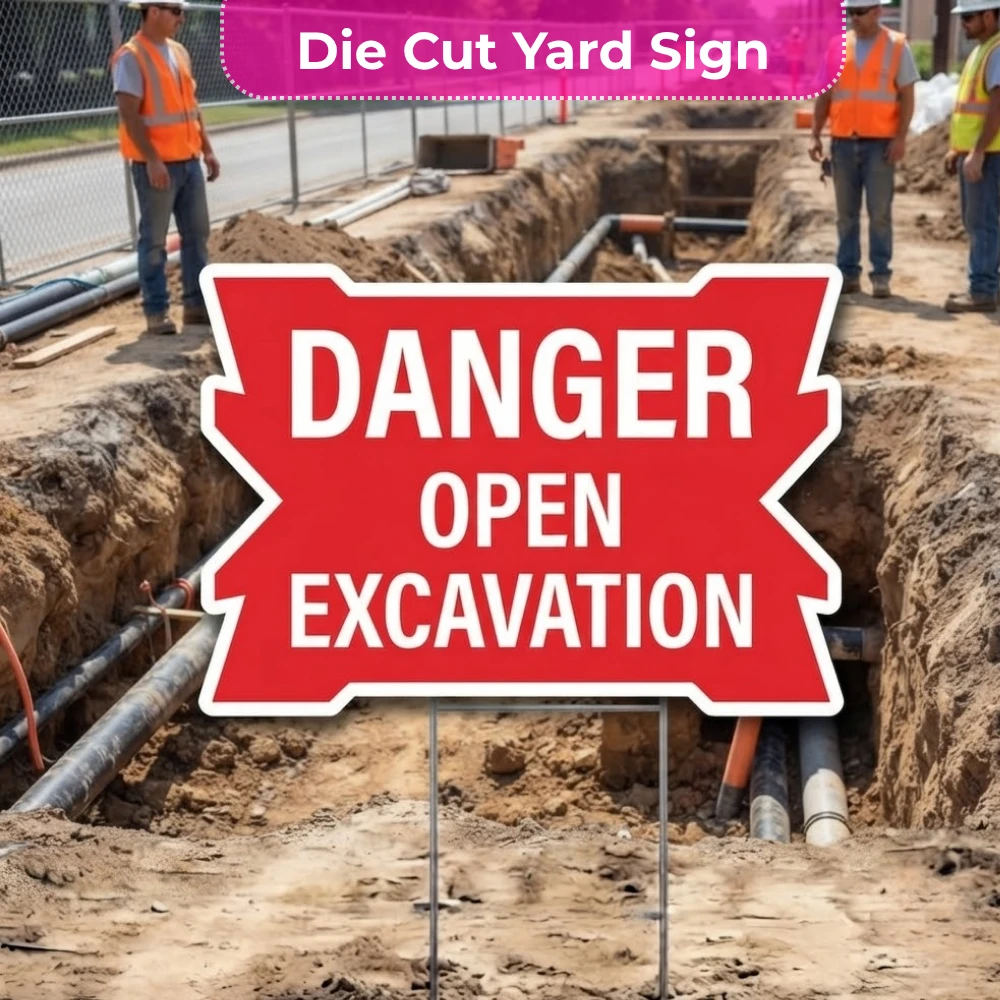
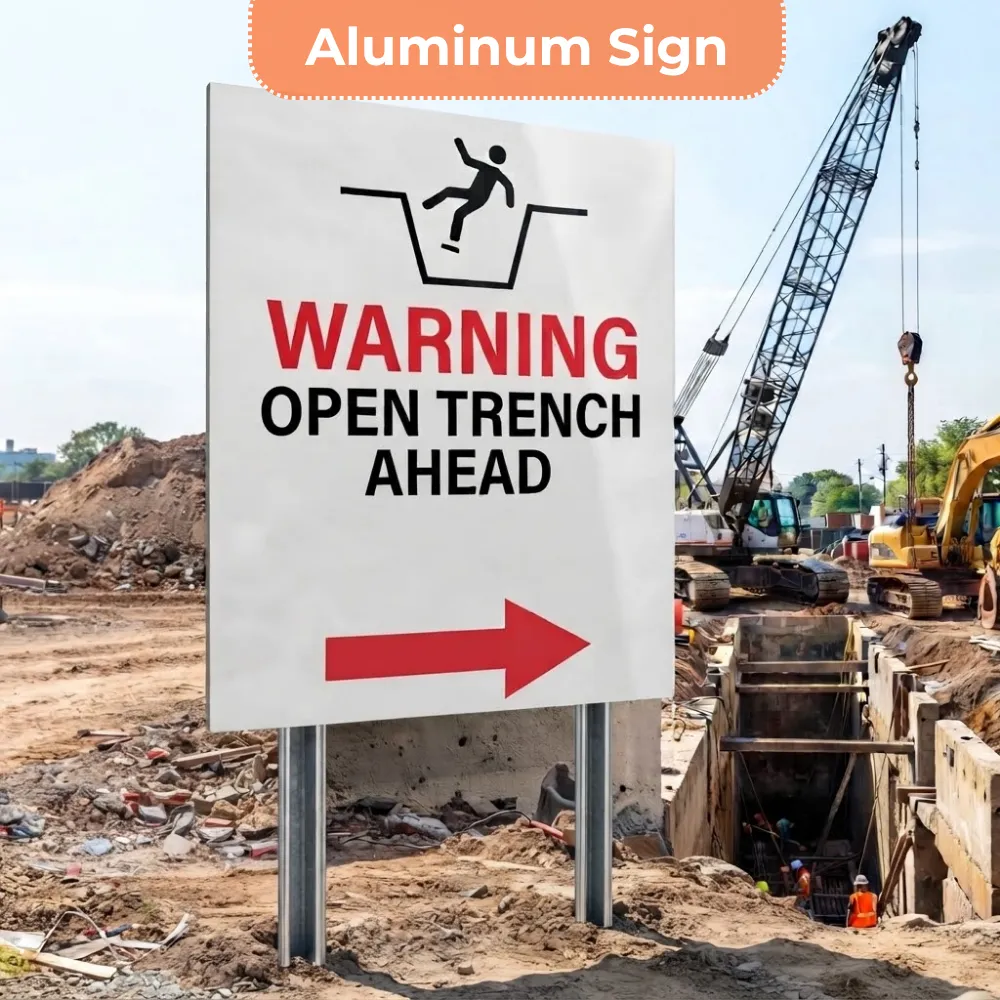
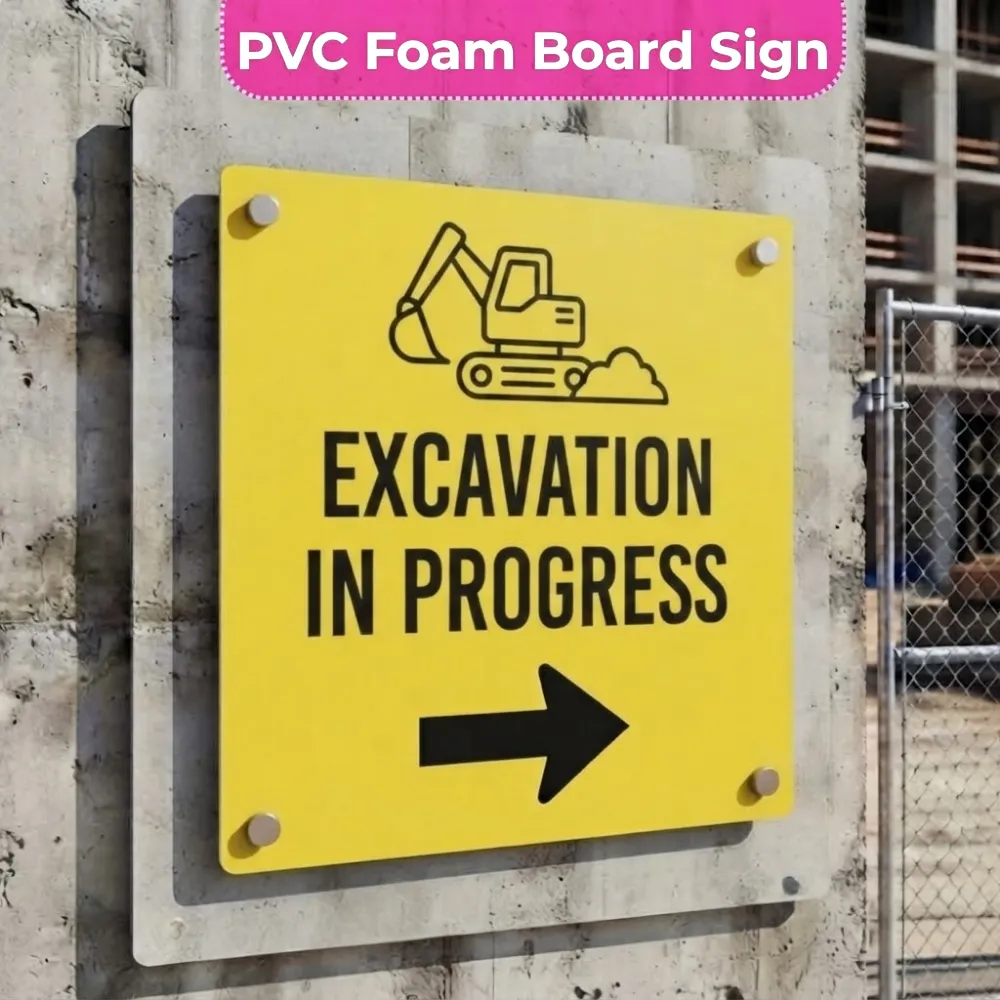
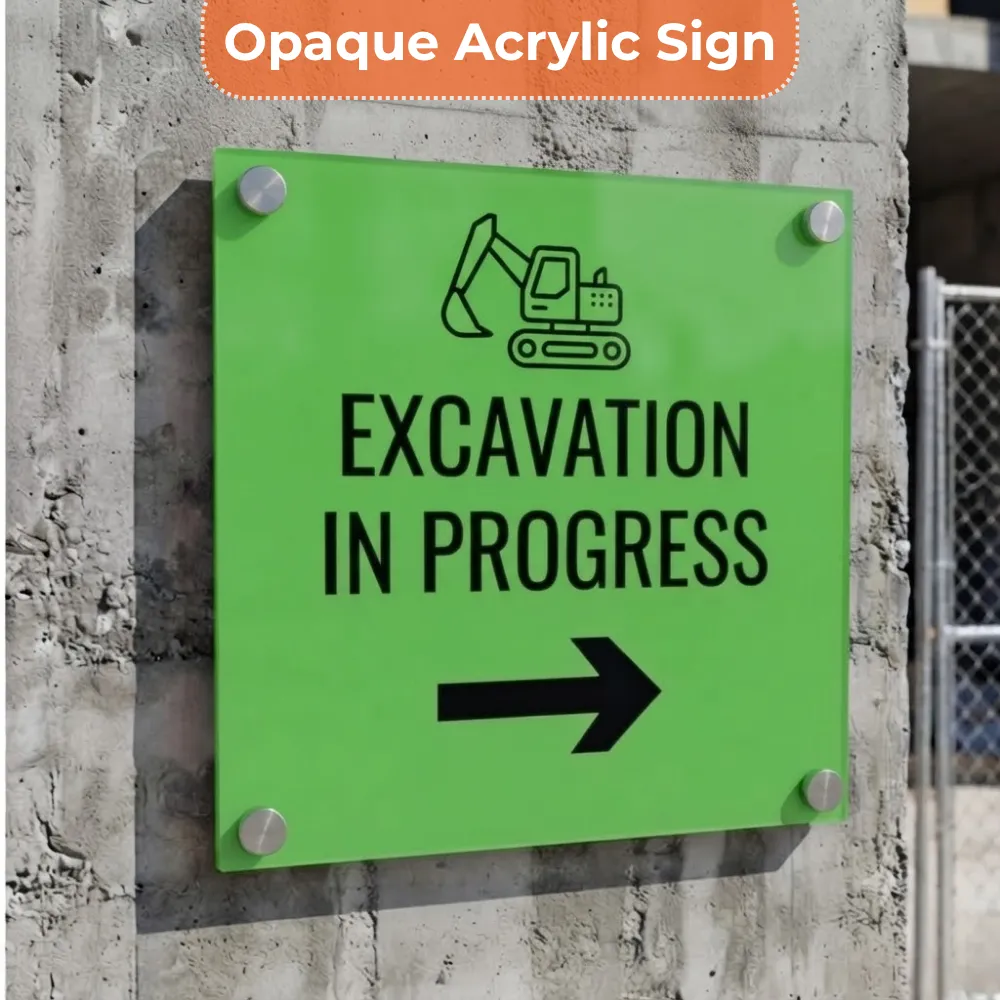
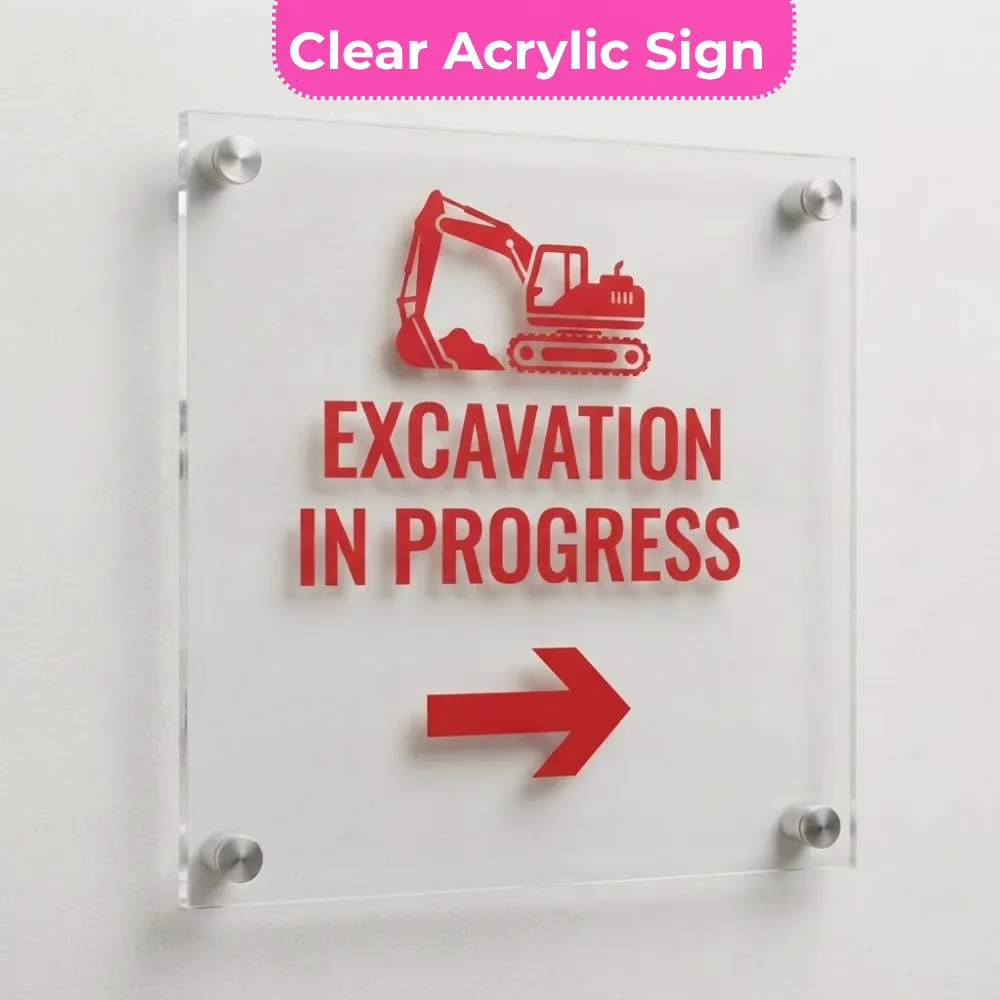
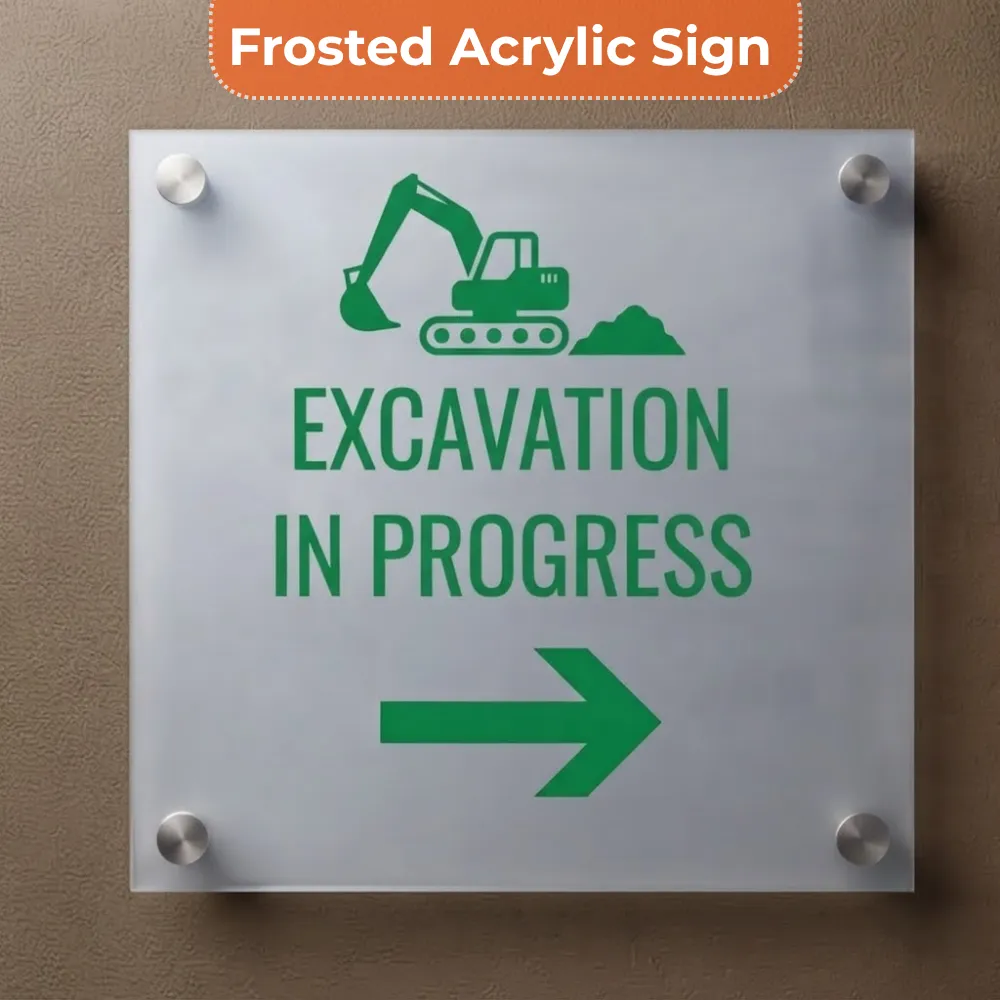
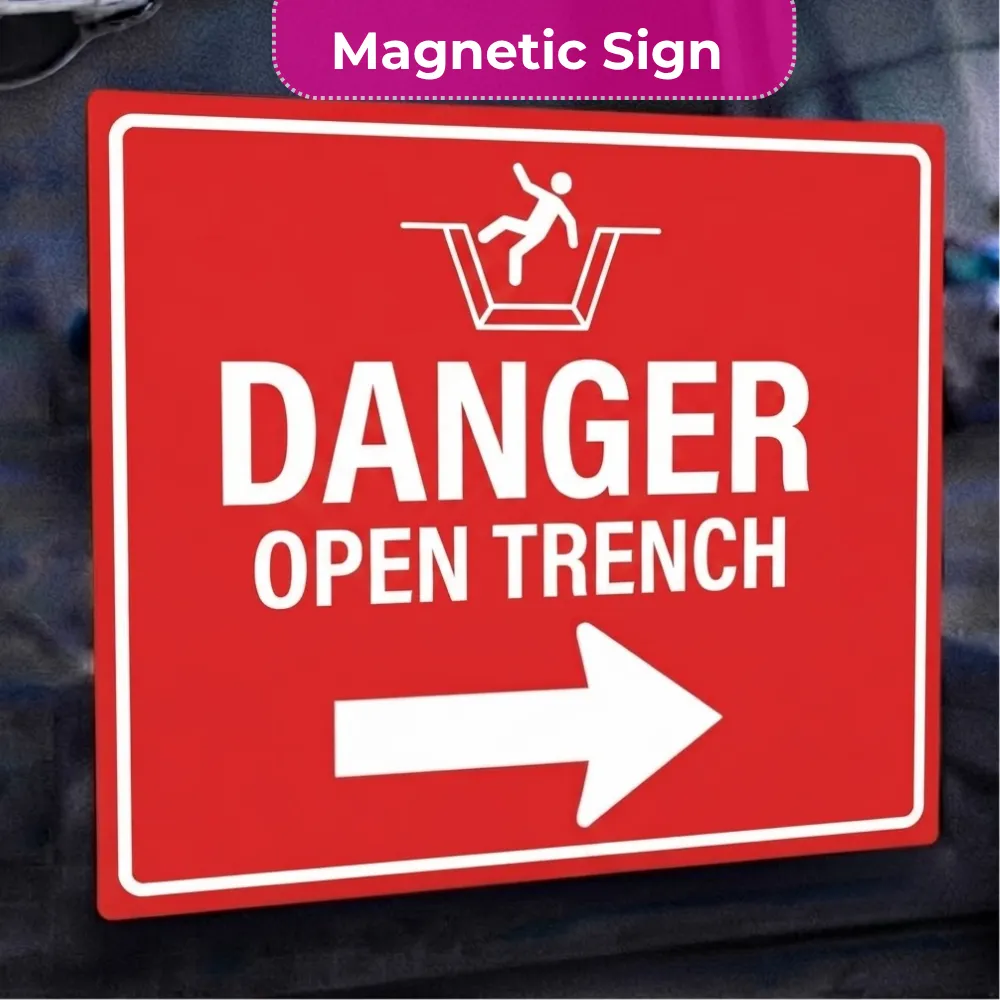
A: Common materials include Corrugated/Coroplast plastic, PVC Foam Board, Aluminum, Acrylic and Magnetic selected according to site conditions.
Q: How large should an excavation warning sign be?
A: Sign size depends on viewing distance, site layout, traffic conditions, lighting, sign content, and applicable requirements. The warning must remain clearly legible.
Q: What is an open excavation sign?
A: An open excavation sign warns people that an excavated area or open cut is present and may create hazards such as falls or unstable ground.
Q: What is an open trench sign?
A: An open trench sign warns workers and visitors about an open trench and associated hazards, such as falls, collapse risks, equipment movement, or restricted access.
Q: Can excavation signs prevent accidents?
A: Signs improve hazard awareness, but they cannot physically prevent falls, collapses, or unauthorized entry. They should be combined with appropriate barriers, protective systems, access controls, and safe work practices.
Q: Are excavation and trenching signs legally required?
A: Some signs may be required by construction, workplace safety, traffic-control, or local regulations. Exact requirements depend on the jurisdiction, project, and site conditions.
Q: Can excavation signs be customized?
A: Yes. Signs can be customized with site-specific hazards, project instructions, utility warnings, access restrictions, emergency information, and directional guidance, subject to applicable requirements.
Q: How do excavation signs improve construction-site safety?
A: They provide early visual warnings that help people recognize excavation hazards, avoid restricted areas, follow designated routes, and remain alert around excavation equipment.
Q: Should excavation signs be used with barricades?
A: Yes. Where physical protection or access control is required, signs should be used together with barricades, guardrails, fencing, barriers, warning lights, or other appropriate controls.
Q: How should excavation and trenching signs be maintained?
A: Inspect signs regularly for fading, physical damage, dirt, obstruction, loose mounting, poor visibility, and outdated information, and repair or replace them when necessary.
Q: When should an excavation sign be replaced?
A: Replace the sign when it becomes damaged, faded, illegible, unstable, obstructed, or no longer accurately communicates the excavation hazard or site conditions.
Q: How do you choose the right excavation or trenching sign?
A: Choose the sign based on the specific excavation hazard, location, viewing distance, lighting, environmental conditions, intended audience, traffic movement, and applicable construction safety requirements.

Sign in or create an account to add this product to your cart.

No products in the cart.