HALLOWEEN SUPER SALE 30% OFF USE CODE: SPOOKY

HALLOWEEN SUPER SALE 30% OFF USE CODE: SPOOKY

Pedestrian Safety Signs

SKU:PSS355
Shipping
Method
Fixed Price
(Unlimited QTY)
Priority*$30
Express*$20

    Size (W X H)

    Size (W X H)

    • (max file size 1 GB)

    Kindly share the artwork via email at design@printwithebannersigns.com

24/7 chat support

Unlimited Mockup Revisals

On Time delivery

Secured Payment

Key Features of Pedestrian Safety Signs: –

Pedestrian safety signs are visual safety tools used to guide, warn, inform, and protect people walking through roads, construction zones, parking areas, workplaces, public spaces, and other environments with vehicle or pedestrian hazards. Effective pedestrian signs help people identify risks, understand directions, follow restrictions, and choose safer routes.

  1. Clear and Easy-to-Understand Messages

    Pedestrian safety signs should communicate information quickly and clearly. Short wording, simple instructions, and recognizable symbols help pedestrians understand warnings without unnecessary reading.

  2. Recognizable Symbols and Pictograms

    Standardized pedestrian symbols can communicate information quickly and help overcome language barriers. Familiar pictograms are particularly useful in busy public areas, transport facilities, workplaces, and construction zones.

  3. High Visibility and Strong Contrast

    Pedestrian signs should be easy to notice against their surroundings. Contrasting colors, appropriate typography, clear graphics, and suitable positioning improve visibility and help pedestrians identify important information.

  4. Appropriate Size and Legibility

    Sign size should match the viewing distance and location. Text and symbols must be large and clear enough for pedestrians to understand the message without standing dangerously close to a roadway, work area, or other hazard.

  5. Strategic Placement

    Correct placement is one of the most important features of a pedestrian safety sign. Signs should be positioned where pedestrians can see, understand, and respond to the information before reaching a hazard, crossing point, restricted area, or route change.

  6. Visibility in Low-Light Conditions

    Where pedestrian routes are used at night or in poorly lit areas, signs may require retroreflective materials, illumination, or other visibility-enhancing features. The appropriate solution depends on the location and applicable safety requirements.

  7. Hazard-Specific Information

    Effective pedestrian safety signs should clearly communicate the relevant condition or risk. Common messages include:

    • Pedestrian crossing
    • Pedestrian route
    • Walkway or footpath
    • No pedestrian access
    • Construction area ahead
    • Watch for vehicles
    • Shared pedestrian and vehicle areas
    • Temporary pedestrian detour
    • Crossing restrictions
    • Emergency exit or evacuation route
  8. Durable and Weather-Resistant Construction

    Outdoor pedestrian signs may be exposed to sunlight, rain, wind, dust, moisture, and temperature changes. Durable materials help maintain visibility, legibility, and structural integrity over time.

  9. Accessibility Considerations

    Pedestrian signage should be designed and positioned with the needs of the intended users in mind. Clear visual information, adequate contrast, readable text, and appropriate placement can improve accessibility. Specific accessibility requirements depend on the location, facility type, and applicable regulations.

  10. Consistent Design

    Consistent use of symbols, colors, terminology, and directional information makes pedestrian routes easier to understand. Signs should also be coordinated with pavement markings, barriers, signals, lighting, and other pedestrian-control measures.

  11. Secure Installation

    Signs should be stable, correctly oriented, and securely mounted so they remain visible and do not create an additional obstruction or hazard for pedestrians.

  12. Regular Inspection and Maintenance

    Pedestrian safety signs should be checked regularly for fading, damage, dirt, obstruction, poor visibility, loose mounting, or outdated information. Damaged or unclear signs should be repaired, cleaned, repositioned, or replaced as appropriate.

  13. Suitable for Temporary and Permanent Applications

    Pedestrian signs may be used for permanent facilities or temporary conditions such as construction work, road maintenance, events, building projects, and temporary route changes. Temporary signage should be easy to install, relocate, and update as conditions change.

  14. Compliance With Applicable Standards

    Pedestrian safety signs should follow the applicable traffic, workplace safety, accessibility, construction, and signage requirements for their location and purpose. Design and installation requirements can vary by jurisdiction and application.

Overview of Pedestrian Safety Signs: –

Pedestrian safety signs are visual communication tools designed to guide pedestrians, warn them about potential hazards, identify safe walking routes, and communicate restrictions or required actions. They are commonly used on roads, construction sites, parking areas, workplaces, public facilities, schools, transport areas, and other locations where pedestrian and vehicle movement may overlap.

Effective pedestrian safety signs help people understand their surroundings and make safer decisions before reaching a crossing, work zone, vehicle route, restricted area, or other potential hazard.

Why Are Pedestrian Safety Signs Important?

Pedestrian safety signs provide clear information at locations where pedestrians need to understand a hazard, direction, restriction, or change in route. They can help:

  • Alert pedestrians to vehicles and other potential hazards.
  • Identify designated pedestrian crossings and walkways.
  • Direct people along safe or temporary routes.
  • Warn about construction and maintenance activities.
  • Restrict pedestrian access to hazardous areas.
  • Communicate temporary pedestrian detours.
  • Support safer movement around parking and traffic areas.
  • Identify emergency exits and evacuation routes.

Pedestrian signs are most effective when combined with appropriate walkways, barriers, lighting, pavement markings, traffic controls, accessibility measures, and other safety features.

Common Types of Pedestrian Safety Signs

The specific signs required depend on the location and applicable regulations. Common examples include:

  • Pedestrian Crossing Signs – identify designated locations for pedestrians to cross.
  • Pedestrian Walkway Signs – identify routes intended for pedestrian movement.
  • No Pedestrian Signs – indicate areas where pedestrian access is prohibited or restricted.
  • Pedestrian Detour Signs – guide pedestrians around temporary obstructions or construction areas.
  • Watch for Vehicles Signs – alert pedestrians to vehicle movement or crossing points.
  • Construction Pedestrian Signs – communicate temporary changes and hazards around construction zones.
  • Shared-Path Signs – identify areas where pedestrians and other road users may share a route.
  • Emergency Exit Signs – direct people toward designated emergency exits or evacuation routes.

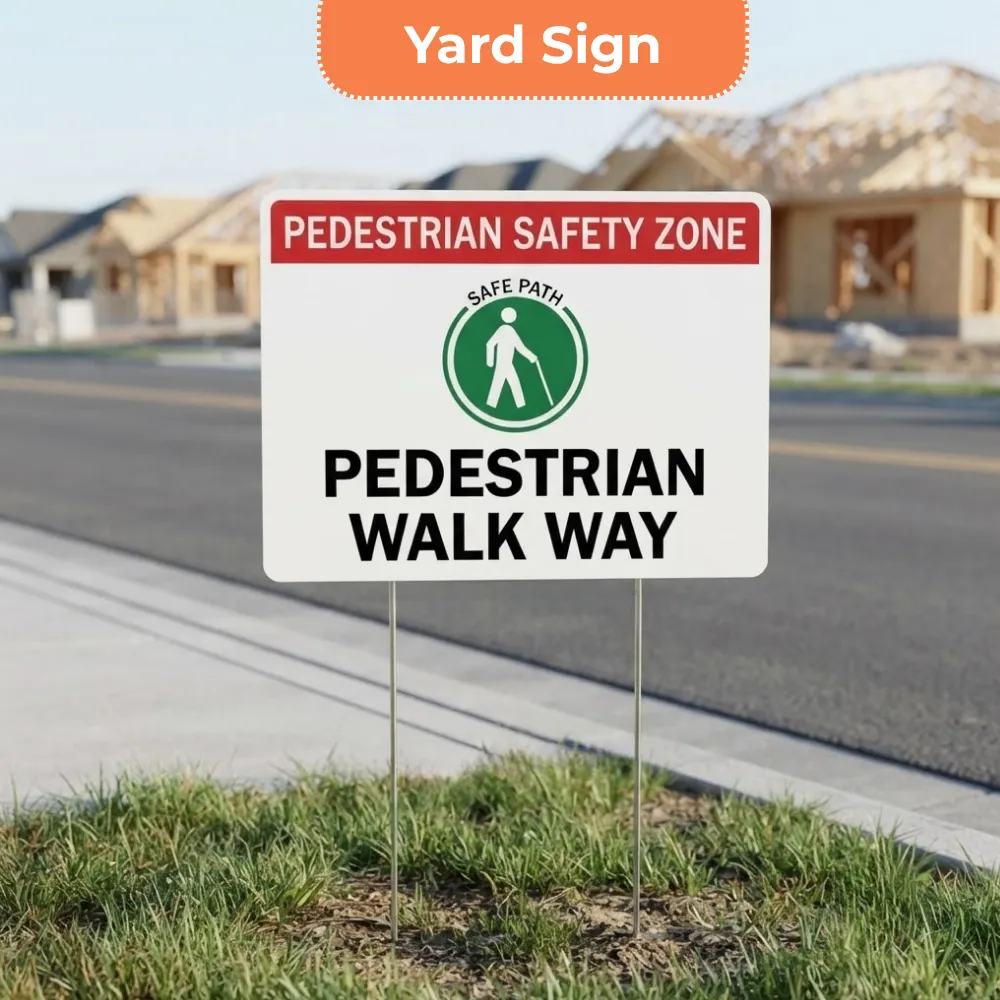
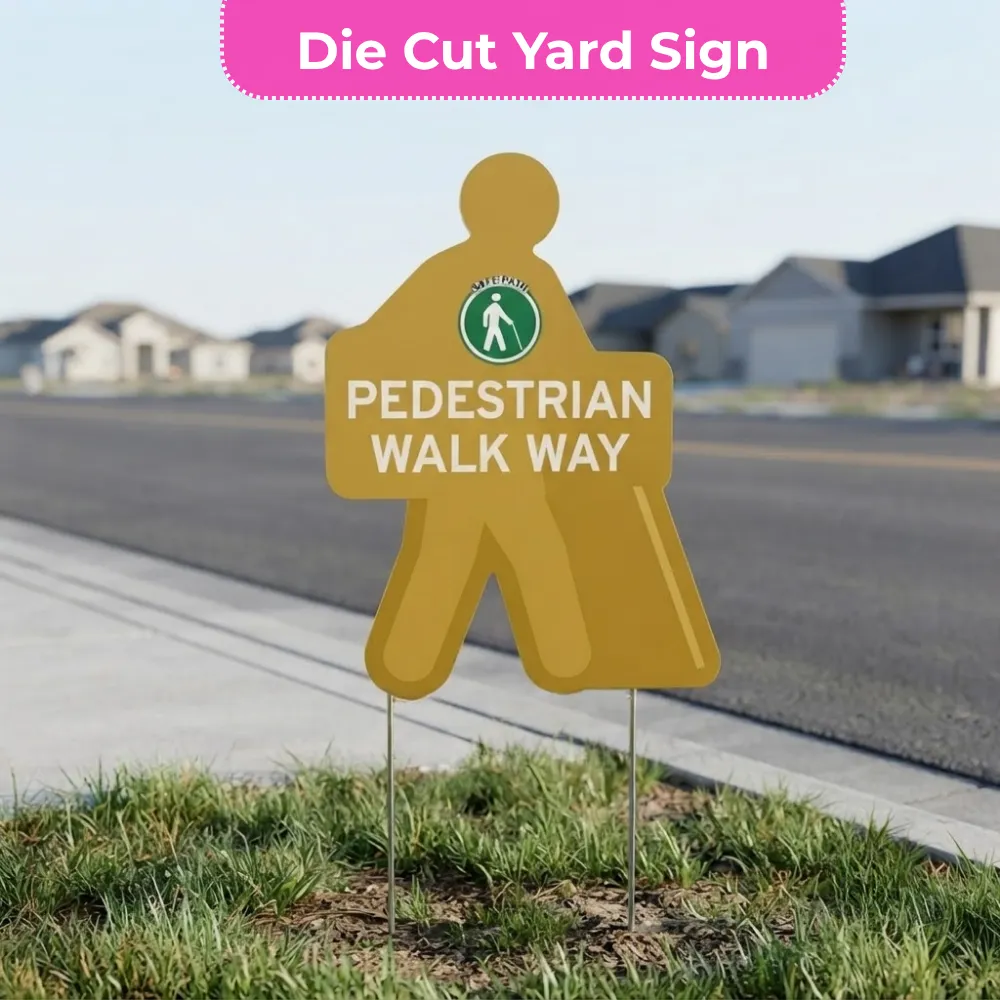
Yard Sign :-

  • The Product Material is corrugated plastic (Coroplast).
  • The printing on the product will be Glossy Finish and would be direct on the Coroplast Sheet.
  • The Material weight is 1010 GSM and the Thickness is 6mm.
  • We offer Full Color, 720 DPI Full Color Printing.
  • UV printing is even available.
  • Metal Stakes are made up of Aluminum Material.
  • The quality of the Metal Stakes is 1000 Series Aluminum metal.
  • Please request for Metal grommets at additional cost.

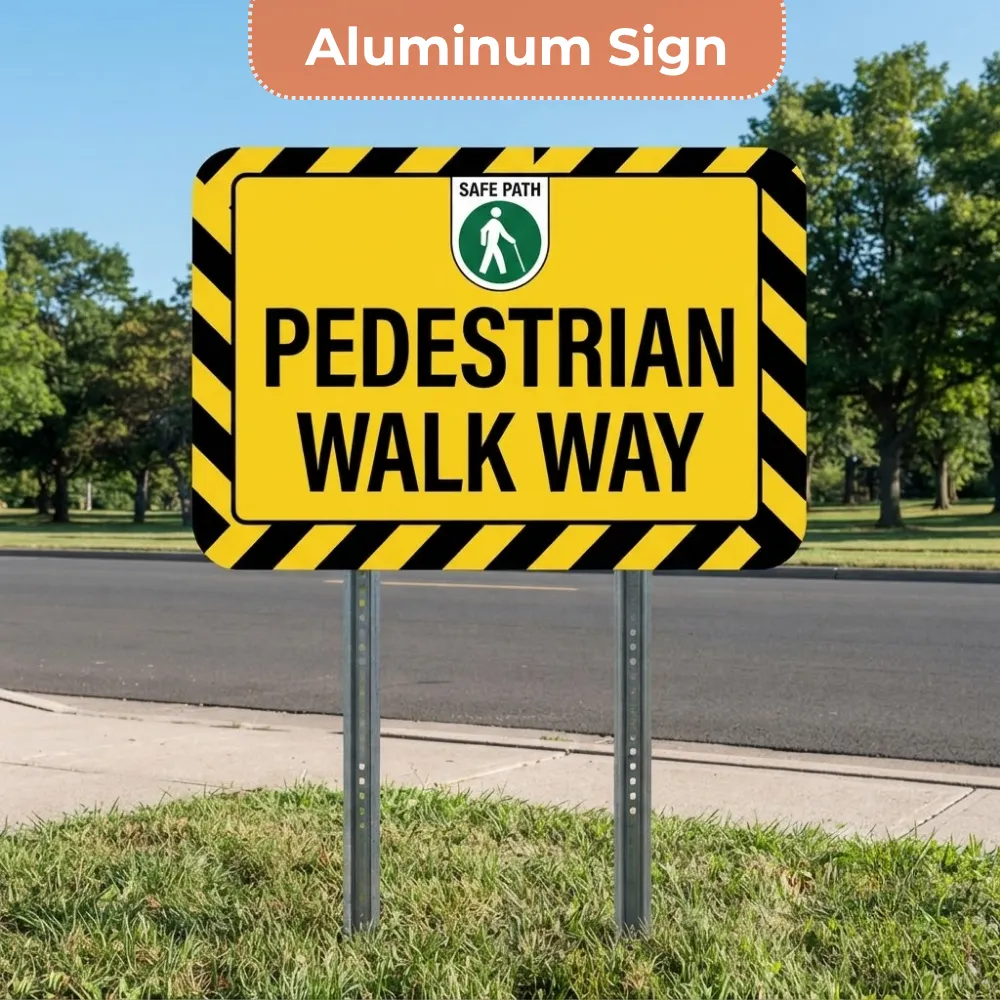
Aluminum Sign :-

  • The Product Material is Aluminum Metal.
  • The printing on the product will be Glossy Finish.
  • Vinyl will be printed first and then will be pasted on the Aluminum Sheet.
  • The Material Thickness is 1.2 MM and the hole Diameter is approximately 5 to 7 MM.
  • We offer Full Color, 840 DPI Full color Printing.
  • UV printing is even available.
  • Mounting Studs are made up of Stainless Steel.

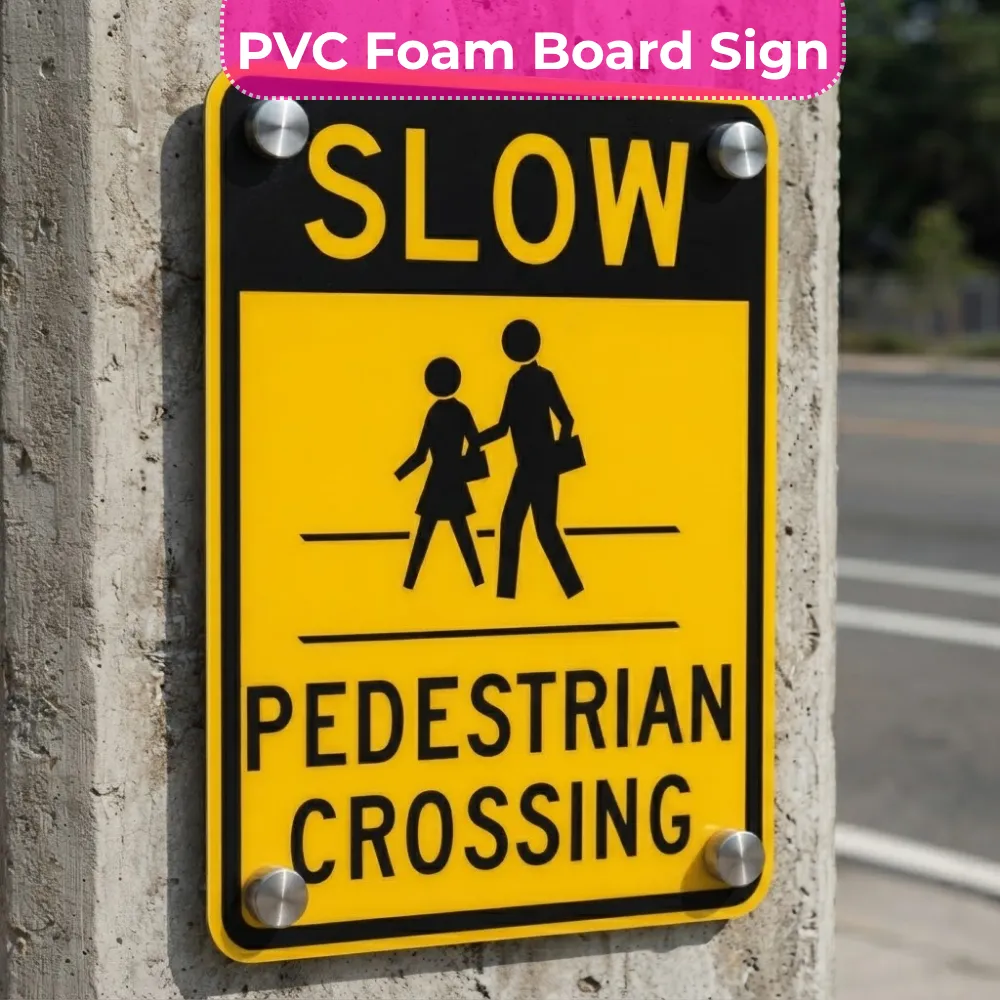
PVC Foam Board Sign :-

  • The Product Material is PVC Foam Board.
  • The printing on the product will be Matte Finish.
  • Vinyl will be printed first and then will be pasted on the Aluminum Sheet.
  • The Material Thickness is 5 MM and the hole Diameter is approximately 5 to 7 MM.
  • We offer Full Color, 840 DPI Full color Printing.
  • UV printing is even available.
  • Mounting Studs are made up of Stainless Steel.

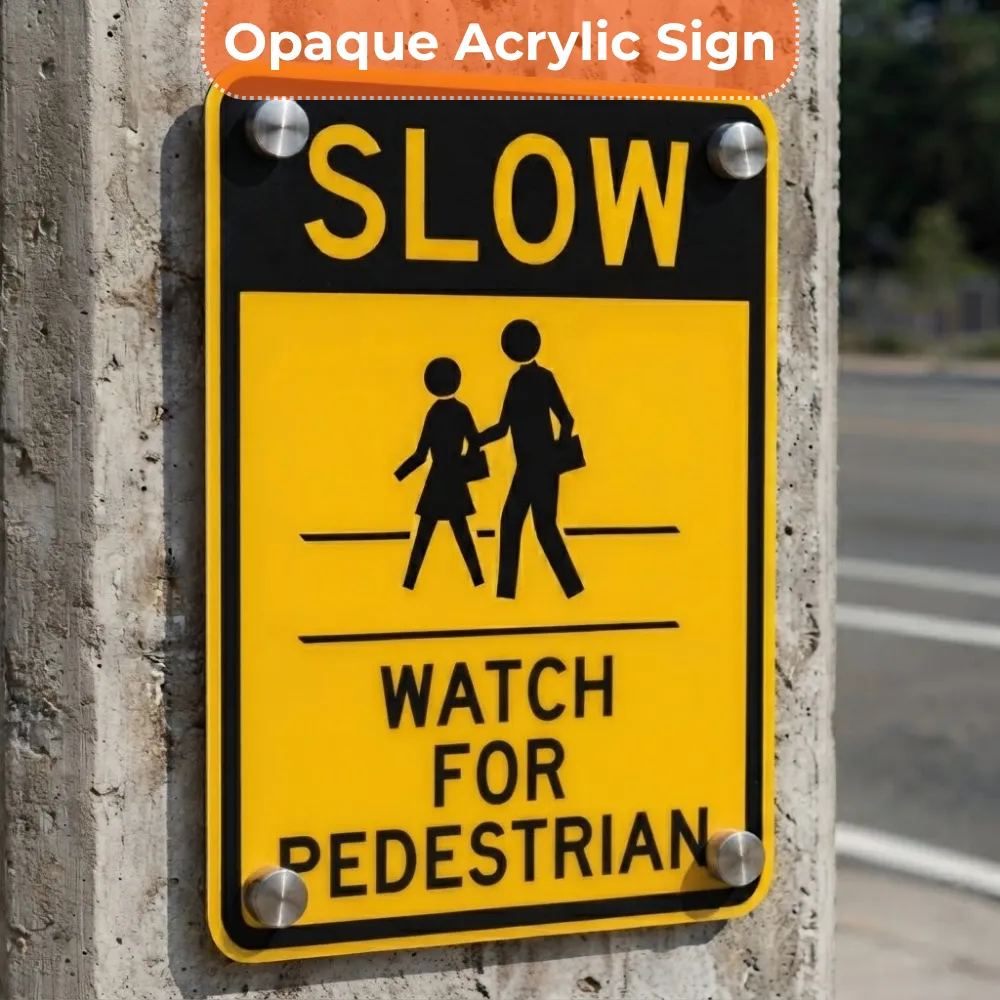
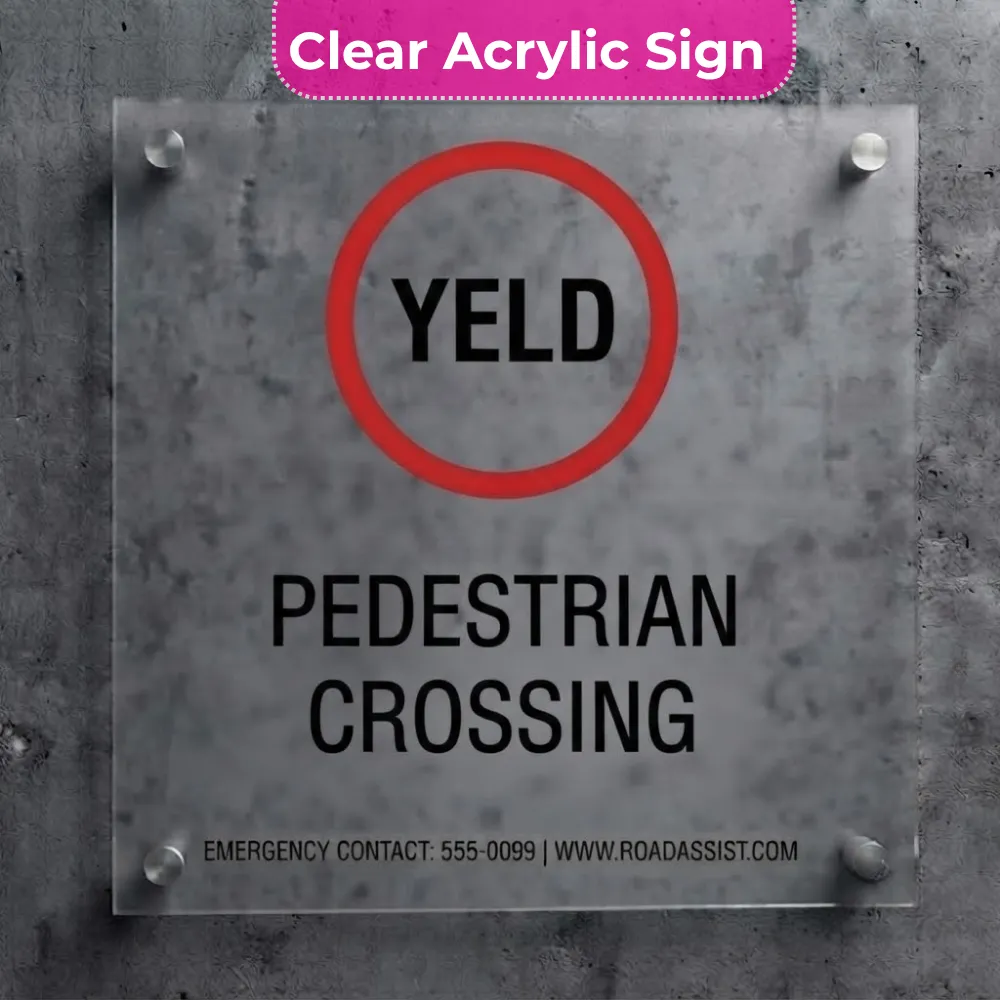
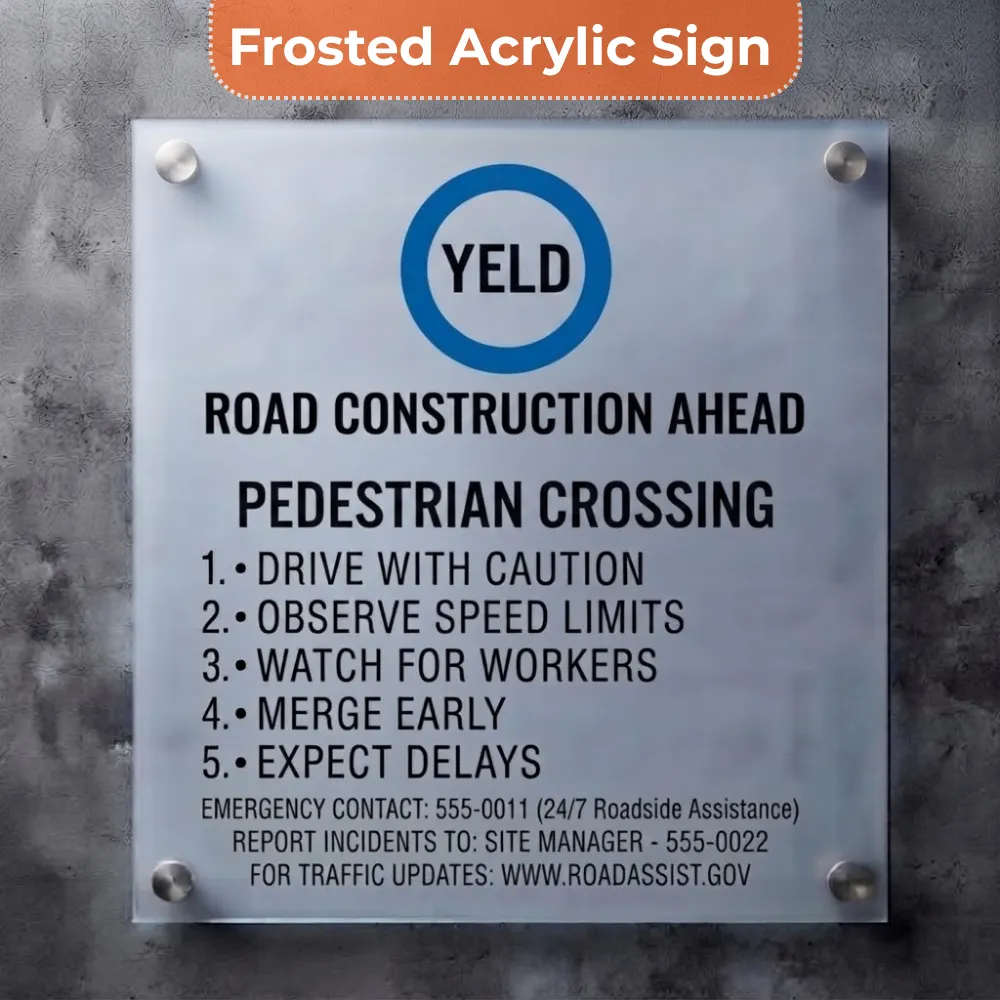
Acrylic Sign :-

  • The Product Material is Acrylic.
  • The printing on the product will be Glossy Finish.
  • We print directly on the sign.
  • The Material Thickness is 6 MM and the hole Diameter is approximately 5 to 7 MM.
  • The Material Weight is 6200 GSM
  • We offer Full Color, 840 DPI Printing.
  • UV printing is even available.
  • Mounting Studs are made up of Stainless Steel.

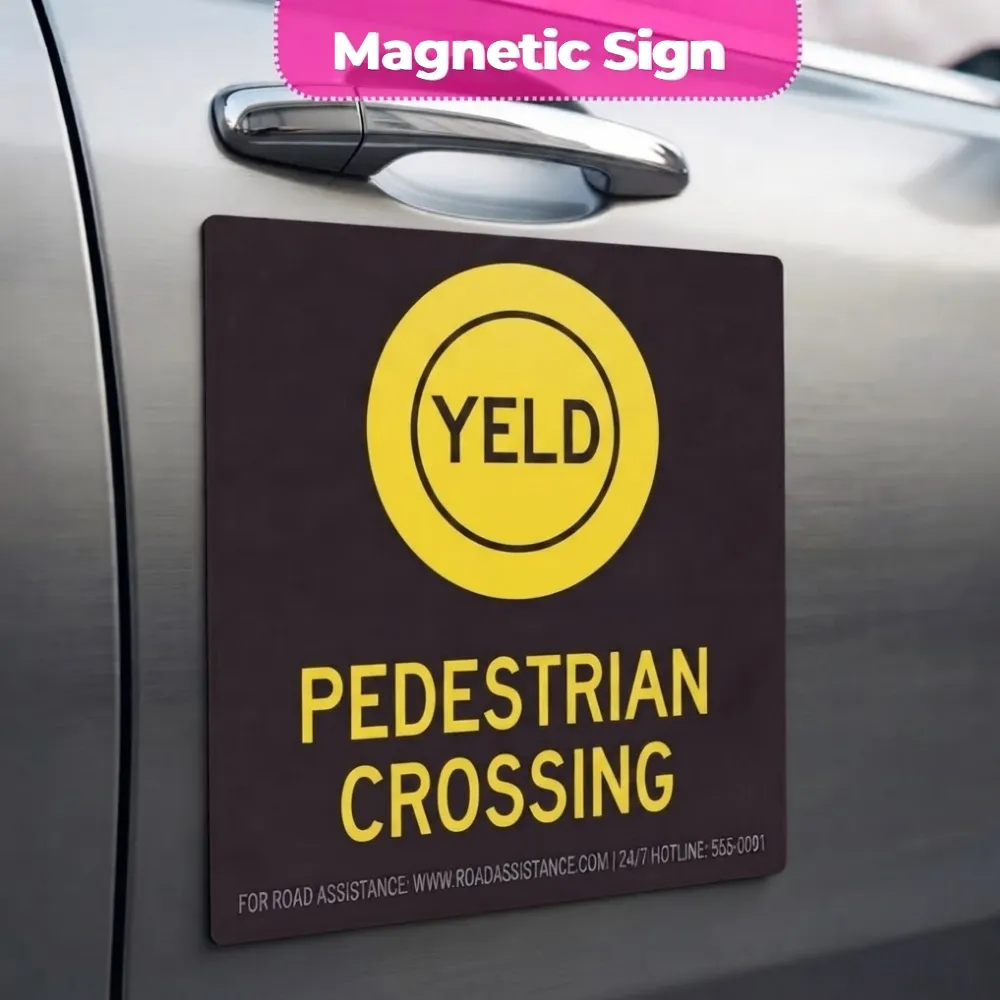
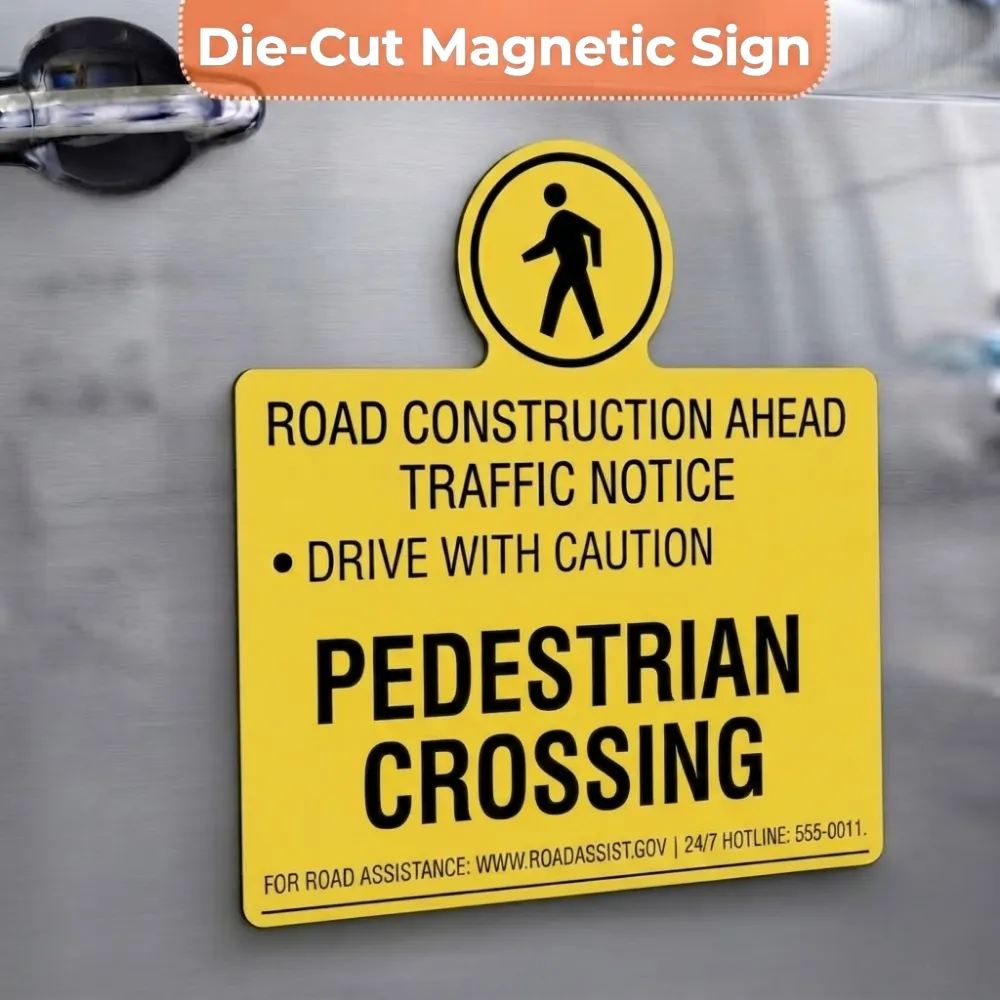
Magnetic Sign :-

  • The Product Material is Flexible Magnetic Sheet.
  • The printing on the product will be Glossy Finish.
  • We print directly on the sign.
  • The Material Thickness is 900 Microns.
  • The Material Weight is 2900 GSM
  • We offer Full Color, 840 DPI Printing.
  • UV printing is 600 DPI is even available.
  • It is built for durability with 75.8 oz weight resists curling, tearing, and wear to vehicle surfaces.

Q: What are pedestrian safety signs?
A: Pedestrian safety signs are visual signs that guide pedestrians, identify safe routes, warn about hazards, and communicate restrictions or required actions.

Q: Why are pedestrian safety signs important?
A: They help pedestrians recognize hazards, follow safe routes, understand traffic conditions, and avoid restricted or dangerous areas.

Q: What are the main types of pedestrian safety signs?
A: Common types include pedestrian crossing, walkway, no pedestrian access, pedestrian detour, watch for vehicles, construction pedestrian, shared-path, and emergency exit signs.

Q: Where are pedestrian safety signs used?
A: They are commonly used at roads, construction sites, parking areas, schools, workplaces, hospitals, public facilities, transport areas, and pedestrian paths.

Q: What is the purpose of a pedestrian crossing sign?
A: A pedestrian crossing sign identifies or warns about a designated or expected pedestrian crossing area, helping road users and pedestrians recognize potential crossing activity.

Q: What are pedestrian detour signs?
A: Pedestrian detour signs direct people to an alternative walking route when a normal sidewalk, walkway, or crossing is temporarily unavailable.

Q: What makes a pedestrian safety sign effective?
A: An effective sign is clear, visible, legible, recognizable, durable, correctly positioned, and appropriate for the specific hazard or instruction.

Q: Where should pedestrian safety signs be placed?
A: Signs should be positioned where pedestrians can see, understand, and respond to the information before reaching the relevant hazard, crossing, restriction, or route change.

Q: Should pedestrian safety signs be reflective?
A: Reflective materials or suitable illumination can improve visibility during nighttime and low-light conditions, depending on the location and applicable requirements.

Q: What materials are used for pedestrian safety signs?
A: Common materials include Corrugated/Coroplast plastic, PVC Foam Board, Aluminum, Acrylic and Magnetic, selected according to the installation environment.

Q: How large should a pedestrian safety sign be?
A: Sign size depends on viewing distance, location, sign type, pedestrian traffic, environmental conditions, and applicable standards. Text and symbols should remain clearly legible.

Q: Can pedestrian safety signs be used at construction sites?
A: Yes. They can guide pedestrians around construction hazards, temporary closures, excavation areas, vehicle routes, and temporary walkways or detours.

Q: How do pedestrian signs improve construction-site safety?
A: They help separate pedestrian movement from construction activities, communicate hazards, identify temporary routes, and restrict access to dangerous areas.

Q: Are pedestrian safety signs required by law?
A: Some signs may be required by traffic, workplace safety, accessibility, building, or local regulations. Requirements vary according to the location and application.

Q: What symbols are commonly used on pedestrian safety signs?
A: Common symbols include walking pedestrians, crossing pedestrians, directional arrows, accessibility symbols, vehicles, and hazard pictograms, depending on the sign’s purpose.

Q: How should pedestrian safety signs be maintained?
A: Signs should be inspected for fading, damage, dirt, obstruction, poor visibility, loose mounting, or outdated information and corrected or replaced when necessary.

Q: When should a pedestrian safety sign be replaced?
A: Replace a sign when it becomes damaged, faded, illegible, unstable, obstructed, or no longer accurately communicates the current pedestrian condition.

Q: Can pedestrian safety signs replace barriers?
A: No. Signs provide information but do not physically separate pedestrians from hazards. Barriers, barricades, guardrails, lighting, and other controls may be necessary depending on the risk.

Q: What is the difference between a pedestrian warning sign and a pedestrian direction sign?
A: A warning sign alerts pedestrians or road users to a potential hazard, while a direction sign provides information about where pedestrians should go or which route to follow.

Q: How do you choose the right pedestrian safety sign?
A: Choose the sign based on the hazard or instruction, pedestrian route, viewing distance, location, lighting, environmental conditions, intended users, duration of use, and applicable safety standards.

Home Shop Cart 0 Wishlist Account

Subscribe To Our Newsletter

Welcome To the eBannerSigns family. Fill the details and stay updated with Offers & New Product Launch.

Shopping Cart (0)

No products in the cart. No products in the cart.

For Bulk Orders