HALLOWEEN SUPER SALE 30% OFF USE CODE: SPOOKY
| ShippingMethod | Fixed Price(Unlimited QTY) |
|---|---|
| Priority* | $30 |
| Express* | $20 |
Size (W X H)
Size (W X H)

Kindly share the artwork via email at design@printwithebannersigns.com
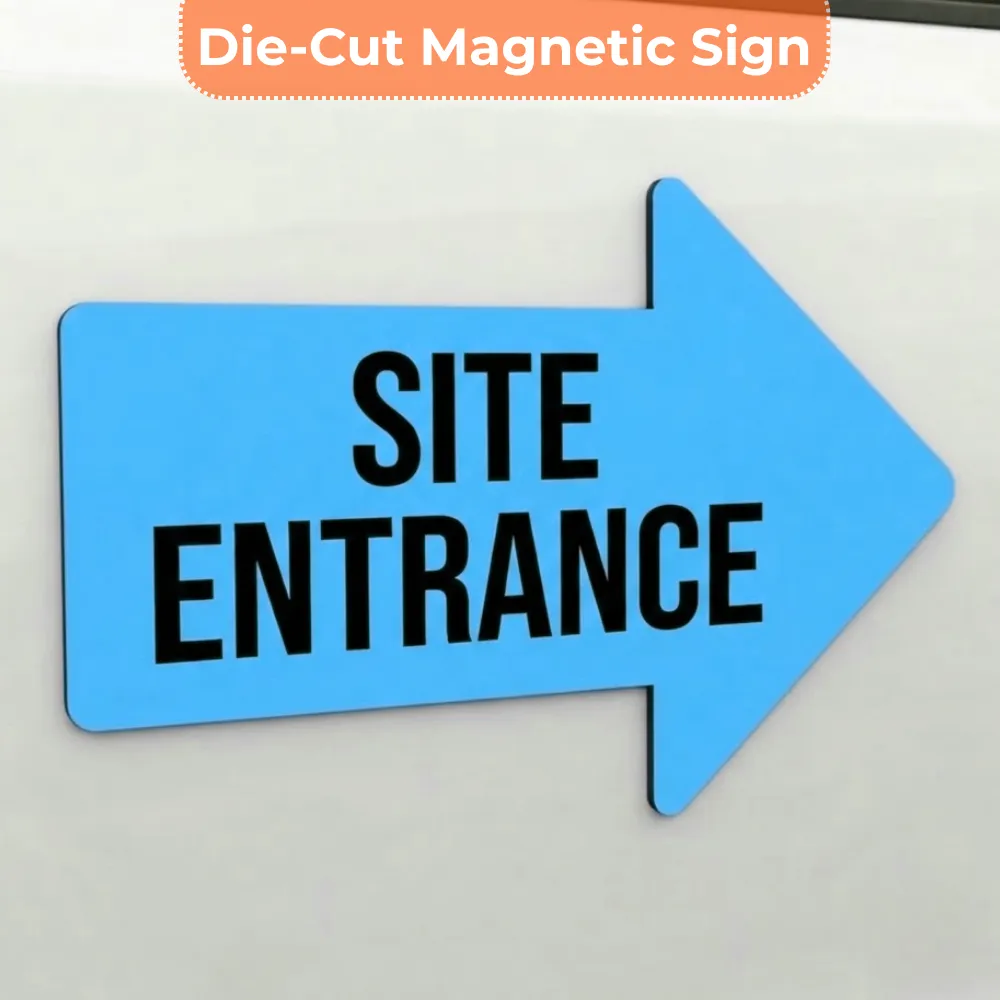
Site entrance signs are identification, directional, safety, and access-control signs installed at the entrance of construction sites, industrial facilities, warehouses, commercial properties, private premises, public facilities, and other controlled areas. They provide important information to visitors, workers, drivers, contractors, and pedestrians before they enter the site.
An effective site entrance sign should make it clear where the site begins, who may enter, what safety requirements apply, and where visitors should go.
A site entrance sign should clearly identify the name, type, purpose, or operator of the site where appropriate. Clear identification helps visitors and delivery personnel confirm that they have reached the correct location.
Entrance signs should be easy to notice from the expected approach. Strong contrast, suitable colors, clear typography, adequate size, and strategic positioning improve visibility for drivers, pedestrians, and visitors.
Important information should be presented using concise wording, readable fonts, and clear layouts. Visitors should be able to understand the key message without spending excessive time reading the sign.
Where applicable, entrance signs can communicate essential safety requirements before entry, such as:
Site entrance signs can clearly communicate who is permitted to enter and what authorization or procedure is required. This is particularly important for construction sites, industrial facilities, warehouses, and restricted areas.
Effective entrance signage can guide visitors toward important locations such as:
Directional information should be clear and consistent with other signs throughout the site.
Where appropriate, standardized symbols and pictograms can communicate safety requirements, restrictions, directions, and hazards quickly. Symbols are especially useful for multilingual sites or locations with frequent visitors.
The sign should be large enough for its information to remain clearly visible at the expected approach distance. Site entrances used by vehicles may require larger signs than pedestrian-only entrances.
Where entrances operate at night or in low-light conditions, retroreflective materials, lighting, or suitable illumination can improve visibility. The appropriate solution depends on the location, traffic conditions, and applicable requirements.
Outdoor entrance signs are exposed to sunlight, rain, wind, dust, moisture, temperature changes, and physical wear. Suitable materials and finishes help maintain their appearance, legibility, and structural condition.
Entrance signs should be positioned where visitors and road users can see and understand the information before entering the site or reaching an access decision point.
Signs should not be hidden by vehicles, vegetation, gates, buildings, equipment, or other obstructions.
Signs should be securely mounted and correctly oriented so they remain stable during normal weather and site operations. The installation should not create a hazard for pedestrians or vehicles.
Entrance signs should be coordinated with internal directional, safety, warning, regulatory, and emergency signs. Consistent terminology, symbols, and visual design make the site easier to navigate.
Where appropriate, entrance signage should consider the needs of people with disabilities. Clear visual contrast, readable information, accessible routes, and suitable sign placement can improve accessibility. Specific requirements depend on the location and applicable regulations.
Site conditions can change during construction and other projects. Entrance signs should be easy to inspect, clean, update, relocate, or replace when access routes, safety requirements, contractors, or site operations change.
Site entrance signage should follow the applicable workplace safety, construction, traffic, fire-safety, accessibility, and local signage requirements. Exact requirements vary by site type, jurisdiction, and intended use.
Site entrance signs are identification, directional, safety, and access-control signs installed at the entrances of construction sites, industrial facilities, warehouses, commercial properties, private premises, infrastructure projects, and other controlled locations. Their purpose is to provide essential information to workers, visitors, contractors, delivery drivers, pedestrians, and other site users before they enter.
A well-designed site entrance sign helps people quickly understand where they are, whether they are authorized to enter, what safety requirements apply, and where they should go.
Site entrances are often the first point where people encounter a site’s safety rules and access procedures. Clear entrance signage can help:
Entrance signs are most effective when combined with appropriate gates, barriers, traffic controls, pedestrian routes, lighting, security procedures, and site safety management systems.
The exact signs required depend on the type and purpose of the site. Common examples include:
Q: What are site entrance signs?
A: Site entrance signs are identification, safety, directional, and access-control signs placed at site entrances to inform visitors, workers, contractors, pedestrians, and drivers about entry requirements and site conditions.
Q: Why are site entrance signs important?
A: They help identify the site, communicate safety rules, control access, direct visitors, and improve awareness of potential hazards before people enter.
Q: Where are site entrance signs used?
A: They are commonly used at construction sites, factories, warehouses, industrial facilities, infrastructure projects, commercial properties, private premises, and controlled-access areas.
Q: What information should a site entrance sign include?
A: Depending on the site, it may include site identification, visitor instructions, PPE requirements, access restrictions, vehicle directions, pedestrian routes, safety warnings, and emergency information.
Q: What are the main types of site entrance signs?
A: Common types include site identification, construction entrance, visitor entrance, authorized personnel only, PPE requirement, vehicle entrance, pedestrian entrance, delivery entrance, warning, no-entry, and directional signs.
Q: What makes a site entrance sign effective?
A: An effective sign is clear, highly visible, easy to read, appropriately sized, durable, correctly positioned, and relevant to the site’s access and safety requirements.
Q: Where should site entrance signs be placed?
A: They should be positioned where people can see and understand the information before entering the site or reaching an access decision point.
Q: Should site entrance signs be reflective?
A: Reflective materials can improve visibility during nighttime and low-light conditions, particularly at entrances used by vehicles or pedestrians after dark.
Q: What materials are used for site entrance signs?
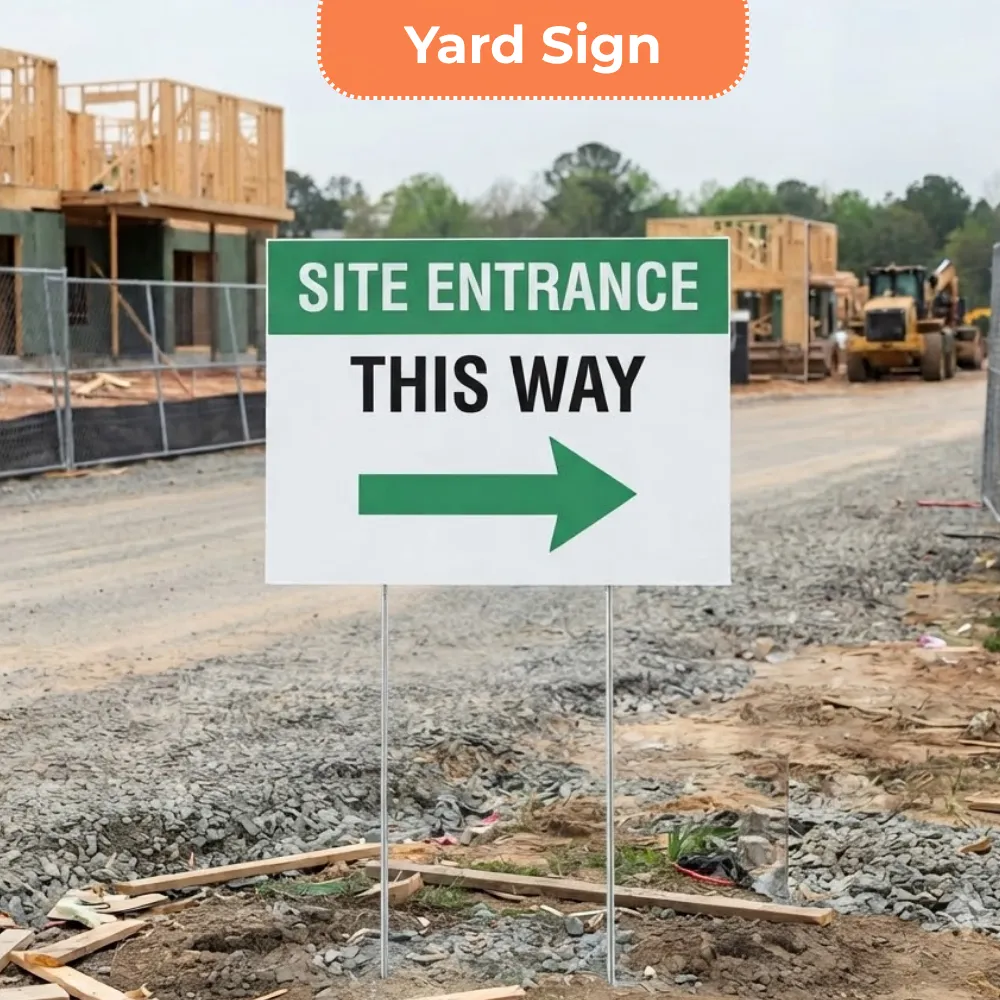
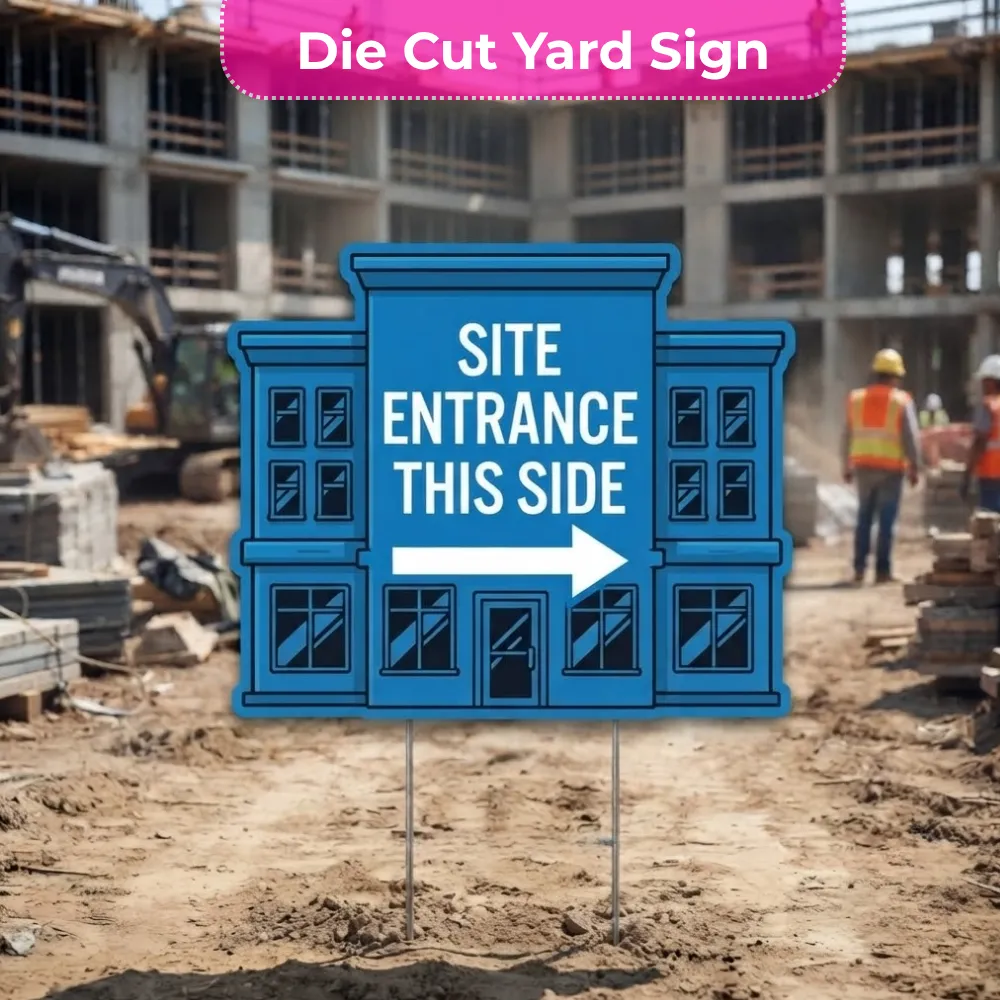
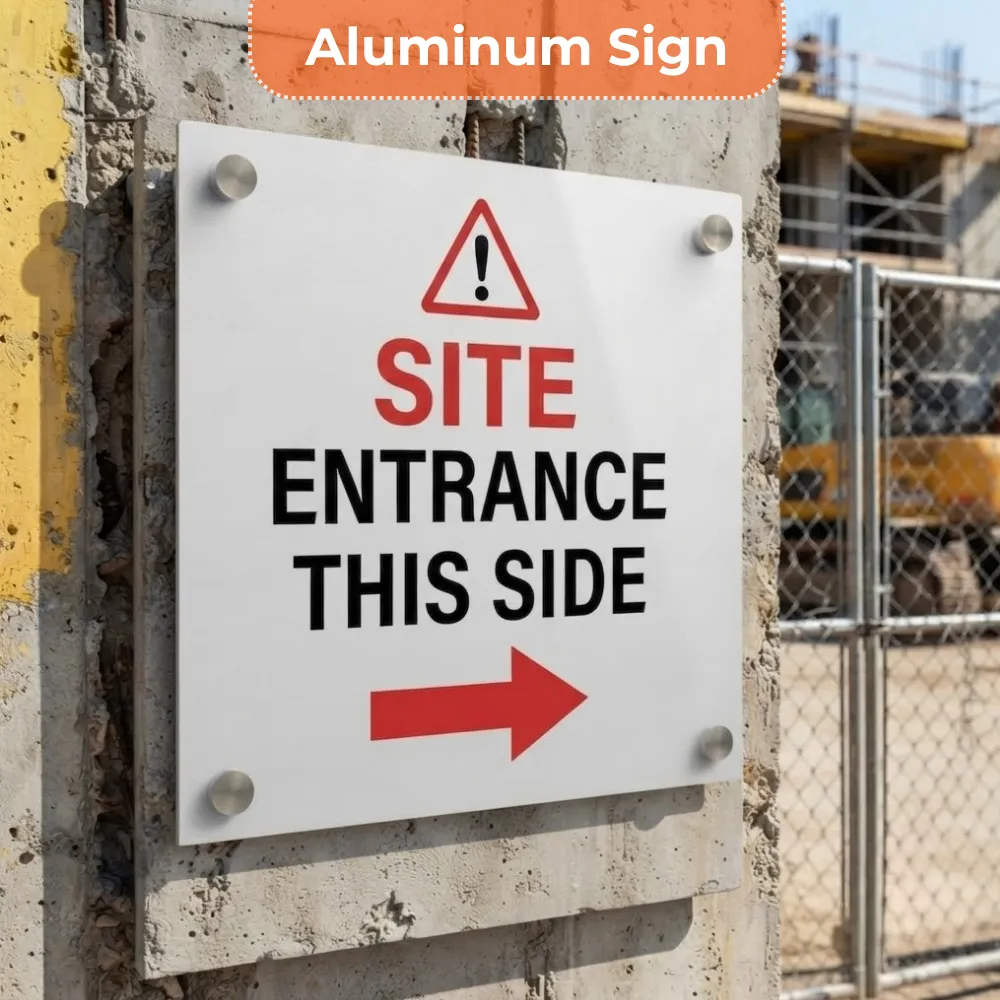
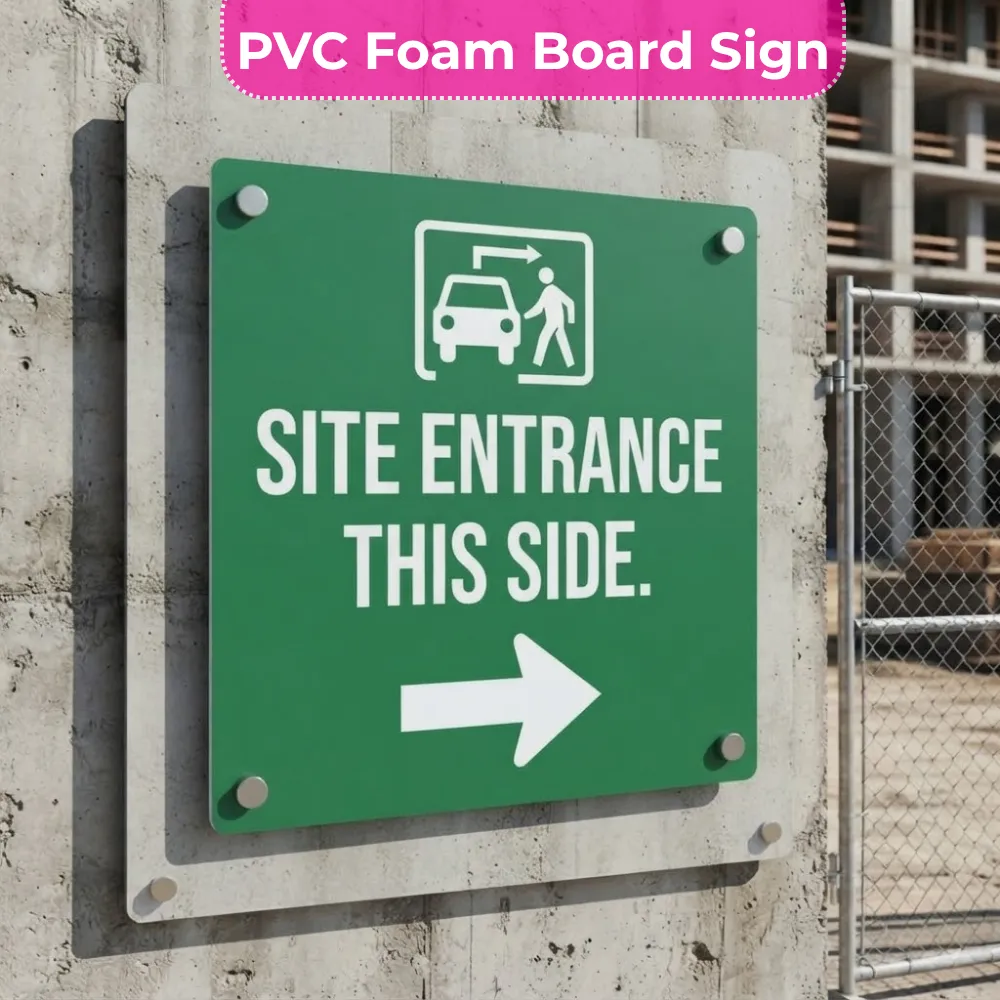
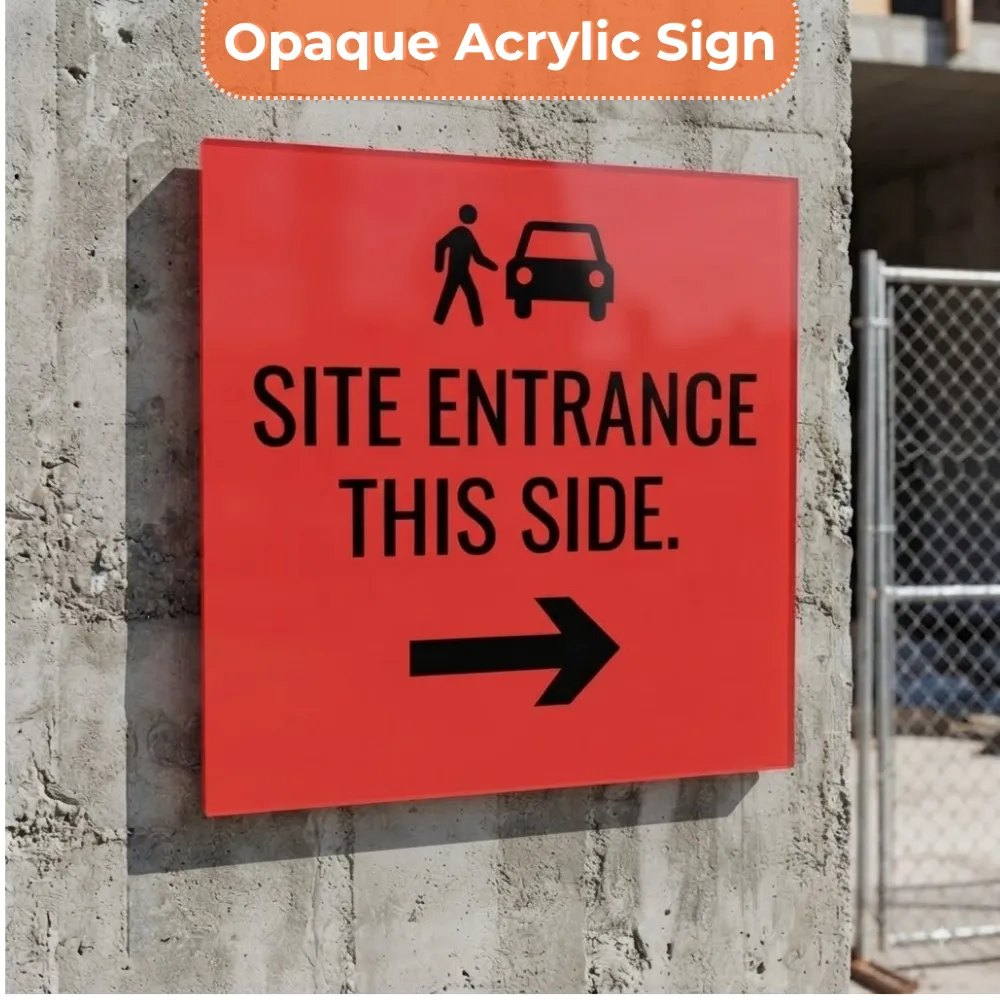
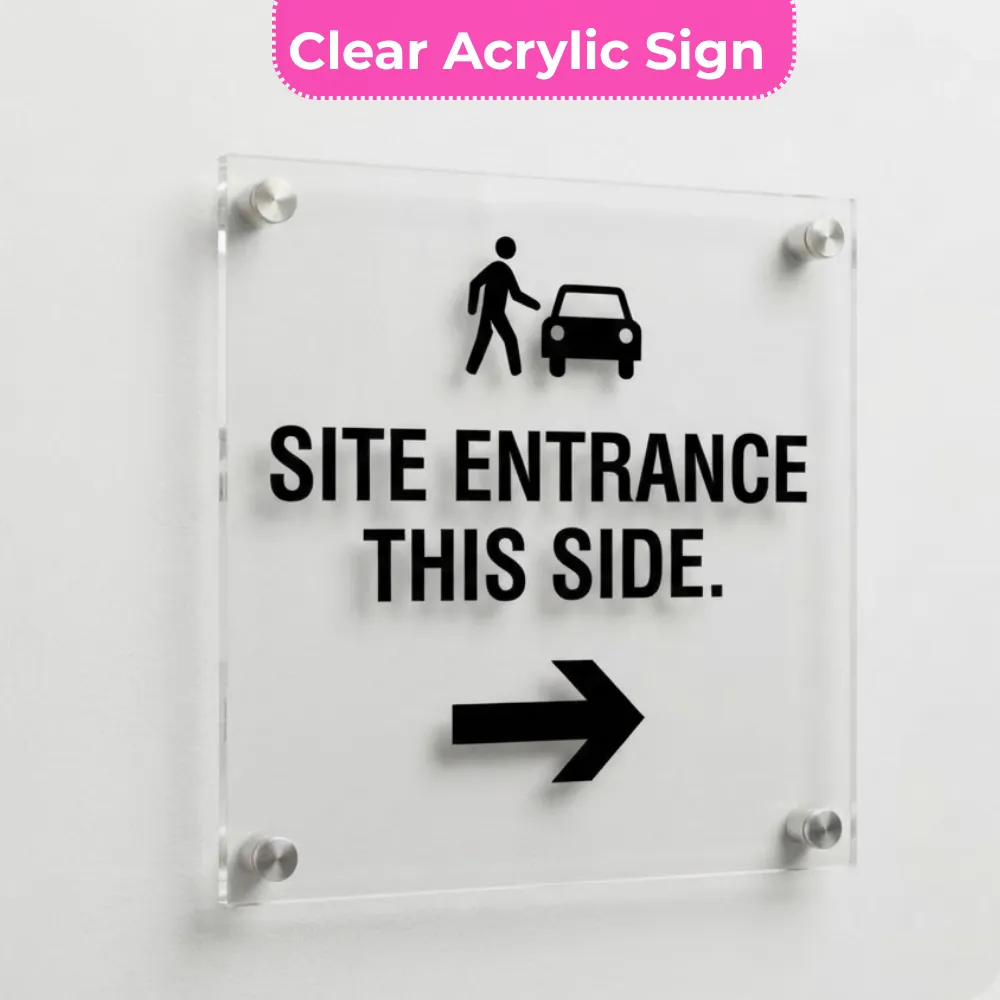
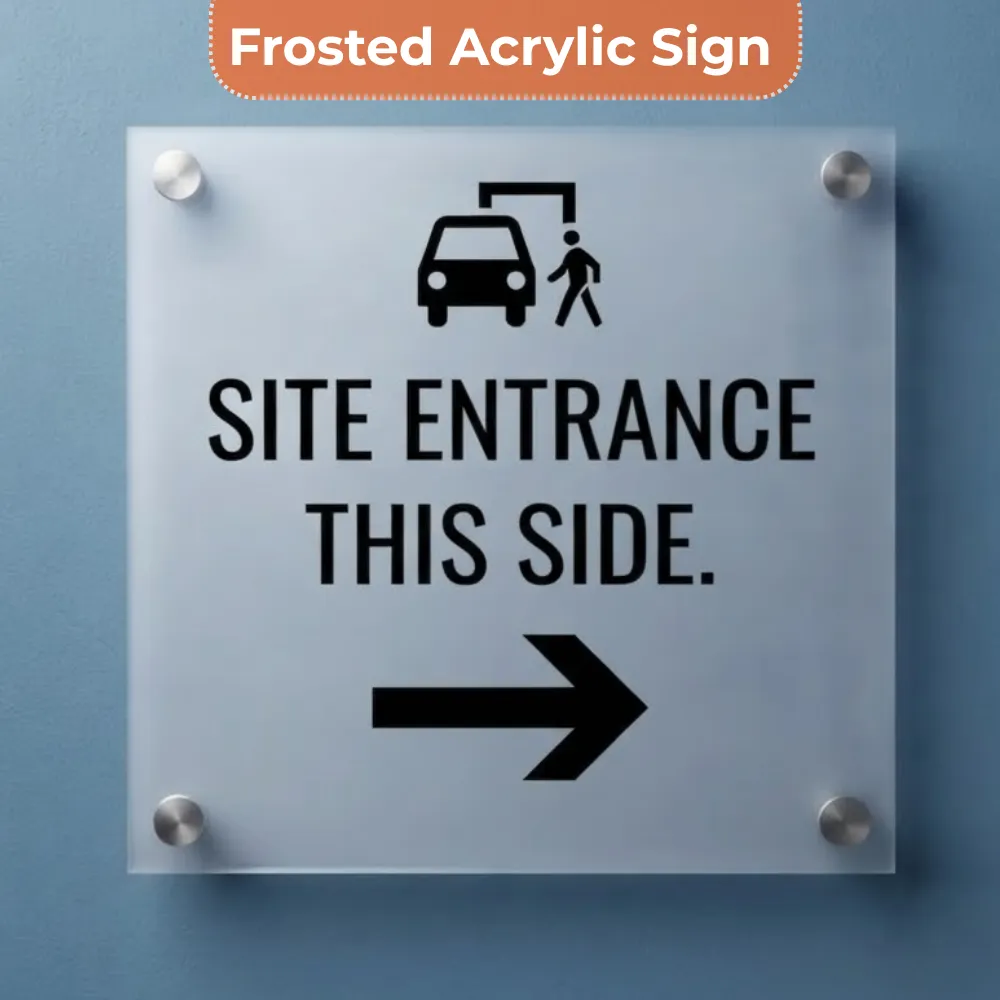
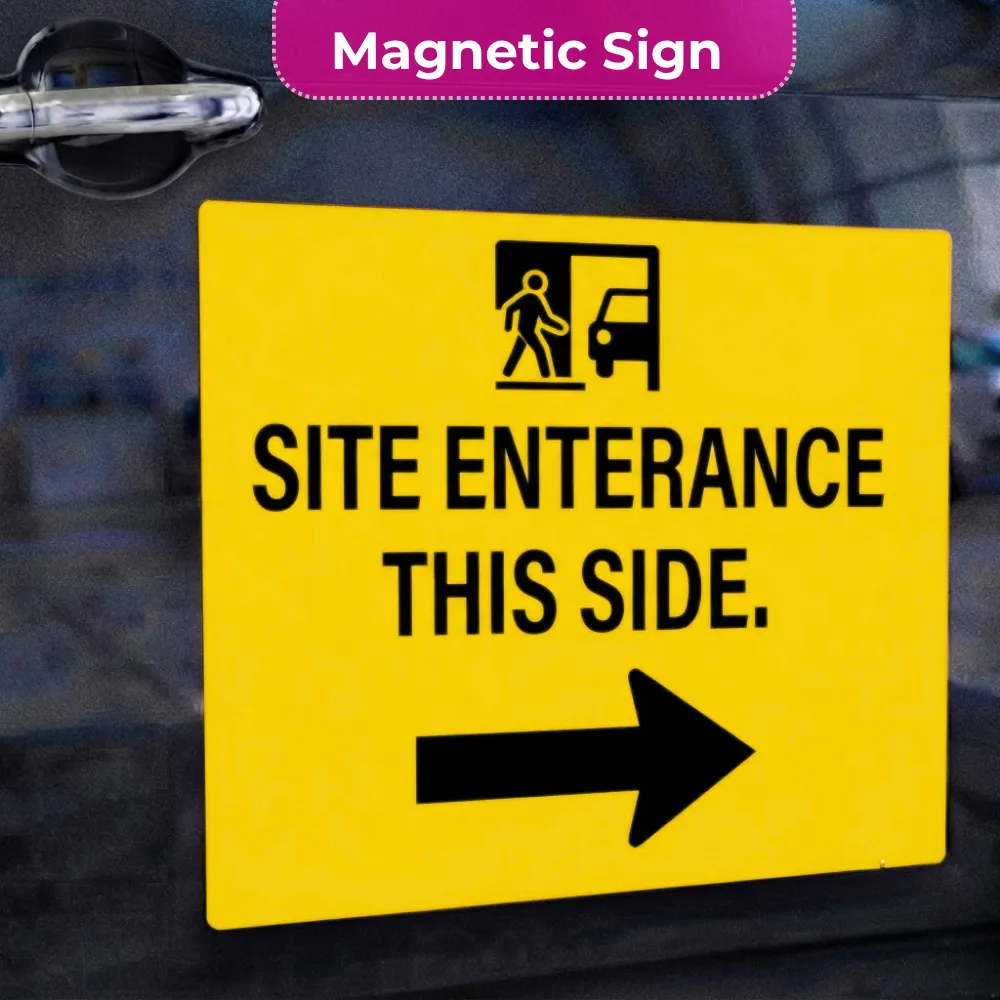
A: Common materials include Corrugated/Coroplast plastic, PVC Foam Board, Aluminum, Acrylic and Magnetic depending on the application and environment.
Q: How large should a site entrance sign be?
A: Sign size depends on viewing distance, entrance layout, traffic speed, sign content, lighting, and applicable requirements. Information should remain clearly legible from the intended approach.
Q: What safety information should construction site entrance signs display?
A: Construction entrances may communicate required PPE, visitor reporting procedures, access restrictions, vehicle movement, site hazards, speed limits, and designated pedestrian routes.
Q: Can site entrance signs control access?
A: They can communicate access restrictions and entry procedures, but physical access control may also require gates, barriers, security systems, or authorized personnel.
Q: Are site entrance signs legally required?
A: Some entrance signs may be required by construction, workplace safety, traffic, fire-safety, accessibility, or local regulations. Requirements vary by location, industry, and site type.
Q: Can site entrance signs be customized?
A: Yes. They can be customized with site names, project information, visitor instructions, safety rules, directional information, contact details, and site-specific warnings, subject to applicable requirements.
Q: How do site entrance signs improve construction-site safety?
A: They provide information about site hazards, PPE requirements, access restrictions, traffic movement, and visitor procedures before people enter active work areas.
Q: Should site entrance signs include PPE requirements?
A: Where PPE is required, entrance signage can clearly communicate which protective equipment must be worn before entering the site or a designated area.
Q: How should site entrance signs be maintained?
A: They should be regularly checked for fading, damage, dirt, corrosion, obstruction, poor visibility, loose mounting, and outdated information.
Q: When should a site entrance sign be replaced?
A: Replace a sign when it becomes damaged, faded, illegible, unstable, obstructed, or no longer accurately represents current site conditions or entry requirements.
Q: Can site entrance signs replace other safety controls?
A: No. Signs communicate information but do not physically control hazards. They should complement barriers, gates, pedestrian routes, traffic controls, lighting, training, and other appropriate safety measures.
Q: How do you choose the right site entrance sign?
A: Choose the sign based on the site type, access requirements, hazards, intended audience, viewing distance, lighting, environmental conditions, sign location, and applicable safety standards and regulations.

Sign in or create an account to add this product to your cart.

No products in the cart.