HALLOWEEN SUPER SALE 30% OFF USE CODE: SPOOKY

HALLOWEEN SUPER SALE 30% OFF USE CODE: SPOOKY

Project Information Signs

SKU:PIS371
Shipping
Method
Fixed Price
(Unlimited QTY)
Priority*$30
Express*$20

    Size (W X H)

    Size (W X H)

    • (max file size 1 GB)

    Kindly share the artwork via email at design@printwithebannersigns.com

24/7 chat support

Unlimited Mockup Revisals

On Time delivery

Secured Payment

Key Features of Project Information Signs: –

Project information signs are informational signs or boards displayed at construction, infrastructure, commercial, residential, and development projects to communicate important details about the project, developer, contractor, consultants, timeline, site information, contact details, and public-facing notices.

A well-designed project information sign helps visitors, workers, authorities, contractors, and members of the public quickly understand what project is taking place, who is responsible for it, and where to find relevant information.

  1. Clear Project IdentificationA project information sign should clearly identify the project using an easy-to-read project name or development title.

    It may include:

    • Project Name
    • Development Name
    • Project Type
    • Project Location
    • Project Number
    • Site Address

    Clear identification helps distinguish the project from nearby construction activities.

  2. Project DescriptionA concise description explains what is being constructed, renovated, expanded, or developed.

    Examples include:

    • Commercial Building Development
    • Residential Development
    • Road Improvement Project
    • Infrastructure Upgrade
    • Industrial Facility Construction
    • Building Renovation

    The description should provide useful context without overcrowding the sign.

  3. Developer or Owner InformationProject information signs may identify the organization responsible for the development.

    Depending on the project, this can include:

    • Developer Name
    • Property Owner
    • Client Name
    • Organization Logo
    • Contact Information

    This provides transparency and helps stakeholders identify the project owner or developer.

  4. Contractor InformationConstruction project signs commonly identify the main contractor or construction company responsible for delivering the project.

    Information may include:

    • General Contractor
    • Main Contractor
    • Construction Company Name
    • Company Logo
    • Contact Details

    Where required, contractor information should be presented according to applicable project or local authority requirements.

  5. Architect and Consultant DetailsDepending on the project, project signage may identify key professional teams, such as:
    • Architect
    • Structural Engineer
    • Civil Engineer
    • Project Consultant
    • Project Management Company
    • Landscape Architect
    • Design Consultant

    This is particularly useful for larger commercial and infrastructure projects.

  6. Project LocationThe location should be clearly stated when the project information sign is intended for public or stakeholder communication.

    It may include:

    • Site Address
    • Project Location
    • Building Number
    • Street Name
    • Area or District
    • Site Reference Number

    A clear location helps identify the exact project being undertaken.

  7. Project TimelineWhere appropriate, project information signs can communicate key dates such as:
    • Project Start Date
    • Expected Completion Date
    • Construction Duration
    • Project Phase
    • Scheduled Work Period

    Project dates should be updated if the timeline changes significantly.

  8. Project Contact InformationContact details allow stakeholders to obtain project-related information or report relevant concerns.

    Depending on the project, information may include:

    • Project Office
    • Contractor Contact
    • Site Office
    • Telephone Number
    • Email Address
    • Website
    • Customer or Community Contact

    Only current and appropriate contact information should be displayed.

  9. High-Visibility DesignProject information signs should be easy to notice and read from an appropriate viewing distance.

    Visibility can be improved through:

    • Strong color contrast
    • Appropriate sign dimensions
    • Clear typography
    • Adequate spacing
    • Logical information hierarchy
    • High-quality graphics

    Important information should receive greater visual prominence than secondary details.

  10. Easy-to-Read TypographyProject signs should use simple, legible fonts and appropriate text sizes.

    Avoid excessive decorative typography, tightly packed text, or low-contrast combinations that make the information difficult to read.

  11. Professional AppearanceA project information board represents the project and its stakeholders. A professional design can help communicate a sense of organization, credibility, transparency, and project identity.

    Branding can include:

    • Company Logos
    • Project Logo
    • Brand Colors
    • Professional Graphics
    • Consistent Typography

    Branding should not reduce the visibility or readability of essential project information.

  12. Clear Information HierarchyInformation should be organized so readers can identify the most important details quickly.

    A practical hierarchy can be:

    Project Name → Project Description → Developer/Owner → Contractor → Consultants → Timeline → Contact Information

    This makes the sign easier to scan.

  13. Durable ConstructionOutdoor project information signs may be exposed to:
    • Sunlight
    • Rain
    • Wind
    • Dust
    • Moisture
    • Temperature changes

    Materials should therefore be selected according to the expected environment, project duration, installation method, and required durability.

  14. Weather ResistanceFor outdoor construction projects, project information boards should be designed to withstand expected weather conditions without excessive fading, warping, corrosion, or deterioration.

    Common material options may include:

    • Aluminum
    • Composite panels
    • PVC
    • Acrylic
    • Galvanized metal
    • Weather-resistant printed panels
  15. Secure InstallationProject information signs should be securely mounted so they remain:
    • Stable
    • Upright
    • Visible
    • Correctly positioned
    • Resistant to expected environmental conditions

    Installation methods should be appropriate for the sign’s size, weight, location, and exposure.

  16. Public-Facing InformationFor projects visible from public areas, project information signs can help communicate relevant information to:
    • Nearby residents
    • Pedestrians
    • Visitors
    • Local businesses
    • Authorities
    • Contractors
    • Project stakeholders

    The information should be accurate, relevant, and easy to understand.

  17. Regulatory and Permit InformationDepending on the jurisdiction and project type, project signage may need to display certain permit, approval, planning, contractor, or regulatory information.

    Requirements vary by location, so project owners should verify applicable local regulations before finalizing the sign.

Overview of Project Information Signs: –

Project information signs are informational boards or signs used at construction, infrastructure, commercial, residential, industrial, and development projects to communicate important details about a project to workers, visitors, contractors, authorities, stakeholders, nearby residents, and the public.

A project information sign typically identifies what is being developed, where the project is located, who is responsible for the work, what stage or timeline the project follows, and how relevant stakeholders can obtain additional information.

Unlike warning or mandatory safety signs, which communicate immediate hazards and required actions, project information signs focus primarily on project identification, transparency, communication, and public awareness.

What Are Project Information Signs?

Project information signs are large-format informational signs or boards placed at or near a project site.

Depending on the project, they may display:

  • Project name
  • Project description
  • Project location
  • Developer or owner
  • Main contractor
  • Architect
  • Engineers and consultants
  • Project manager
  • Project reference number
  • Permit or approval information
  • Construction timeline
  • Expected completion date
  • Contact information
  • Website or QR code
  • Project logo and branding

The exact information displayed depends on the project type, location, intended audience, and applicable requirements.

Why Are Project Information Signs Important?

Construction and development projects can affect workers, visitors, surrounding communities, businesses, road users, and other stakeholders.

A well-designed project information board can help:

  • Identify the project clearly.
  • Explain the purpose of the development.
  • Identify key project organizations.
  • Provide relevant contact information.
  • Improve public awareness.
  • Support project transparency.
  • Communicate important project updates.
  • Provide a professional project identity.
  • Direct stakeholders to additional information.

For public-facing projects, signage can serve as an important first point of communication between the project team and the surrounding community.

Yard Sign :-

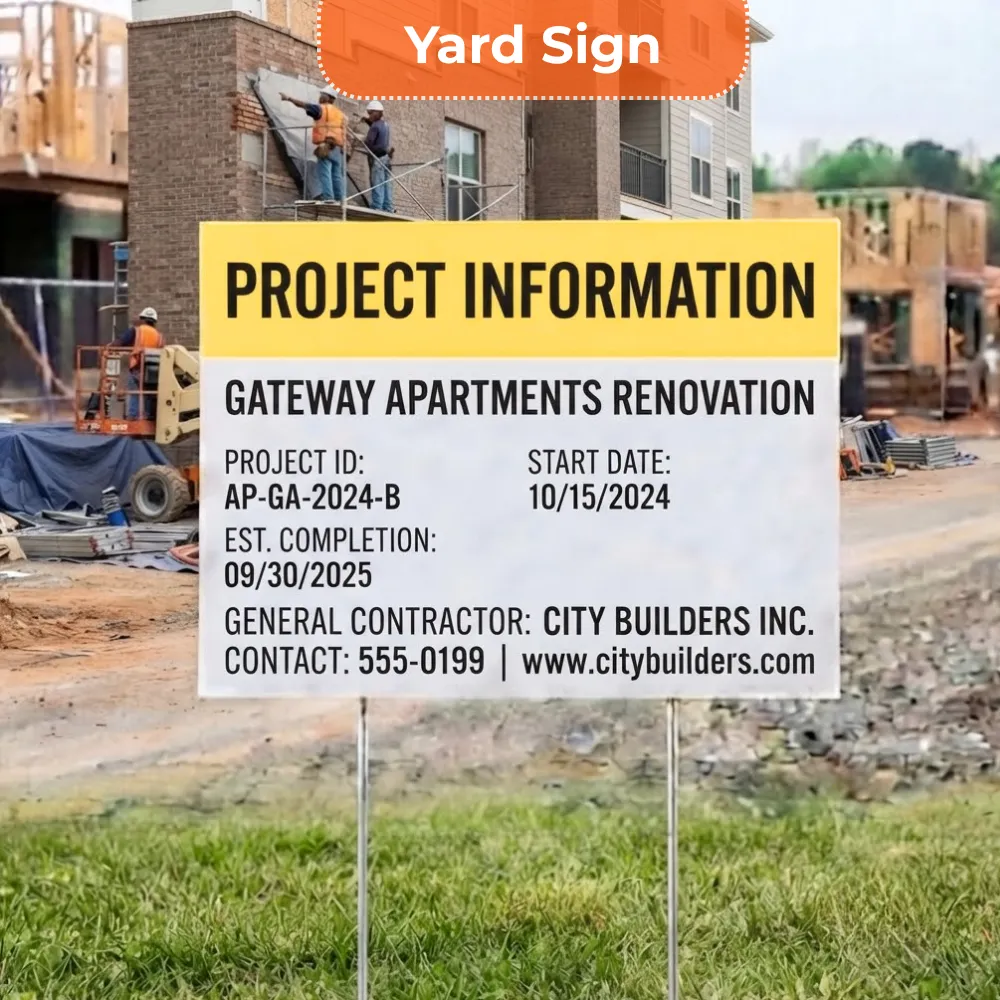
  • The Product Material is corrugated plastic (Coroplast).
  • The printing on the product will be Glossy Finish and would be direct on the Coroplast Sheet.
  • The Material weight is 1010 GSM and the Thickness is 6mm.
  • We offer Full Color, 720 DPI Full Color Printing.
  • UV printing is even available.
  • Metal Stakes are made up of Aluminum Material.
  • The quality of the Metal Stakes is 1000 Series Aluminum metal.
  • Please request for Metal grommets at additional cost.

Aluminum Sign :-

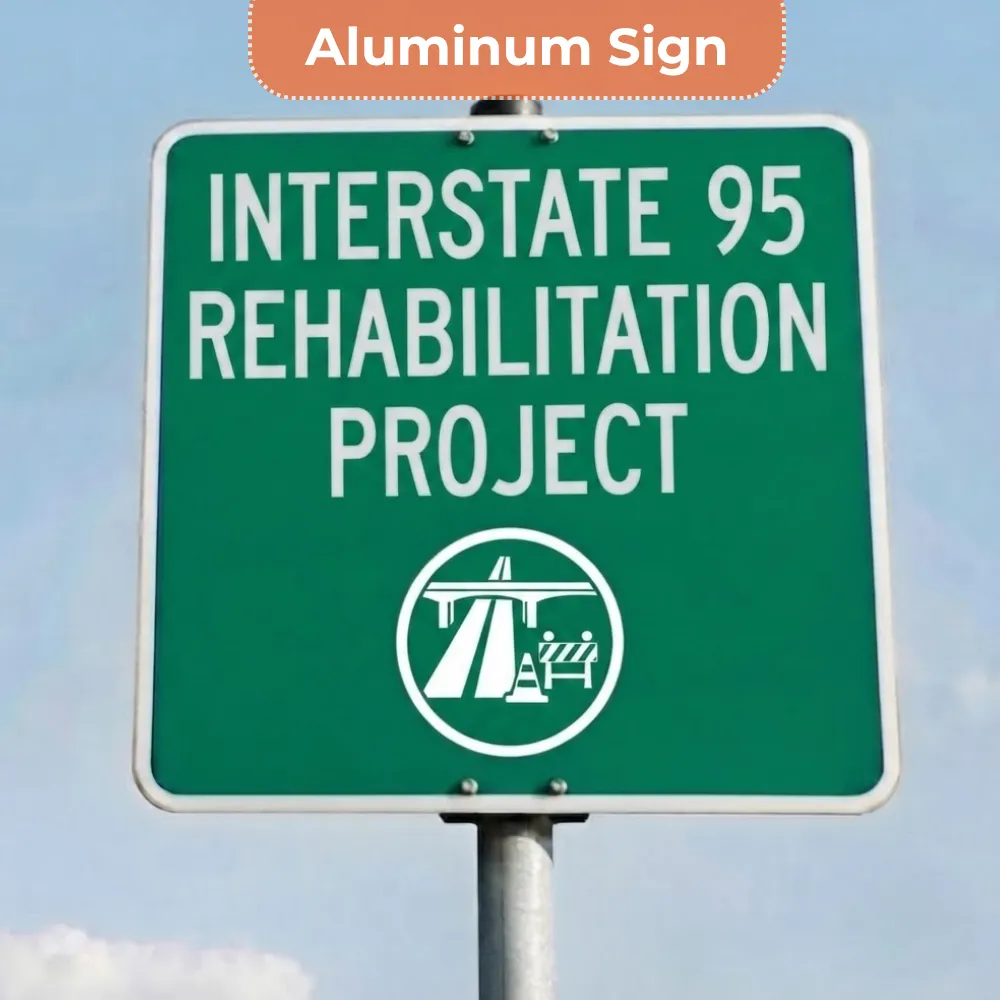
  • The Product Material is Aluminum Metal.
  • The printing on the product will be Glossy Finish.
  • Vinyl will be printed first and then will be pasted on the Aluminum Sheet.
  • The Material Thickness is 1.2 MM and the hole Diameter is approximately 5 to 7 MM.
  • We offer Full Color, 840 DPI Full color Printing.
  • UV printing is even available.
  • Mounting Studs are made up of Stainless Steel.

PVC Foam Board Sign :-

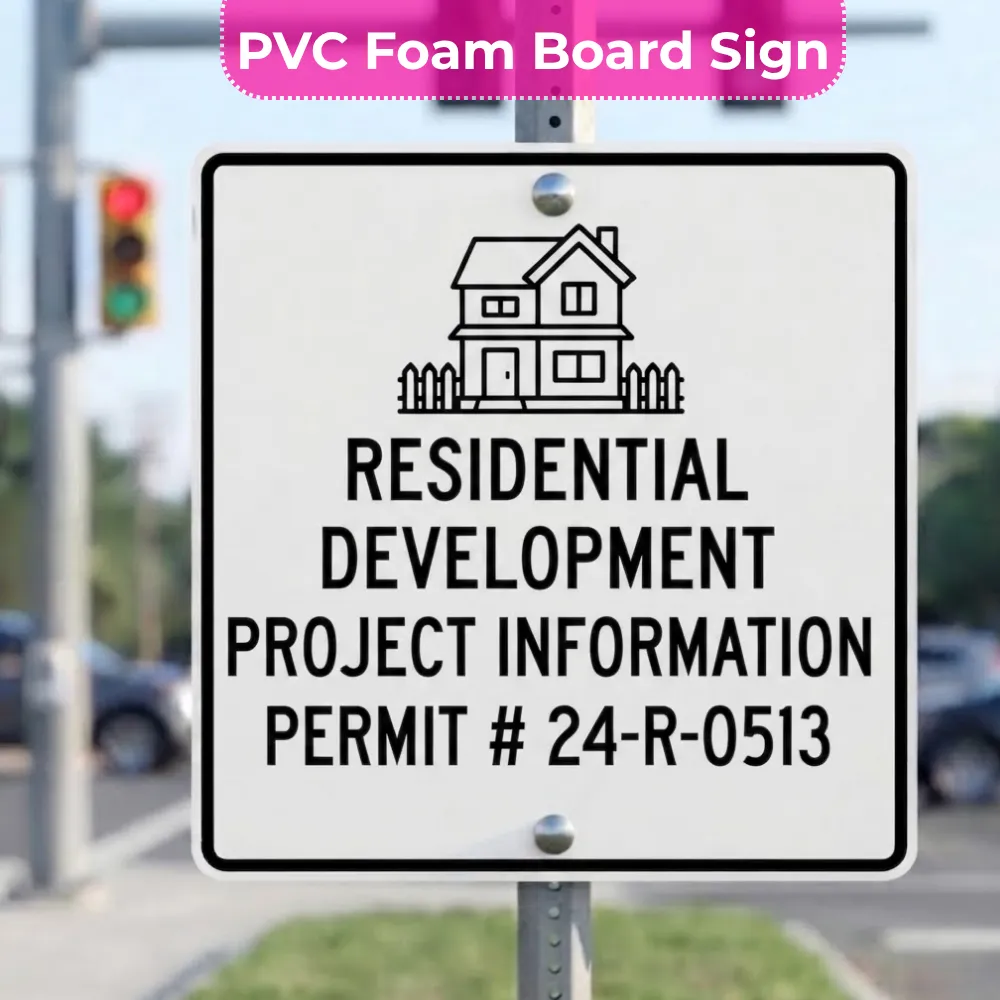
  • The Product Material is PVC Foam Board.
  • The printing on the product will be Matte Finish.
  • Vinyl will be printed first and then will be pasted on the Aluminum Sheet.
  • The Material Thickness is 5 MM and the hole Diameter is approximately 5 to 7 MM.
  • We offer Full Color, 840 DPI Full color Printing.
  • UV printing is even available.
  • Mounting Studs are made up of Stainless Steel.

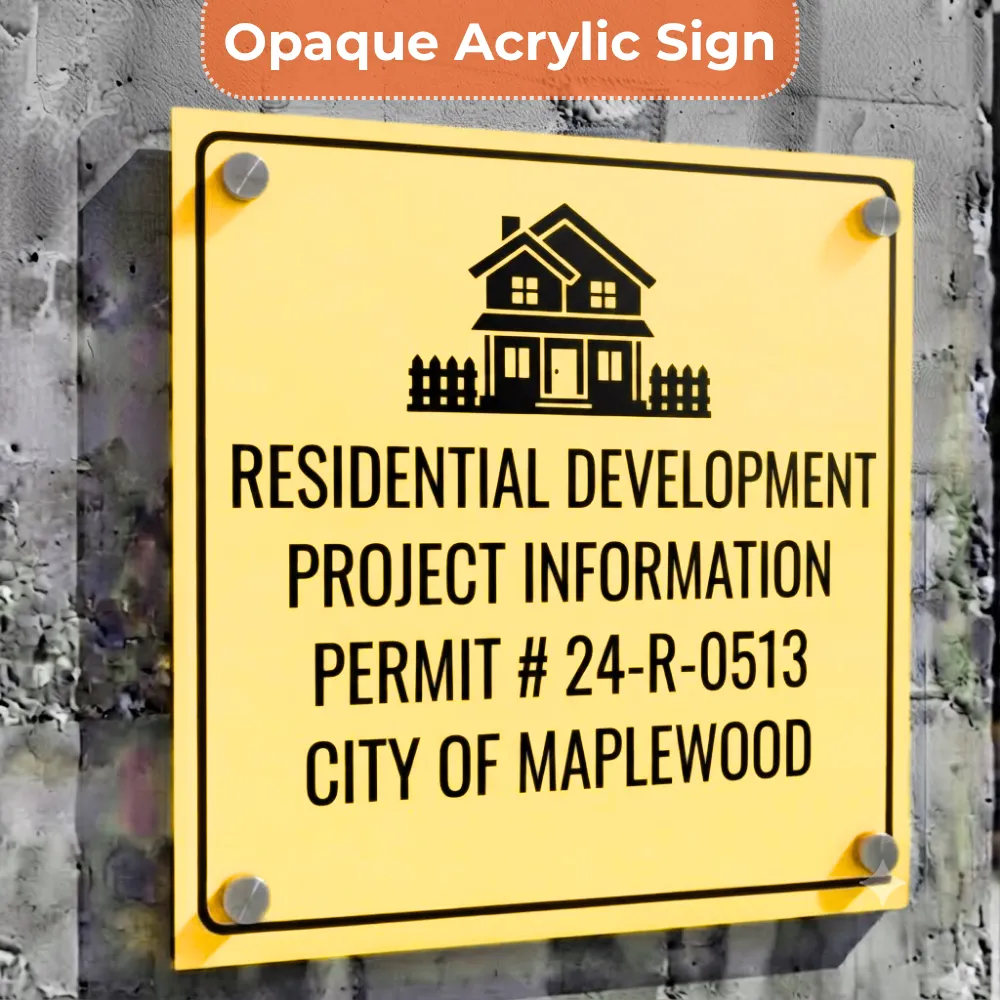
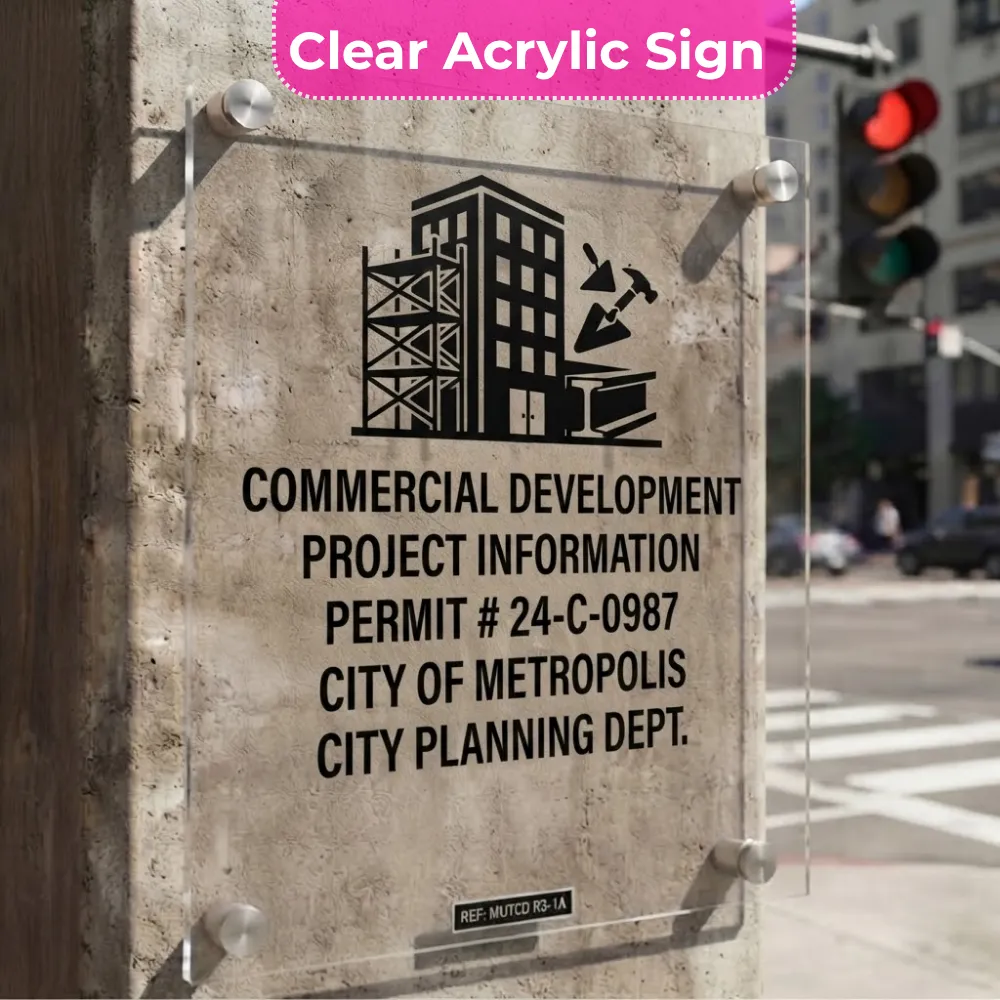
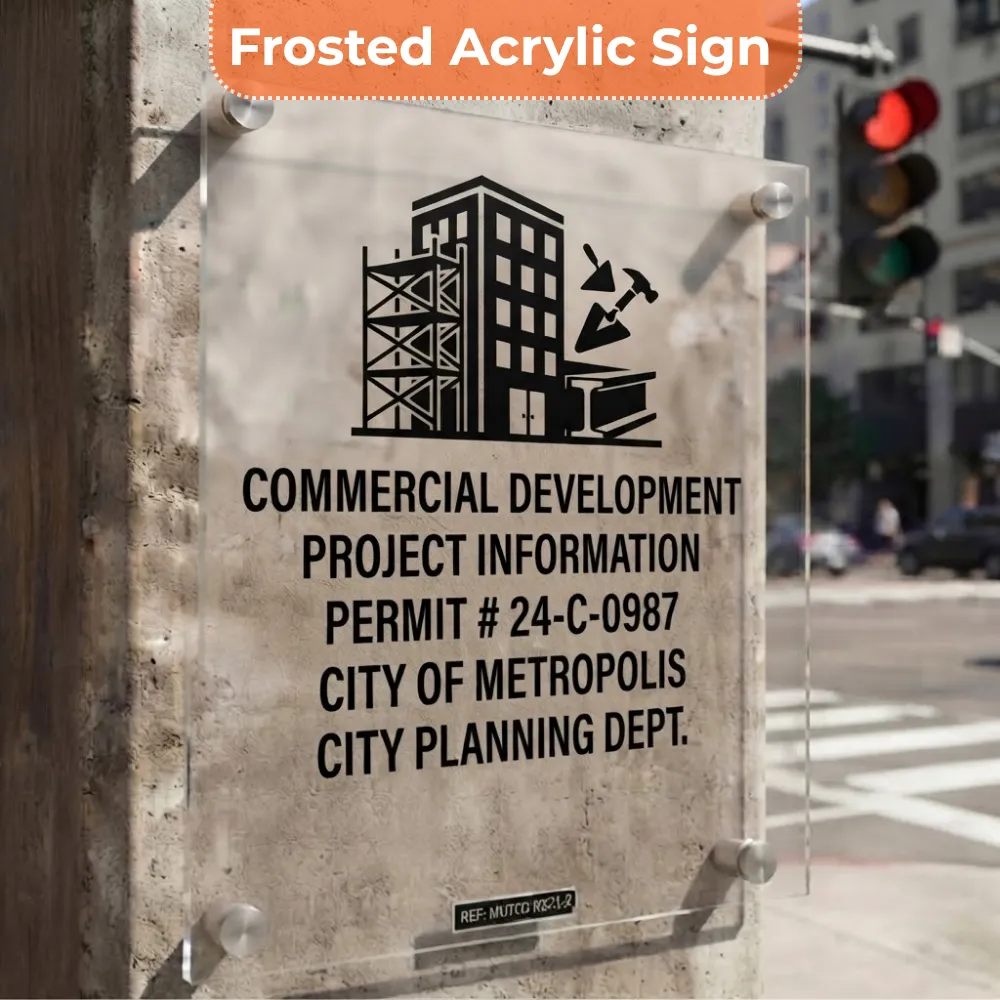
Acrylic Sign :-

  • The Product Material is Acrylic.
  • The printing on the product will be Glossy Finish.
  • We print directly on the sign.
  • The Material Thickness is 6 MM and the hole Diameter is approximately 5 to 7 MM.
  • The Material Weight is 6200 GSM.
  • We offer Full Color, 840 DPI Printing.
  • UV printing is even available.
  • Mounting Studs are made up of Stainless Steel.

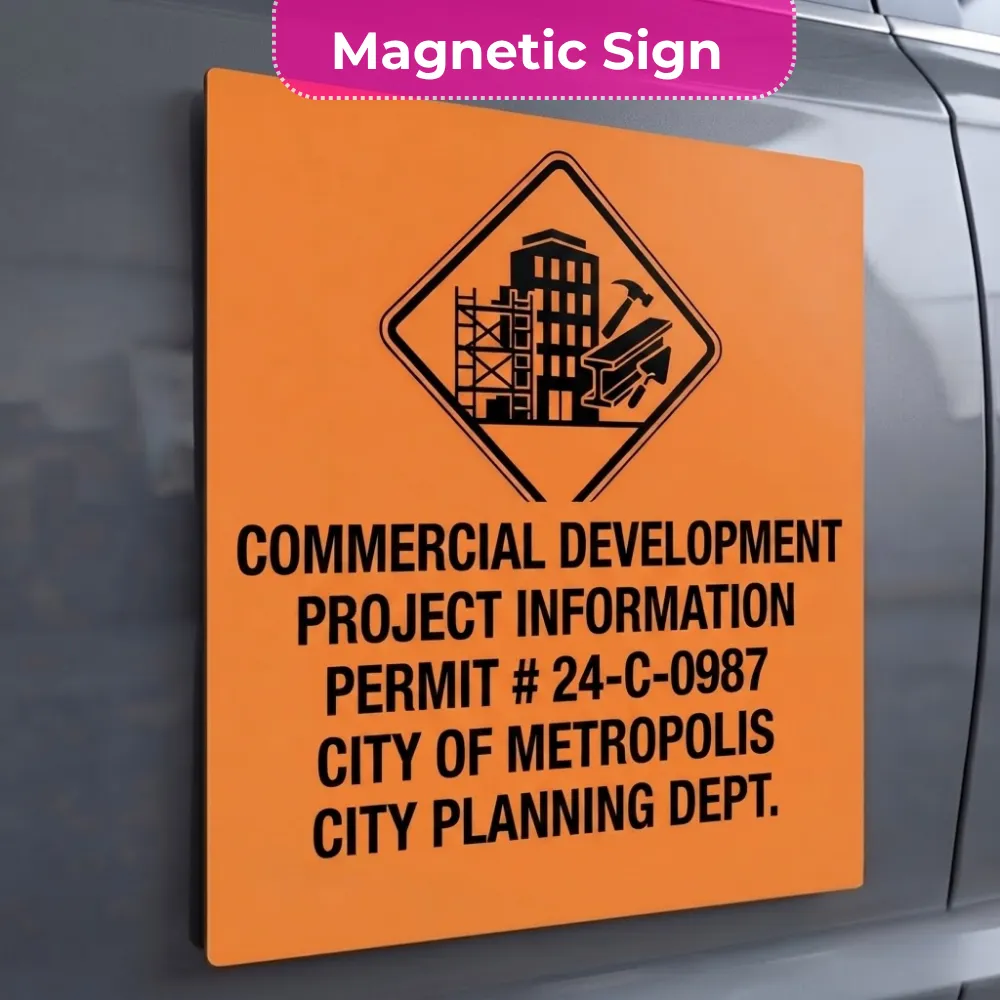
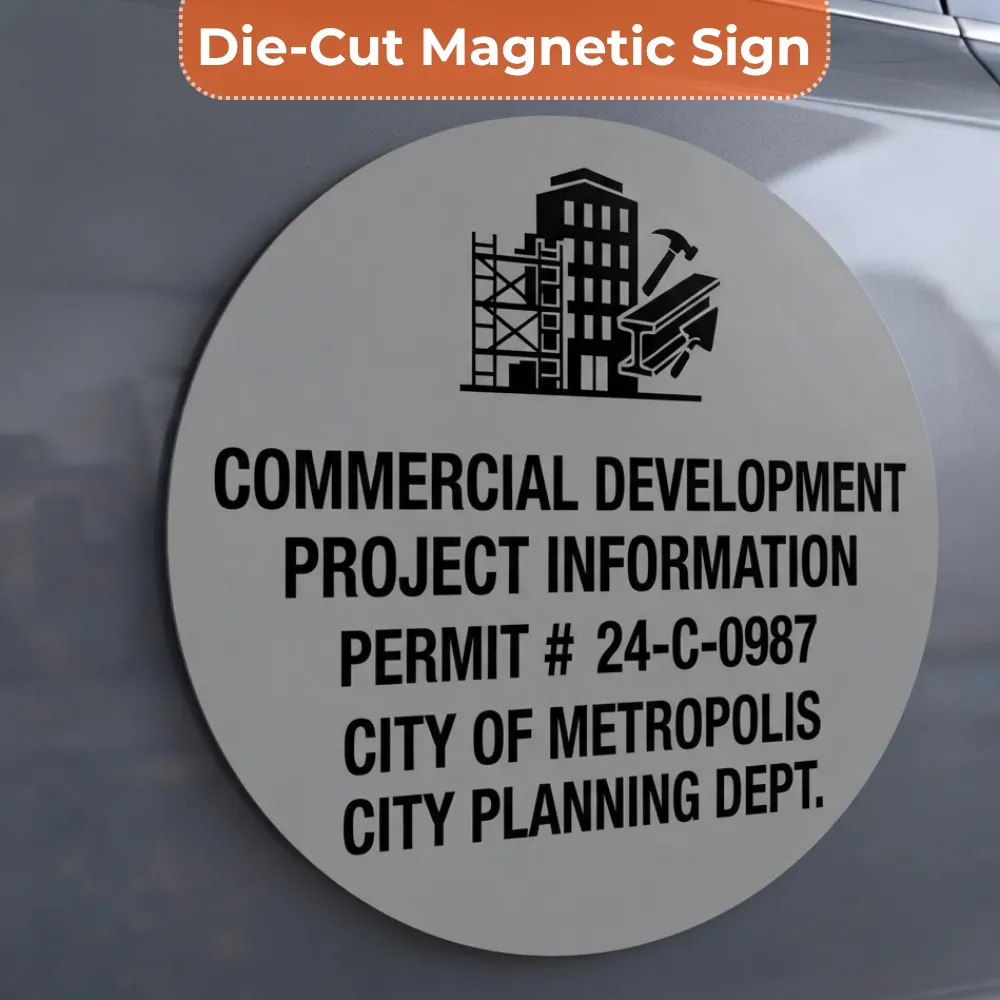
Magnetic Sign :-

  • The Product Material is Flexible Magnetic Sheet.
  • The printing on the product will be Glossy Finish.
  • We print directly on the sign.
  • The Material Thickness is 900 Microns.
  • The Material Weight is 2900 GSM.
  • We offer Full Color, 840 DPI Printing.
  • UV printing is 600 DPI is even available.
  • It is built for durability with 75.8 oz weight and resists curling, tearing, and wear to vehicle surfaces.

Q: What are project information signs?
A: Project information signs are informational boards used at construction and development sites to communicate project details such as the project name, developer, contractor, consultants, timeline, location, and contact information.

Q: Why are project information signs important?
A: They help identify a project, communicate essential information, improve public awareness, support transparency, and provide stakeholders with relevant contact or project details.

Q: What information should a project information sign include?
A: A typical sign may include the project name, project description, location, developer, contractor, consultants, project timeline, contact details, project reference number, and website or QR code.

Q: Where are project information signs used?
A: They are commonly used at commercial buildings, residential developments, infrastructure projects, road projects, industrial sites, government projects, schools, hospitals, renovation sites, and mixed-use developments.

Q: What is the difference between a project information sign and a safety sign?
A: A project information sign communicates project and stakeholder information, while a safety sign communicates hazards, required actions, access restrictions, emergency information, or safety procedures.

Q: Who uses project information signs?
A: They provide useful information to workers, contractors, visitors, inspectors, authorities, nearby residents, businesses, pedestrians, and other project stakeholders.

Q: Can project information signs include contractor details?
A: Yes. Depending on the project, they may identify the main contractor, construction company, subcontractors, project manager, architect, engineers, or other consultants.

Q: Can project information signs include project timelines?
A: Yes. Where appropriate, signs can display the project start date, expected completion date, construction duration, or current project phase. Dates should be updated when significant changes occur.

Q: Can project information signs include a QR code?
A: Yes. A QR code can connect visitors to a project website, digital updates, contact information, construction notices, community information, or other relevant online resources.

Q: What materials are used for project information signs?
A: Common materials include Corrugated/Coroplast plastic, PVC Foam Board, Aluminum, Acrylic and Magnetic depending on the installation environment and project duration.

Q: Should project information signs be weather-resistant?
A: Yes. Outdoor project signs should be designed for expected exposure to sunlight, rain, wind, dust, moisture, and temperature changes to maintain readability and appearance.

Q: Where should a project information sign be placed?
A: It should be installed where the intended audience can easily see and read it, such as near a main site entrance, public-facing boundary, project office, visitor area, or construction hoarding.

Q: Can project information signs be customized?
A: Yes. Project signs can be customized with project-specific information, branding, logos, graphics, stakeholder details, contact information, and digital links, subject to applicable requirements.

Q: Are project information signs legally required?
A: Requirements vary by country, state or province, local authority, planning regulations, permit conditions, project type, and contractual requirements. Project owners should verify applicable local requirements.

Q: How do project information signs improve public communication?
A: They provide a convenient source of project identification, development details, timelines, contact information, and relevant public information in a visible location.

Q: What makes a good project information sign?
A: An effective project information sign is clear, accurate, readable, visually organized, highly visible, durable, professionally designed, securely installed, and kept up to date.

Q: How large should a project information sign be?
A: There is no single universal size. The appropriate size depends on viewing distance, available space, amount of information, installation location, visibility requirements, and applicable local regulations.

Q: How should project information signs be maintained?
A: Inspect them for fading, weather damage, dirt, physical damage, loose mounting, obstruction, outdated information, and incorrect contact details. Update or replace signs when necessary.

Q: Can project information signs be used for construction site branding?
A: Yes. They can incorporate company logos, project branding, brand colors, project imagery, and developer information, provided branding does not reduce the readability of essential information.

Q: How do I choose the right project information sign?
A: Choose a sign based on the project type, intended audience, information required, installation location, viewing distance, environmental conditions, project duration, design requirements, and applicable regulations.
Home Shop Cart 2 Wishlist Account

Subscribe To Our Newsletter

Welcome To the eBannerSigns family. Fill the details and stay updated with Offers & New Product Launch.
Shopping Cart (0)

No products in the cart. No products in the cart.

For Bulk Orders