
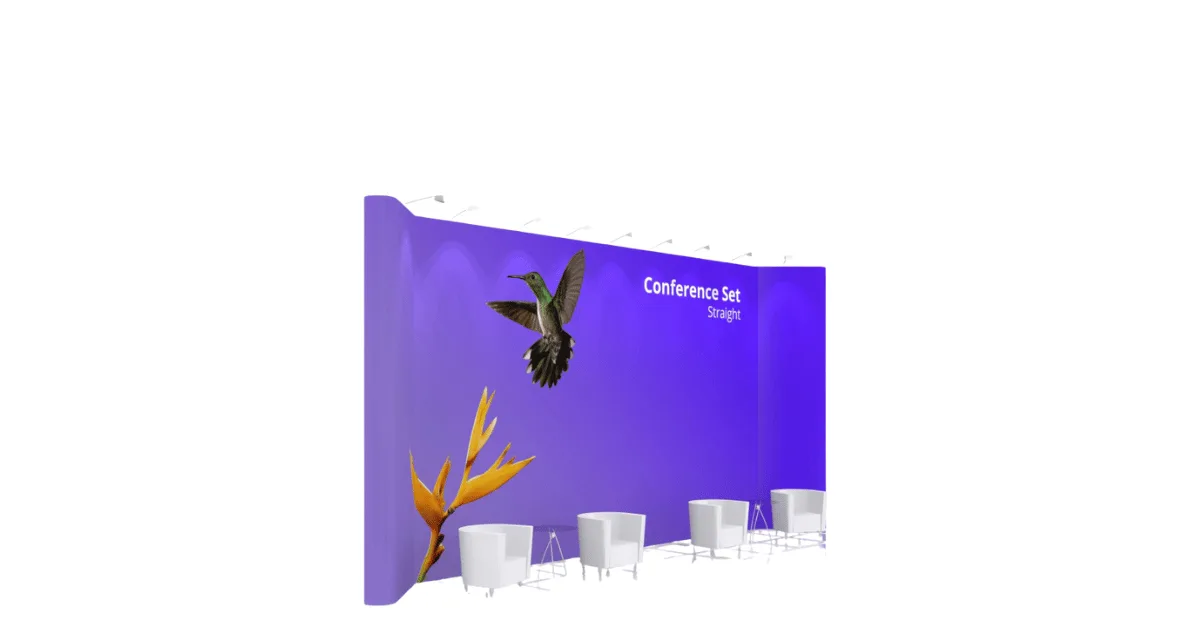
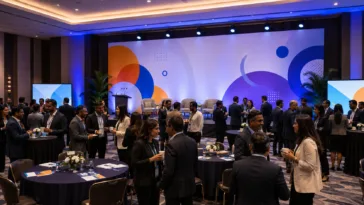
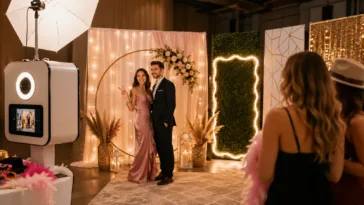
Backdrops are now an essential part of contemporary event and branding design. A efficient backdrop immediately improves the visual attractiveness of any room, whether it is being used for product launches, trade exhibitions, corporate gatherings or photo booths. Businesses and event planners now have a large selection of materials, coatings and display options to pick from thanks to the rising popularity of custom backdrop printing. Prior to making a purchase, comparing these options guarantees the ideal ratio of design, durability and quality.
Comprehending Custom Backdrop Printing
Large printed displays intended to highlight logos, images or business messaging are known as custom backgrounds. They make striking backdrops for images, presentations and advertising campaigns. To get the intended visual impact, custom backdrop printing entails choosing the appropriate material, size and printing method. Every choice, from vinyl to fabric, has special advantages appropriate for various settings and uses.
Comparing Printing Methods for Backdrops
Traditional Single-Step Dye Sublimation
How It Operates: Often without the need for a transfer paper phase, ink is heated into a gas and injected straight into fabric. The fabric is directly sprayed with ink, which is subsequently heated.
Cons: Ink can bleed without the accuracy of Giant Printing’s transfer paper stage, which lessens sharpness, particularly on intricate drawings.
Compared to the thorough ink penetration of the 2-step technique, durability suffers. The cloth may feel less elegant and colors may fade more quickly.
Screen Printing
How It Operates: One color at a time, ink is pushed onto fabric via stencils.
Cons: It is expensive, time-consuming, and low-resolution, making it unsuitable for huge backdrops. Over time, the surface-level ink fractures and fine details disappear.
Screen printing is obsolete for anything other than basic logos because Giant Printing’s two-step method simply manages complex, multi-color designs.
Printing directly onto fabric (DTF)
How It Operates: Inkjet printers spray ink directly onto fabric.
Drawbacks: Muted colors and a rigid texture result from the ink sitting on the surface rather than in the fibers. Particularly on big backdrops, it is prone to fading, cracking and wrinkles. Fine details become blurry due to a decrease in resolution.
DTF lacks the depth and durability required for a striking backdrop and it feels less expensive and less durable than Giant Printing’s embedded ink.
Vinyl Printing (UV or Solvent)
How It Operates: Vinyl banner material is printed with ink that is frequently cured using solvents or UV light.
Cons: Vinyl is heavy, quickly creases and cracks and reflects light strangely; it is not fabric. Solvent inks frequently fade outside and colors lack depth.
The two-step fabric-based process used by Giant Printing provides a softer, more polished appearance with superior durability and no drawbacks of vinyl.
Generic Digital Inkjet
How It Operates: Ink is sprayed onto a variety of surfaces by simple inkjet printers.
Cons: Fading, weak ink penetration and inconsistent quality are common. It is an inexpensive alternative that falls short of Giant Printing’s heat-transfer accuracy in terms of durability and vibrancy.
You deserve better than a shoddy print job for your backdrop.
Selecting an Appropriate Background
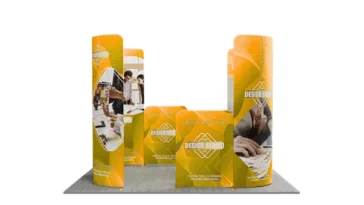
The sort of event, the venue and the desired look all influence backdrop selection. Tension fabric displays add a contemporary edge, vinyl offers durability, and fabric backdrops offer elegance. Retractable backgrounds provide ease and step and repeat designs improve branding. Making an informed choice is aided by taking into account elements like portability, reusability and lighting.
eBannerSigns offers professional Custom Backdrop Printing services for companies and event planners looking for backdrops that are strong, long-lasting and aesthetically pleasing.

 No products in the cart.