HALLOWEEN SUPER SALE 30% OFF USE CODE: SPOOKY

HALLOWEEN SUPER SALE 30% OFF USE CODE: SPOOKY

Construction Warning Signs

SKU:CWS351
Shipping
Method
Fixed Price
(Unlimited QTY)
Priority*$30
Express*$20

    Size (W X H)

    Size (W X H)

    • (max file size 1 GB)

    Kindly share the artwork via email at design@printwithebannersigns.com

24/7 chat support

Unlimited Mockup Revisals

On Time delivery

Secured Payment


Key Features of Construction Warning Signs: –

  1. High Visibility and Attention-Grabbing Design

    Construction warning signs should be easy to notice from an appropriate distance. Bright safety colors, strong contrast, bold lettering, and recognizable symbols help attract attention, particularly in busy construction environments.

    For roadside construction, signs may also need enhanced visibility so that motorists can identify the warning early enough to slow down, change lanes, or follow temporary traffic controls.

  2. Clear and Easy-to-Understand Messages

    A construction warning sign should communicate its message quickly. Short wording, familiar symbols, and simple graphics reduce the time required to understand a hazard.

    For example, signs may warn about:

    • Road construction or roadwork ahead
    • Construction workers
    • Excavation or open trenches
    • Falling objects
    • Moving construction equipment
    • Electrical hazards
    • Uneven surfaces
    • Restricted or hazardous areas

    The message should be specific enough to identify the risk without unnecessary information.

  3. Standard Safety Colors and Symbols

    The use of recognized safety colors, shapes, and symbols helps people identify warnings consistently. Color and symbol conventions can vary depending on the country, industry, and applicable standard, so construction sites should use signage that complies with the relevant local requirements.

    Consistent visual communication is particularly important when workers or visitors need to recognize a hazard immediately without reading lengthy text.

  4. Suitable Size and Viewing Distance

    The size of a construction warning sign should correspond to where it is installed and how far away it needs to be recognized. A sign positioned beside a high-speed roadway generally requires different visibility considerations than a sign placed at the entrance to a construction building.

    Text and symbols should be large enough to remain legible at the intended viewing distance and under expected environmental conditions.

  5. Reflective and Low-Light Visibility

    Construction sites often operate during early mornings, evenings, or nighttime. Reflective materials and suitable illumination can improve the visibility of warning signs when natural light is limited.

    For temporary traffic control and roadside construction, enhanced nighttime visibility can be particularly important because drivers need to recognize hazards and instructions with sufficient advance notice.

  6. Weather-Resistant and Durable Materials

    Outdoor construction warning signs are exposed to sunlight, rain, wind, dust, humidity, and temperature changes. Signs should therefore be manufactured from materials appropriate for the installation environment.

    Durable signs help maintain readable text, visible symbols, and effective colors throughout their intended service life.

  7. Strategic and Correct Placement

    Even a well-designed warning sign cannot provide effective safety communication if it is placed incorrectly. Signs should be installed at locations where the intended audience can see, read, and respond to the warning before reaching the hazard.

    Placement should consider:

    • Traffic speed and direction
    • Pedestrian movement
    • Worker access routes
    • The location of the hazard
    • Visibility obstructions
    • Lighting conditions
    • Required warning distance
    • Temporary changes to the construction area
  8. Hazard-Specific Information

    Effective construction warning signs should communicate the specific hazard or change in conditions that people need to recognize.

    Instead of using vague warnings, signs should identify the relevant risk whenever appropriate—for example, “Men at Work,” “Excavation Ahead,” or a recognized symbol for a particular hazard. Specific information helps users understand what precaution may be required.

  9. Legibility and Readability

    The wording on a construction warning sign should remain readable under the conditions in which it will be viewed. Appropriate font size, spacing, contrast, and layout all contribute to legibility.

    Avoiding excessive text is important because people may have only a few seconds to interpret a warning, especially when traveling through a construction zone.

  10. Resistance to Tampering and Physical Damage

    Construction sites are active environments where signs can be exposed to accidental impacts, movement of equipment, vibration, dust, and unauthorized interference. Appropriate mounting systems and durable construction can help keep signs secure, upright, and visible.

    Temporary signs should also be easy to relocate when site conditions change while remaining stable enough for their intended use.

  11. Compliance With Applicable Safety Requirements

    Construction warning signs should be selected and installed according to the applicable workplace safety, road traffic, construction, and signage regulations or standards in the relevant jurisdiction.

    Compliance requirements can differ depending on whether a sign is being used inside a workplace, at a public construction site, or as part of temporary traffic control. Businesses should verify the requirements that apply to their specific location and application.

  12. Suitable for Temporary or Permanent Applications

    Construction warning signs may be used for both temporary construction activities and longer-term hazards. Temporary signs should be practical to install, move, and replace as construction phases change, while permanent signs may require more robust mounting and materials.

    Choosing the appropriate sign type for the duration and environment of the project helps maintain effective hazard communication.

Overview of Construction Warning Signs: –

Construction warning signs are designed to identify potential hazards, provide clear safety information, and guide workers, drivers, and pedestrians through or around construction areas. The most effective signs combine high visibility, simple messaging, durable materials, and appropriate placement to ensure that warnings can be understood quickly and acted upon safely.

Construction warning signs are an essential part of construction site safety and hazard communication. They alert workers, drivers, pedestrians, and visitors to potential dangers, changes in site conditions, restricted areas, and temporary construction activities. An effective construction warning sign should be easy to recognize, understand, and act upon before a person reaches the hazard.

Construction warning signs help communicate hazards before people encounter them. Properly selected and positioned signs can help manage pedestrian and vehicle movement, identify dangerous areas, support temporary traffic control, and reinforce safe behavior on construction sites.

However, warning signs should not be considered a substitute for other safety controls. They work best as part of a comprehensive safety system that may include physical barriers, barricades, traffic controls, personal protective equipment (PPE), worker training, lighting, and hazard assessments.

What Should a Good Construction Warning Sign Include?

A well-designed warning sign should communicate the essential information as quickly as possible:

Hazard → Location or direction → Required awareness or action

The exact wording, colors, symbols, dimensions, and installation requirements depend on the type of construction activity, location, intended audience, and applicable safety standards.

Quick Checklist for Construction Warning Signs

Before installing a warning sign, check that it is:

  • Clearly visible from the required distance
  • Easy to read and understand
  • Appropriate for the specific hazard
  • Suitable for the indoor or outdoor environment
  • Visible under expected lighting conditions
  • Securely mounted
  • Positioned before the hazard or decision point
  • Free from obstructions
  • Maintained in good condition
  • Compliant with applicable local requirements

In summary, effective construction warning signs combine visibility, clarity, durability, appropriate placement, hazard-specific information, and regulatory compliance. These features help construction sites communicate risks effectively and create safer conditions for workers, pedestrians, drivers, and visitors.

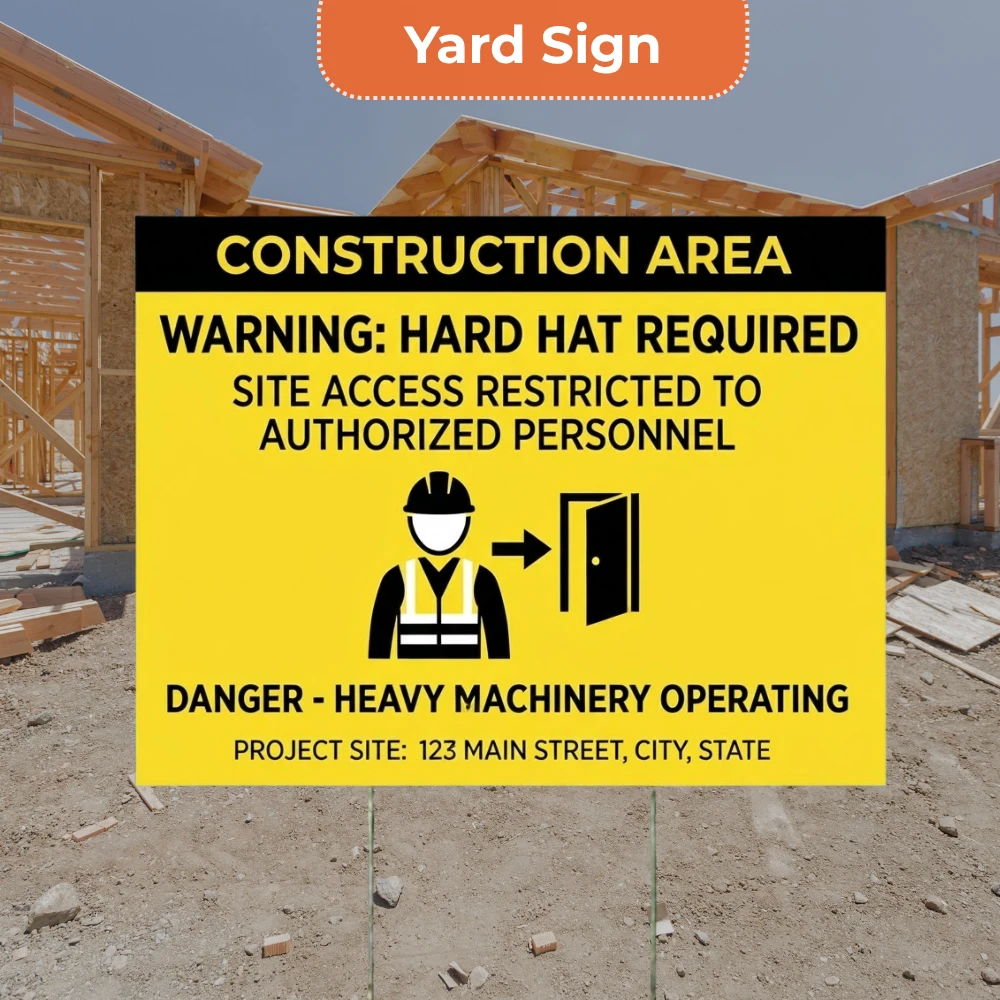
Yard Sign :-

  • The Product Material is corrugated plastic (Coroplast).
  • The printing on the product will be Glossy Finish and would be direct on the Coroplast Sheet.
  • The Material weight is 1010 GSM and the Thickness is 6mm.
  • We offer Full Color, 720 DPI Full Color Printing.
  • UV printing is even available.
  • Metal Stakes are made up of Aluminum Material.
  • The quality of the Metal Stakes is 1000 Series Aluminum metal.
  • Please request for Metal grommets at additional cost.

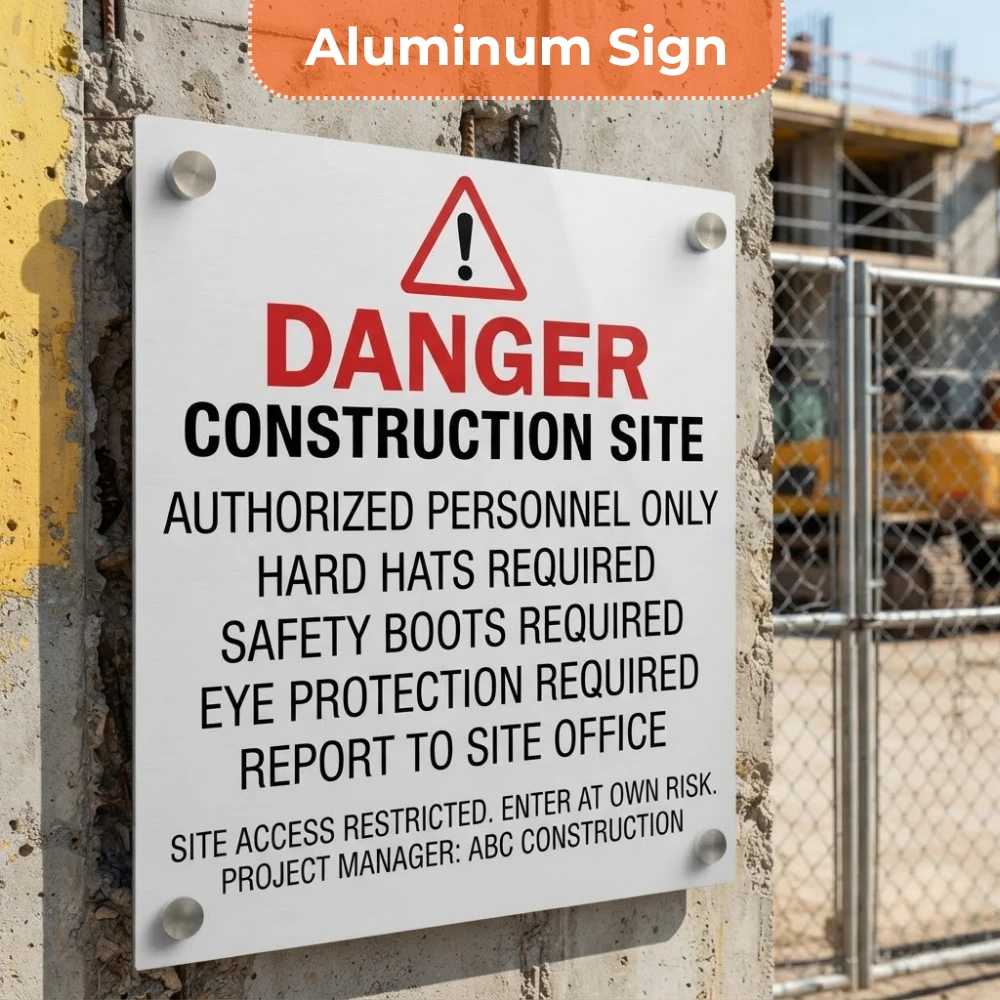
Aluminum Sign :-

  • The Product Material is Aluminum Metal.
  • The printing on the product will be Glossy Finish.
  • Vinyl will be printed first and then will be pasted on the Aluminum Sheet.
  • The Material Thickness is 1.2 MM and the hole Diameter is approximately 5 to 7 MM.
  • We offer Full Color, 840 DPI Full color Printing.
  • UV printing is even available.
  • Mounting Studs are made up of Stainless Steel.

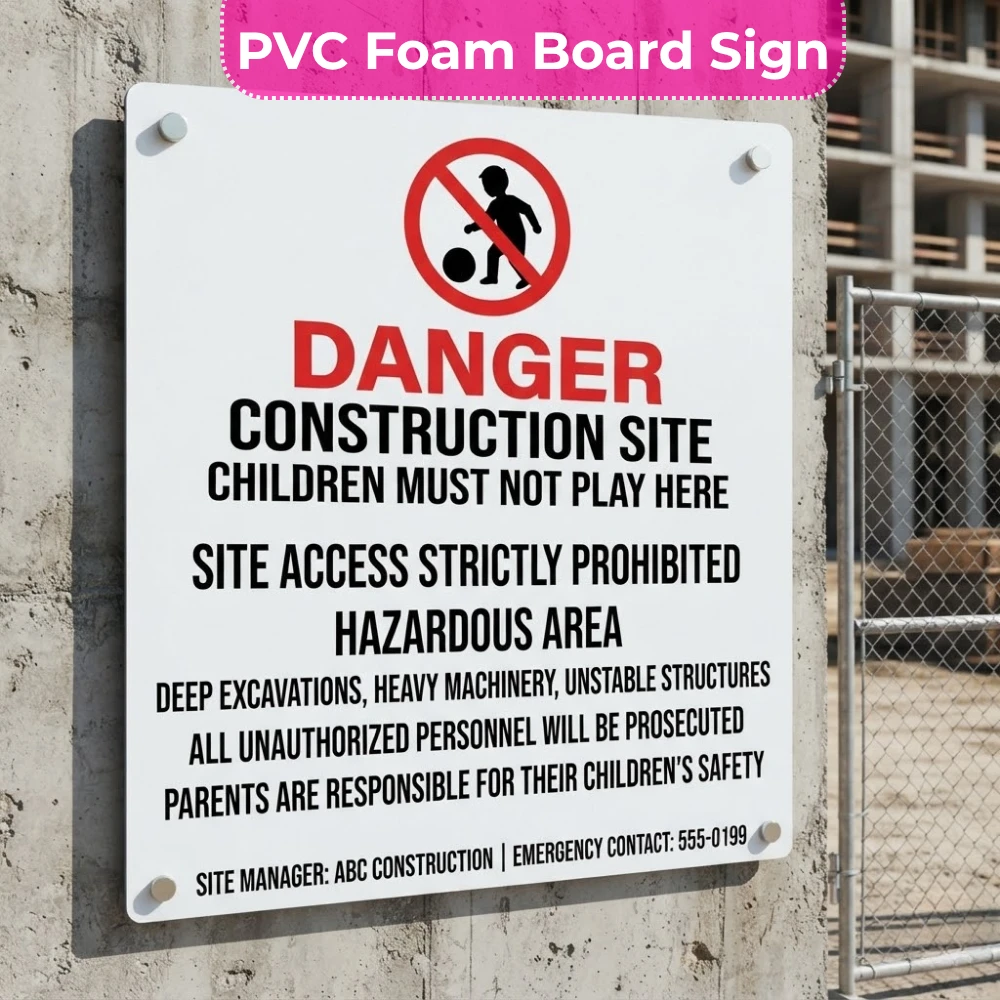
PVC Foam Board Sign :-

  • The Product Material is PVC Foam Board.
  • The printing on the product will be Matte Finish.
  • Vinyl will be printed first and then will be pasted on the Aluminum Sheet.
  • The Material Thickness is 5 MM and the hole Diameter is approximately 5 to 7 MM.
  • We offer Full Color, 840 DPI Full color Printing.
  • UV printing is even available.
  • Mounting Studs are made up of Stainless Steel.

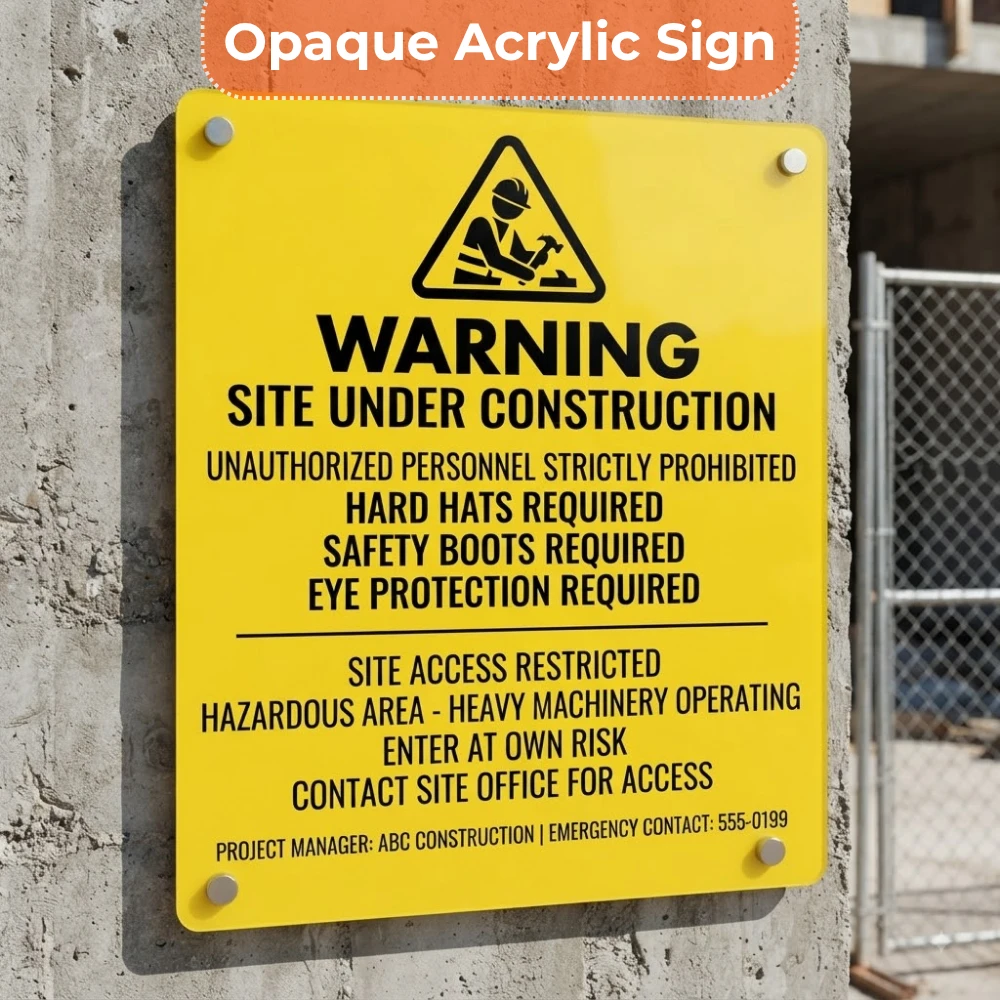
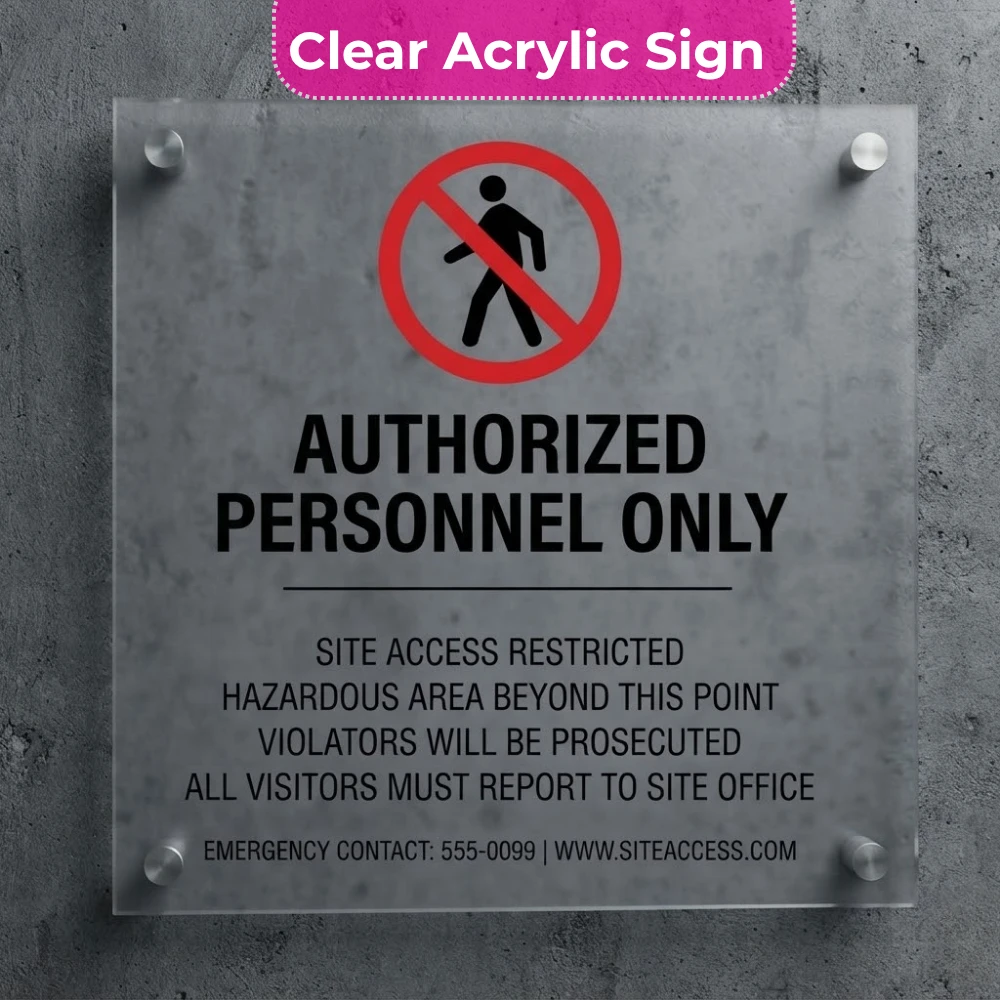
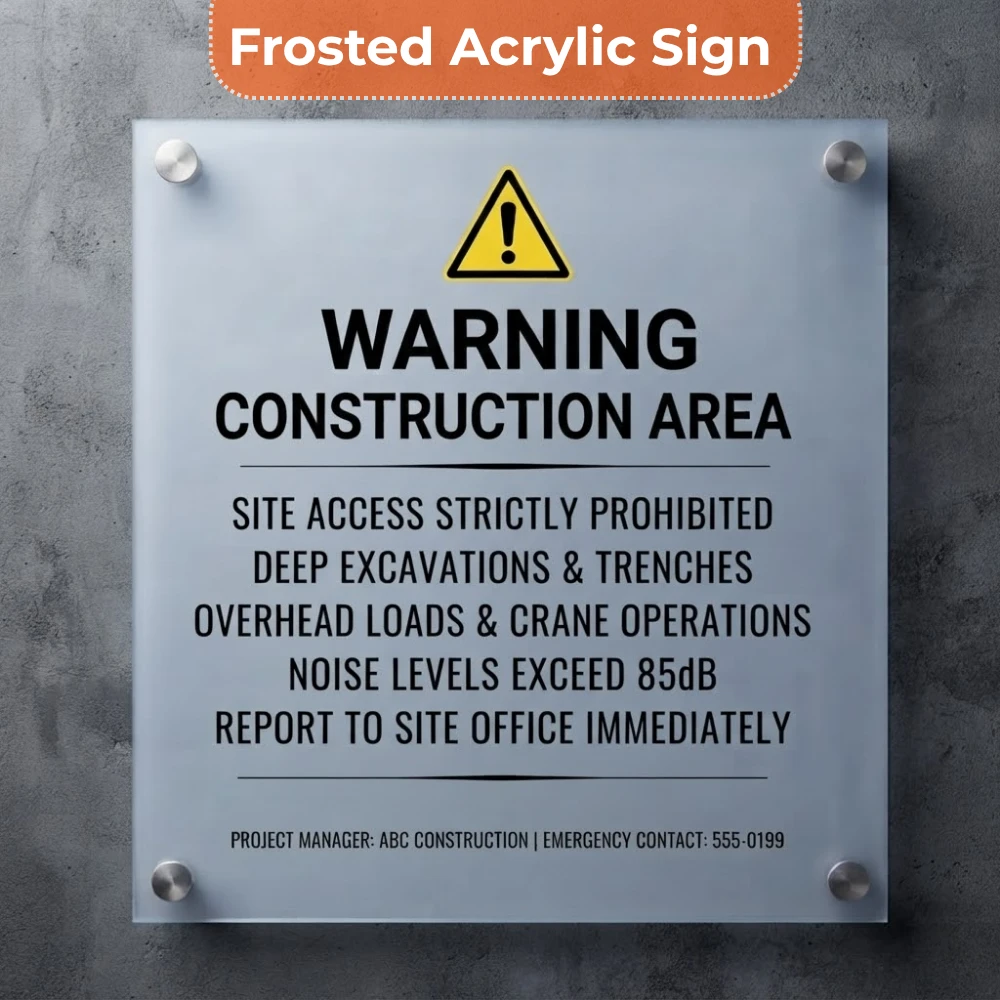
Acrylic Sign :-

  • The Product Material is Acrylic.
  • The printing on the product will be Glossy Finish.
  • We print directly on the sign.
  • The Material Thickness is 6 MM and the hole Diameter is approximately 5 to 7 MM.
  • The Material Weight is 6200 GSM.
  • We offer Full Color, 840 DPI Printing.
  • UV printing is even available.
  • Mounting Studs are made up of Stainless Steel.

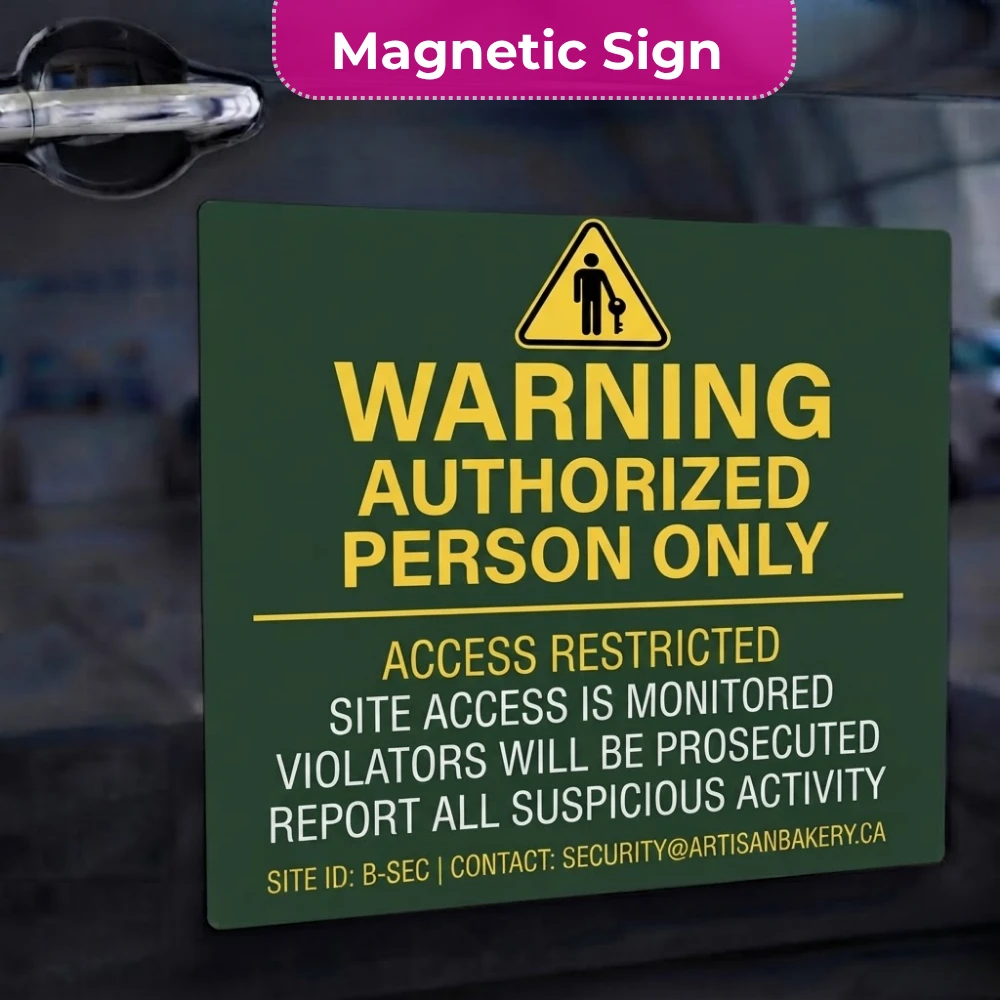
Magnetic Sign :-

  • The Product Material is Flexible Magnetic Sheet.
  • The printing on the product will be Glossy Finish.
  • We print directly on the sign.
  • The Material Thickness is 900 Microns.
  • The Material Weight is 2900 GSM.
  • We offer Full Color, 840 DPI Printing.
  • UV printing is 600 DPI is even available.
  • It is built for durability with 75.8 oz weight resists curling, tearing, and wear to vehicle surfaces.

Q: What are construction warning signs?
A: Construction warning signs alert workers, drivers, and pedestrians to construction hazards, work zones, and changing site conditions.

Q: Why are construction warning signs important?
A: They provide advance hazard information, improve safety awareness, and help people recognize and respond to risks around construction sites.

Q: What are the main features of construction warning signs?
A: Key features include high visibility, clear messaging, recognizable symbols, proper sizing, durable materials, legibility, and strategic placement.

Q: What hazards do construction warning signs identify?
A: They can warn about roadwork, excavation, falling objects, moving machinery, electrical hazards, uneven surfaces, and restricted areas.

Q: What colors are used for construction warning signs?
A: Construction warning sign colors depend on the type of hazard, sign system, and applicable safety standards. High-contrast safety colors are commonly used to improve visibility.

Q: Are construction warning signs visible at night?
A: Signs made with reflective materials or suitable illumination can improve visibility during nighttime and low-light conditions.

Q: Where should construction warning signs be placed?
A: Signs should be placed where people can see and understand the warning before reaching the hazard or affected area.

Q: What materials are used to make construction warning signs?
A: Common materials include Corrugated/Coroplast plastic, PVC Foam Board, Aluminum, Acrylic and Magnetic, selected according to the environment and intended use.

Q: How large should a construction warning sign be?
A: Sign size depends on the viewing distance, location, traffic conditions, sign type, and applicable regulations. Text and symbols must remain clearly visible.

Q: What makes a construction warning sign effective?
A: An effective sign combines visibility, concise messaging, recognizable symbols, durability, legibility, correct placement, and suitability for the identified hazard.

Q: Are construction warning signs legally required?
A: Requirements vary by country, state, workplace, construction activity, and applicable safety or traffic regulations. Project-specific requirements should be verified.

Q: How often should construction warning signs be inspected?
A: Signs should be inspected regularly and whenever site conditions, hazards, traffic routes, or construction phases change.

Q: When should a construction warning sign be replaced?
A: A sign should be replaced when it becomes damaged, faded, illegible, unstable, obstructed, or no longer accurately represents the site hazard.

Q: Can construction warning signs prevent accidents?
A: Warning signs can improve hazard awareness and support safer behavior, but they are most effective when combined with appropriate engineering and administrative safety controls.

Q: Can construction warning signs replace safety barriers?
A: No. Warning signs communicate hazards but do not physically prevent access. Barriers, barricades, guards, and other controls may be necessary for certain hazards.

Q: What is the difference between warning and mandatory construction signs?
A: Warning signs identify potential hazards, while mandatory signs communicate an action that must be followed, such as wearing required personal protective equipment (PPE).

Q: Are temporary construction warning signs different from permanent signs?
A: Yes. Temporary signs are designed for changing construction conditions and short-term applications, while permanent signs are intended for longer-term hazards or site requirements.

Q: What information should a construction warning sign contain?
A: A warning sign should communicate the relevant hazard or condition clearly and quickly, using concise text, appropriate symbols, or both.

Q: How can construction warning signs improve worksite safety?
A: They help communicate hazards, control movement, identify restricted areas, guide pedestrians and vehicles, and reinforce safety procedures.

Q: How do you choose the right construction warning sign?
A: Choose a sign based on the specific hazard, location, viewing distance, lighting conditions, duration of use, intended audience, environmental exposure, and applicable safety standards.

Home Shop Cart 0 Wishlist Account

Subscribe To Our Newsletter

Welcome To the eBannerSigns family. Fill the details and stay updated with Offers & New Product Launch.

Shopping Cart (0)

No products in the cart. No products in the cart.

For Bulk Orders